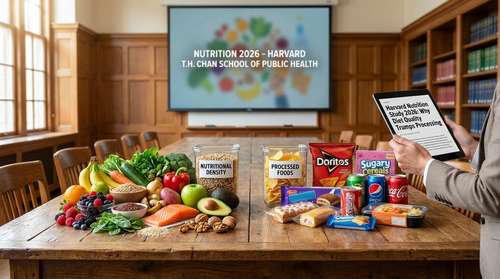
The American grocery landscape is undergoing a major transformation. This week, regulatory agencies are expected to finalize the highly anticipated FDA ultra-processed food definition, a milestone that will officially classify the processing level of approximately 70 percent of the domestic food supply. Born out of the ambitious 2026 Human Foods Program deliverables, this move marks a profound shift in how the federal government evaluates public health, moving beyond mere calorie counting to scrutinize how our meals are manufactured.
Decoding the FDA Ultra-Processed Food Definition
For decades, shoppers have relied on the traditional Nutrition Facts panel. However, the latest 2026 nutrition policy news reveals that this legacy system is no longer enough. Driven by the broader Make America Healthy Again (MAHA) initiative championed by U.S. Health Secretary Robert F. Kennedy Jr., the new framework establishes a formal benchmark for what constitutes an ultra-processed food (UPF). Until now, the United States lacked a unified federal standard, leaving researchers and policymakers to rely on the international NOVA classification system. The finalized FDA framework—developed in collaboration with the USDA following a massive 2025 public information request—will specifically target industrial processing techniques and the use of cosmetic additives.
Ingredients once hiding in plain sight, such as artificial flavor enhancers, chemical emulsifiers, and synthetic dyes, will now legally categorize a product as ultra-processed. This policy is backed by aggressive research from the NIH-FDA Joint Nutrition Regulatory Science Program, which spent the last year analyzing how these complex chemical formulations disrupt metabolic health and contribute to chronic disease.
The Arrival of Front-of-Package Nutrition Labels
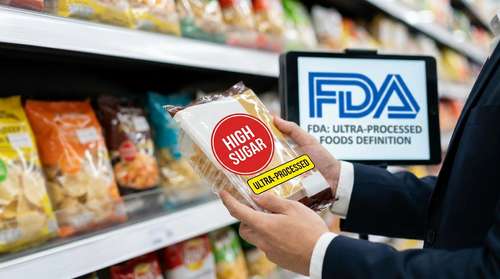
Defining UPFs is only the first phase of this regulatory overhaul. The immediate consequence of this classification is the implementation of mandatory front-of-package nutrition labels. While the FDA originally proposed a text-heavy Nutrition Info box back in January 2025 to alert consumers to saturated fat, sodium, and added sugars, the current administration has pivoted toward a more aggressive, visually striking approach. Officials have signaled the imminent rollout of prominent UPF health warnings, utilizing an intuitive red light, yellow light, green light graphic.
This system guarantees that high sugar food labels and warnings for excessive sodium will no longer be relegated to the fine print on the back of a cereal box. If a product falls under the new ultra-processed classification or trips the threshold for unhealthy nutrient density, it will be immediately apparent to shoppers scanning the aisles.
Forcing Food Industry Transparency and Reformulation
The looming finalization of these healthy eating regulations has sent shockwaves through the consumer packaged goods sector. Food manufacturers are not waiting for enforcement notices to start stripping contentious ingredients from their portfolios. Instead, the industry is engaging in a massive wave of preemptive reformulation. Major brands are systematically auditing their supply chains, transitioning away from synthetic additives, and exploring natural preservation methods to avoid the dreaded ultra-processed designation.
Furthermore, the FDA is signaling an end to legacy GRAS (Generally Recognized as Safe) loopholes. Historically, many chemical preservatives entered the market through self-affirmation by manufacturers without rigorous federal oversight. By systematically reviewing post-market data, the agency is demanding robust safety dossiers for everything from propylparaben to artificial colors, prioritizing consumer health over manufacturing convenience. This era of forced food industry transparency means companies must either clean up their formulations or face the commercial consequences of bearing a red-light warning label on their flagship products.
A Ripple Effect from State to Federal Law
The federal government's actions mirror a growing grassroots and state-level rebellion against heavily modified foods. California set the precedent in October 2025 with the Real Food, Healthy Kids Act (AB 1264), which effectively banned certain ultra-processed items from public schools by defining them through their additive content. The new FDA standard effectively nationalizes this sentiment, standardizing the criteria across all fifty states and applying it to consumer retail.
What to Expect in Grocery Aisles This Year
As the federal definition takes effect, consumers will begin noticing distinct changes during their weekly shopping trips. Although the original proposals suggested a three-year compliance window for larger manufacturers with over $10 million in annual sales, the pressure from public health advocates and shifting consumer demand is expected to accelerate voluntary adoption much sooner.
Shoppers can anticipate a surge in minimally processed marketing claims, alongside a genuine reduction in products relying on synthetic ingredients for shelf stability. By officially establishing the FDA ultra-processed food definition, regulators are betting that undeniable, at-a-glance transparency will ultimately drive American dietary habits toward whole, nutrient-dense foods. The era of silent ingredients and obscured nutritional profiles is rapidly coming to a close.