The U.S. Food and Drug Administration is standing at a critical crossroads regarding how Americans evaluate their groceries. With the highly anticipated FDA nutrition labels 2026 rollout rapidly approaching, the agency is now actively weighing a sweeping overhaul of its proposed labeling system. This reconsideration follows a bombshell study published this week, warning that the government's current design could inadvertently mislead shoppers into purchasing unhealthy products.
At the center of the debate is the future of front-of-package food labeling. Initially proposed in January 2025, the FDA's draft rule aimed to place a "Nutrition Info" box on the front of packaged foods, rating saturated fat, sodium, and added sugars as "low," "medium," or "high". However, top health officials and independent researchers alike are now arguing that this approach is fundamentally flawed and could exacerbate the nation's diet-related disease epidemic.
The UC Davis Study: Exposing the "False Health Halo"
The push for a redesign gained massive momentum on March 24, 2026, when a comprehensive study was published in The Lancet Public Health. The UC Davis nutrition research team, led by Jennifer Falbe and Brittany Lemmon, tested the FDA's proposed label against alternative designs in an online trial involving over 13,000 adults.
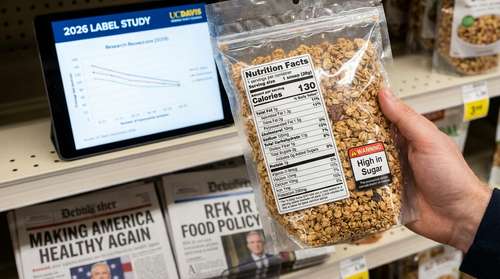
Their findings were striking. The researchers discovered that the FDA's complex rating system often created a "false health halo". For example, if a sugary snack was rated "high" in added sugars but "low" in sodium and saturated fat, consumers were frequently confused by the multiple data points. The presence of two "low" ratings often overshadowed the single "high" warning, leading shoppers to mistakenly identify a highly processed, sugar-laden item as a relatively healthy choice.
Instead, the UC Davis team strongly advocates for simplified food warning labels. In their virtual shopping tests, a stark label that simply read "High in Added Sugars" or "High in Sodium" was vastly more effective at guiding participants toward genuinely nutritious options. "A lot of people overconsume added sugars, sodium, and saturated fat, so to be able to quickly see that 'high-in' label makes it very easy to say, 'maybe I should avoid that today,'" noted lead author Brittany Lemmon.
Aligning with "Making America Healthy Again"
The call for clearer labeling aligns perfectly with the current administration's aggressive public health overhaul. Driven by the Making America Healthy Again (MAHA) initiative, government officials have been openly critical of the inherited regulatory frameworks.
FDA Commissioner Martin Makary explicitly addressed the issue at the National Food Policy Conference on March 4, stating bluntly, "we did not like the front-of-package plan that we inherited". Health and Human Services Secretary Robert F. Kennedy Jr. has similarly positioned the fight against ultra-processed foods as a national emergency, prominently referring to them as "poison" in recent mainstream interviews.
A central pillar of the new RFK Jr food policy is challenging outdated nutritional science. Both Kennedy and Makary have questioned whether saturated fat deserves its status as a primary dietary villain, suggesting that the current label proposal focuses on the wrong metrics. "If we have an opportunity to tell a person about the three most critical health features of a food, is saturated fat really number one?" Makary argued, signaling a massive shift in how the FDA evaluates dietary risks and shapes future consumer guidance.
What the Labeling Overhaul Means for Shoppers
Potential Regulatory Delays
Pivoting from the 2025 proposal to a more direct warning system presents significant administrative hurdles. Kyle Diamantas, the FDA's deputy commissioner for human foods, confirmed in a recent interview in Atlanta that "everything is on the table" regarding the rule's future. However, under the Administrative Procedures Act, adopting the UC Davis recommendation of "High In" warnings would likely require the FDA to formally re-propose the rule and open a new public comment period.
This bureaucratic requirement could delay the agency's stated goal of finalizing a front-of-package labeling program by the spring of 2026. Yet, officials seem willing to accept delays if it guarantees maximum healthy food transparency for the American public moving forward.
The Battle with Big Food
The food and beverage industry has consistently pushed back against mandatory front-of-package regulations, citing steep compliance costs and questioning the FDA's legal authority to enforce the rules. A shift toward explicit "High In" warning labels—which have successfully forced product reformulations and reduced sugar consumption in countries like Chile—would likely trigger intense lobbying and potential legal battles from major food manufacturers.
Despite the looming corporate resistance, the consensus among researchers and public health officials is crystal clear. The labels plastered on our food will be seen every day by millions of Americans for decades. As the obesity and chronic disease epidemic continues to strain the healthcare system, getting this policy right is far more critical than getting it done quickly. Whether through a simplified warning icon or an entirely new nutritional framework, the grocery aisles of tomorrow are bracing for a transparency revolution.