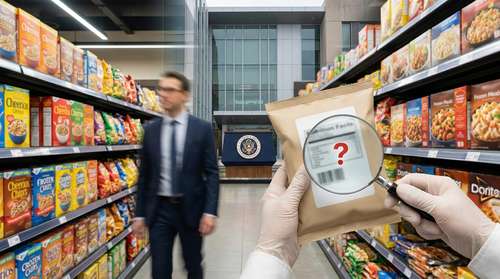
The American supermarket aisle is about to get a radical redesign. Following months of intense agency collaboration and public debate, the highly anticipated federal ultra-processed foods definition is finalized and officially awaiting White House approval.
According to statements made this week by Health and Human Services (HHS) Secretary Robert F. Kennedy Jr., the regulatory framework is currently sitting at the Office of Management and Budget (OMB). Once approved, the new classification will serve as the legal foundation for sweeping changes to the FDA food labeling rules 2026, shifting the nation toward a mandatory front-of-pack visual warning system.
"One of the problems with regulating ultra-processed food is there is no definition, and as a result of it, you can't regulate it," Kennedy remarked during a recent industry address. By cementing an official legal standard, the FDA aims to fundamentally change how packaged goods are formulated, marketed, and sold to American consumers.
Decoding the Ultra-Processed Foods Definition
Historically, nutrition scientists have relied on the NOVA classification system, which sorts the food supply into four distinct categories ranging from unprocessed whole foods to complex industrial formulations. While exact details of the FDA's final language remain under wraps pending OMB clearance, it is expected to heavily mirror the NOVA standard.
Products loaded with high-fructose corn syrup, hydrogenated oils, emulsifiers, and artificial flavorings will likely fall into the strictest regulatory category. For consumers, this precise ultra-processed foods definition will eliminate the guesswork involved in identifying heavily engineered products. For food manufacturers, it triggers a cascade of compliance requirements that will dictate how products are displayed on grocery shelves.
Traffic Lights and the Front of Pack Nutrition Labels
The most visible impact of this regulatory milestone will be the overhaul of front of pack nutrition labels. Previous proposals under the Biden administration focused on a streamlined, black-and-white "Nutrition Info" box that used simple text—such as "low," "medium," or "high"—to qualify the daily value of select nutrients.
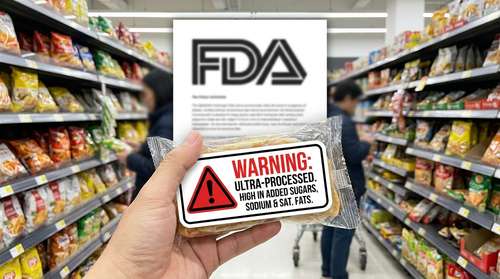
Under Kennedy's leadership, the FDA is abandoning that approach in favor of a traffic-light model. This highly visual system will use red, yellow, and green indicators to flag the levels of added sugars, sodium, and saturated fats. Products categorized as ultra-processed under the new definition may also be required to bear a distinct warning label. Research indicates that mandatory, colorful warning systems—already prevalent in parts of Latin America and Europe—dramatically alter consumer purchasing habits.
The Backbone of the MAHA Food Policy
This regulatory shift aligns directly with the administration's broader MAHA food policy. The "Make America Healthy Again" initiative was built on the premise that heavily subsidized commodity crops and industrial ingredients are the root cause of the nation's chronic disease epidemic. By aggressively targeting RFK Jr processed foods policies, the HHS aims to disincentivize companies from formulating products with synthetic additives.
Additionally, these changes will likely be integrated into the upcoming healthy eating guidelines FDA and USDA releases, which dictate federal nutrition standards for everything from school lunches to military rations.
Fierce Pushback and Food Industry Lobbying 2026
Unsurprisingly, the imminent release of these rules has triggered a massive corporate response. The intensity of food industry lobbying 2026 cannot be overstated, as major multinational conglomerates scramble to protect their most profitable product lines.
Industry groups continue to advocate for the voluntary "Facts Up Front" labeling system, which they developed themselves. Lobbyists argue that implementing mandatory traffic-light warnings and strict UPF classifications will confuse educated consumers, unfairly stigmatize pantry staples, and ultimately raise food prices during a time of economic sensitivity. Public health advocates, however, counter that these voluntary labels have proven largely ineffective at changing consumer behavior.
What Consumers Can Expect Next
With the definition currently under OMB review, formal publication is expected within the next couple of months. Once the OMB greenlights the framework, the FDA will initiate a public comment period for the final rule regarding the traffic-light labeling system.
Food manufacturers are already bracing for impact. Many brands are quietly accelerating their product reformulation efforts, stripping out targeted emulsifiers and artificial dyes to avoid earning a "red light" designation on their packaging. While the legal battles and lobbying efforts will undoubtedly continue, the era of unchecked industrial food formulations appears to be drawing to a close.