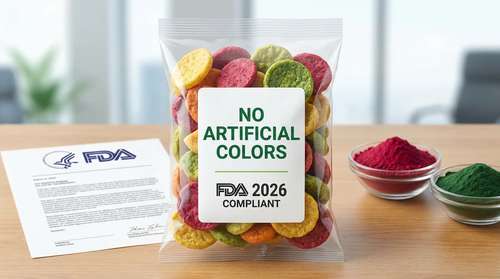
In a landmark decision that promises to reshape the American grocery landscape, the U.S. Food and Drug Administration (FDA) has officially updated its labeling guidelines regarding color additives. As of February 2026, food manufacturers are now permitted to use "No Artificial Colors" claims on product packaging even if they contain naturally derived pigments such as beetroot red or spirulina extract. This significant policy shift marks a departure from previous strict regulations and aligns with the agency's broader initiative to accelerate the removal of petroleum-based food dyes from the supply chain.
The Shift in FDA Labeling Rules 2026
For decades, the FDA's stance on "artificial" coloring was rigid. Under the old framework, a product could generally only bear a "No Artificial Colors" claim if it contained no added color whatsoever. This meant that even if a company used wholesome, plant-based ingredients like turmeric or beet juice to enhance appearance, they were often prohibited from making "no artificial color" claims because, technically, any added color was considered "artificial" to the food item itself.
The FDA labeling rules 2026 update changes this paradigm. The agency has issued guidance clarifying that it will exercise enforcement discretion, allowing companies to use voluntary claims like "No artificial colors," "No artificial preservatives," or "Made without artificial food colors" provided the products do not contain any petroleum-based synthetic dyes (such as Red No. 40, Yellow No. 5, or Blue No. 1). This move is designed to reward manufacturers for formulating with cleaner, natural alternatives and to provide clarity to health-conscious consumers.
Petroleum-Based Food Dyes Ban and Phase-Out
This labeling overhaul is not an isolated event but part of a comprehensive FDA synthetic dye crackdown. Following the announcement in April 2025 to phase out petroleum-based synthetic dyes, the industry has been racing to reformulate. The new labeling flexibility serves as an incentive for brands to meet the aggressive targets set by federal health officials.
The context for this regulatory shift includes the petroleum-based food dyes ban that has been gaining momentum across individual states like California and is now being adopted at the federal level. By differentiating clearly between "certified" (synthetic) colors and "exempt" (natural) colors on the front of the package, the FDA is helping shoppers distinguish between products containing coal-tar derivatives and those colored with fruit and vegetable extracts.
New Approvals: Beetroot Red and Spirulina
To support this transition, the FDA has simultaneously expanded the toolkit available to food scientists. Coinciding with the labeling update, the agency approved beetroot red as a color additive exempt from certification, granting a petition filed by Phytolon Ltd. Additionally, the FDA expanded the authorized uses of spirulina extract, a natural blue pigment derived from algae, following a petition by GNT USA.
These natural food coloring alternatives are critical for maintaining the visual appeal of products like yogurts, cereals, and confections without relying on the "Southampton Six" dyes that have been linked to behavioral issues in children. The approval of beetroot red, in particular, offers a stable, vibrant alternative to the controversial Red No. 40.
Impact on Clean Label Nutrition Trends
The consumer demand for transparency is at an all-time high, driving clean label nutrition trends that prioritize recognizable ingredients. Shoppers who previously had to scan fine print for "Red 40" or "Yellow 6" can now rely more confidently on front-of-pack claims. This regulatory update effectively bridges the gap between strict legal definitions and common consumer understanding—where "artificial" is understood to mean "synthetic chemical" rather than "added plant juice."
Industry experts predict this will trigger a wave of packaging updates throughout 2026. "This is a game-changer for the natural foods sector," says food safety analyst Dr. Elena Rostova. "Brands that have been using expensive natural colors but couldn't brag about it can finally take credit, while the food additive safety regulations continue to tighten around synthetic competitors."
What Consumers Need to Know
While the new rules simplify shopping, it is still wise to read the ingredient list. The FDA labeling rules 2026 allow for "No Artificial Colors" on products with natural additives, but those additives must still be safe and suitable. Consumers should look for specific sources listed in the ingredients, such as "colored with beet juice" or "turmeric extract."
As the petroleum-based food dyes ban timeline progresses toward full implementation, the grocery aisles will likely become more vibrant with natural hues. This update represents a significant victory for public health advocates who have long argued that the regulatory definition of "artificial" was outdated and hindered the adoption of safer, plant-based ingredients.