In a dramatic cultural pivot that marks the end of the "iPad kid" era, parents across America are radically redesigning family life to prioritize tactile, real-world experiences over digital distraction. Pinterest's inaugural Parenting Trend Report for 2026 reveals a staggering shift in priorities, with search data uncovering a massive movement toward "analog" childhoods. This offline childhood movement is not merely about confiscating tablets; it is a proactive reconstruction of play, learning, and connection, driven by a collective desire to combat rising childhood anxiety and reclaim the developmental benefits of sensory engagement.
The Numbers Behind the 'Offline Childhood' Revolution
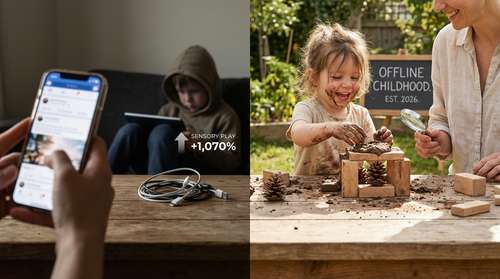
The data from Pinterest's 2026 report paints a clear picture of this parenting pivot. Search traffic for sensory play ideas for kids has exploded by an unprecedented 1,070%, signaling that parents are actively seeking ways to engage their children's developing nervous systems through touch, texture, and physical manipulation rather than passive screen consumption. Simultaneously, searches for DIY playground projects have surged by 630%, indicating a renaissance in backyard engineering where families are building physical environments that demand movement and risk-taking.
"Families are thoughtfully designing childhoods rooted in creativity, intention, and meaningful experiences," explains Sydney Stanback, Pinterest’s Global Trends and Insights Lead. This isn't just about nostalgia; it's a calculated response to modern challenges. Further emphasizing this trend, searches for "screen-free activities" have doubled, rising 200% year-over-year, while interest in a "no phone summer" has jumped by 340%. These figures suggest that 2026 parenting trends are defined by a deliberate decoupling from the digital tether that has defined the last decade of child-rearing.
Combating Anxiety Through Analog Parenting Benefits
The drive toward analog parenting benefits is deeply rooted in concerns over mental health. Recent research, including long-term studies like the GUSTO cohort analysis, has established a troubling link between high infant screen time and the development of anxiety symptoms in adolescence. Parents are responding to this evidence with action. Dr. Brian Razzino, a clinical psychologist, notes that these search trends reflect a parental desire to build core psychological capacities—resilience, curiosity, and self-regulation—that simply cannot be nurtured through a screen.
By prioritizing nature-based learning for families, parents are leveraging the outdoors as a co-regulator for their children's emotions. Searches for "outdoor learning" have climbed 65%, while "educational activities for kids" (often implying hands-on, non-digital formats) are up 280%. This shift acknowledges that the antidote to a high-anxiety, high-stimulation digital world is the grounding, slow-paced rhythm of the physical world. The "slow motherhood" trend, which has seen a 310% increase in interest, further underscores this collective exhale, moving away from hyper-scheduled, tech-optimized parenting toward presence and connection.
The 'Throwback Kid': Nostalgia as a Blueprint
Interestingly, this forward-looking movement is borrowing heavily from the past. The "Throwback Kid" trend identifies a surge in parents looking to recreate the texture of their own 1990s and early 2000s childhoods. This isn't just aesthetic; it's functional. By removing the constant surveillance and dopamine loops of modern tech, parents are trying to gift their children the same "boring," unstructured playtime that fostered their own creativity.
Practical Ways Parents Are Pivoting
- Sensory Bins & Mud Kitchens: The 1,070% rise in sensory play is manifesting in homes as dedicated "messy zones" where kids engage with water, sand, and homemade dough.
- Backyard Builds: The DIY playground projects trend sees parents constructing climbing walls, sensory pathways, and ninja warrior courses at home to ensure physical exhaustion—a key component of healthy sleep and mood regulation.
- Intentional Traditions: With "family traditions ideas" up 200%, there is a renewed focus on rituals that require face-to-face interaction, such as board game nights, family gardening, and cooking together.
Screen-Smart, Not Anti-Tech
It is crucial to note that this Pinterest parenting report 2026 does not signal a total rejection of technology, but rather a maturation in how it is used. The goal is to raise "screen-smart" kids who view technology as a tool rather than a default state of being. The "digital detox aesthetic" (up 95%) represents a visual and lifestyle choice to center the home around books, art, and conversation spaces rather than the television.
As we move deeper into 2026, the offline childhood movement appears to be less of a fleeting fad and more of a permanent course correction. Parents are effectively saying that while the digital world is unavoidable, the foundation of a healthy childhood remains stubbornly, wonderfully analog.