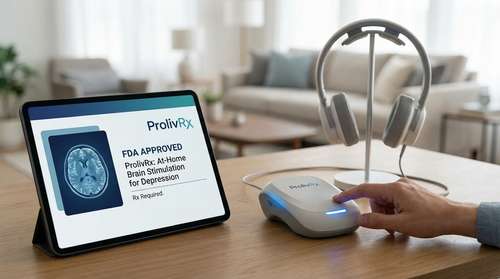
In a pivotal development for mental health care, the U.S. Food and Drug Administration (FDA) has officially cleared ProlivRx, a groundbreaking physician-directed neuromodulation device designed for at-home use. Developed by Neurolief, this prescription-only headset offers a new lifeline for adults battling Major Depressive Disorder (MDD) who have not found relief with traditional antidepressants. As the medical community digests the implications of this recent approval, highlighted in market reports this week, ProlivRx stands out as the first device to deliver external Combined Occipital and Trigeminal Afferent Stimulation (eCOT-AS) outside of a clinic setting.
A New Era for Treatment-Resistant Depression
The approval of ProlivRx marks a significant shift in how treatment-resistant depression is managed. Historically, patients who failed to respond to medication had limited options, often requiring daily visits to a clinic for Transcranial Magnetic Stimulation (TMS) or more invasive procedures. ProlivRx bridges this gap by bringing hospital-grade neuromodulation directly into the patient's home.
"Until now, patients struggling with difficult-to-treat depression did not have a non-pharmacological therapy option that could be administered at home," stated Dr. Linda Carpenter, co-lead investigator of the pivotal MOOD clinical trial. By allowing patients to self-administer treatment under remote physician supervision, the device addresses critical barriers to care, such as geographic distance from specialty clinics and scheduling conflicts.
How ProlivRx Works: The Science of eCOT-AS
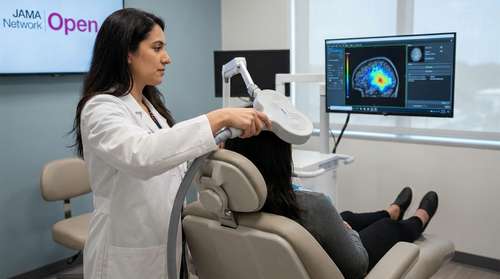
Unlike other recent entrants to the market that use transcranial direct current stimulation (tDCS), ProlivRx utilizes a unique technology known as eCOT-AS. The device features a headset that stimulates the occipital and trigeminal nerve endings located on the scalp and forehead. These nerves act as a direct conduit to the brainstem and higher brain centers involved in mood regulation, such as the limbic system and the dorsolateral prefrontal cortex.
This mechanism allows for deep brain modulation without passing electrical current directly through the skull or brain tissue, minimizing side effects. The treatment is non-invasive and has been described by trial participants as a gentle tingling sensation. Users typically wear the headset for short daily sessions, guided by a smartphone app that tracks adherence and symptoms for their prescribing doctor.
Clinical Data: Success Where Meds Failed
The FDA's decision was underpinned by compelling data from the randomized, controlled MOOD study. The trial evaluated the safety and efficacy of ProlivRx in adults with MDD who had failed to achieve satisfactory improvement from at least one antidepressant medication. Key findings that supported the clearance include:
- Higher Remission Rates: Patients using ProlivRx demonstrated a statistically significant improvement in remission rates compared to the sham (placebo) group (21.3% vs. 6%).
- Symptom Reduction: Participants experienced a substantial reduction in depressive symptoms over the 8-week treatment period.
- Safety Profile: The device was well-tolerated, with no systemic adverse events reported. The most common side effect was mild, transient headache or skin irritation at the stimulation site.
Comparison: ProlivRx vs. Other At-Home Devices
The mental health technology landscape is rapidly evolving. While Flow Neuroscience's FL-100 headset received FDA clearance in late 2025 for tDCS, ProlivRx occupies a unique niche. It is specifically indicated as an adjunctive treatment for patients who are already on medication but not seeing results, positioning it as a powerful "next step" tool for psychiatrists.
Key Differentiators
ProlivRx is currently the only at-home device utilizing the eCOT-AS dual-nerve pathway. Its physician-directed model ensures that while the patient enjoys the convenience of home use, they remain closely tethered to their healthcare provider. This hybrid approach aims to combine the safety of clinical oversight with the accessibility of consumer technology.
Availability and Next Steps
Following the approval, Neurolief has announced plans for a strategic rollout across the United States in early 2026. The initial launch will focus on partnering with major health systems and integrated care networks to ensure prescribers are trained on the new technology. While specific pricing details are yet to be finalized, the company is actively working with insurance providers to establish coverage pathways, aiming to make this new depression treatment for 2026 accessible to the millions of Americans suffering from MDD.
For patients and families navigating the frustration of failed medication trials, ProlivRx represents more than just a new gadget—it offers a scientifically validated path to recovery, right from the comfort of their living room.