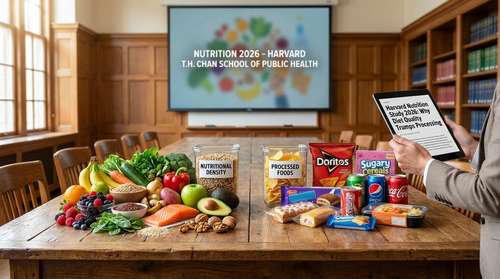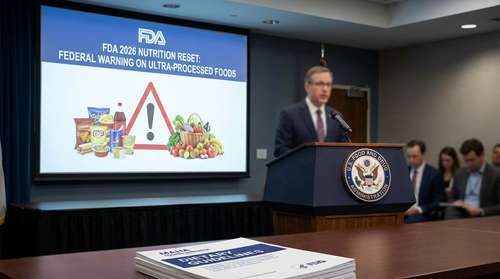
In a historic shift for American food policy, the Food and Drug Administration (FDA) has officially triggered its 2026 'Nutrition Reset,' marking the most aggressive federal intervention in dietary health in decades. As of February 2, 2026, the agency has solidified its new regulatory framework, which includes the first-ever direct federal warning against ultra-processed foods (UPFs) and a definitive timeline for the removal of synthetic dyes. This sweeping overhaul, driven by the 'Make America Healthy Again' (MAHA) initiative, signals the end of the grain-heavy 'MyPlate' era and prioritizes a return to whole-food nutrition to combat the nation's escalating chronic disease crisis.
The End of Ultra-Processed Foods? FDA Issues Historic Warning
For the first time in U.S. history, federal dietary guidelines officially classify ultra-processed foods as a direct threat to public health. The FDA's new stance moves beyond vague advice, explicitly linking UPFs to metabolic dysfunction, obesity, and type 2 diabetes. This policy shift mandates that federal nutrition programs dramatically reduce reliance on industrial formulations—foods containing high fructose corn syrup, seed oils, and artificial preservatives—in favor of nutrient-dense whole foods.
"This change isn't cosmetic, it's corrective," officials stated regarding the 2026 mandate. The agency is currently finalizing a uniform federal definition for UPFs, which will serve as the legal basis for future regulations. This definition is expected to close loopholes that allowed highly processed grain products to be marketed as "healthy" simply because they were fortified with isolated vitamins. The new guidelines prioritize biological outcomes over caloric density, encouraging Americans to consume high-quality proteins, full-fat dairy, and fresh produce.
Food Dye Ban 2026: Phasing Out Petroleum-Based Additives
One of the most tangible aspects of the FDA 2026 nutrition reset is the accelerated phase-out of petroleum-based food dyes. Following growing toxicological evidence and consumer demand, the FDA is working with manufacturers to eliminate six pervasive synthetic dyes—Red 40, Yellow 5, Yellow 6, Blue 1, Blue 2, and Green 3—from the food supply. While the complete elimination target is set for 2027, significant compliance benchmarks are enforced starting this year.
The agency has warned that products containing these additives will face stricter scrutiny and eventual prohibition. This move aligns the U.S. with European standards, where many of these dyes have long been banned or required warning labels. Major food corporations are already reformulating product lines to utilize natural colorants derived from beets, carrots, and spirulina to avoid the looming regulatory cliff.
School Lunch Programs Pivot to 'Scratch Cooking'
Perhaps the most ambitious leg of the MAHA health initiative is the transformation of the National School Lunch Program. The 2026 guidelines effectively dismantle the "heat-and-serve" model that has dominated school cafeterias for decades. The FDA and USDA have issued a joint mandate requiring schools to transition toward "scratch cooking," where meals are prepared on-site using raw, whole ingredients.
Whole Foods Over Refined Carbs
The new standards reject the previous administration's limit on saturated fats in favor of a more nuanced approach that embraces whole food matrices. Schools are now encouraged to serve:
- Whole Proteins: Unprocessed meats, eggs, and seafood instead of breaded nuggets or processed patties.
- Full-Fat Dairy: Reinstating whole milk and removing restrictions on natural animal fats, which new guidelines cite as essential for cognitive development.
- Fresh Produce: Mandatory minimums for fresh, non-starchy vegetables at every meal.
New Front-of-Package Labeling Coming Spring 2026
To empower consumers to navigate this new landscape, the FDA is set to finalize its new front-of-package labeling rule this spring. This system will replace the confusing "Nutrition Facts" panel on the back of boxes with a clear, interpretive symbol on the front. The new labels will instantly identify products high in added sugars, sodium, and saturated fat, while also highlighting those that meet the new criteria for "nutrient-dense."
This initiative aims to cut through marketing noise, allowing shoppers to identify UPF health risks at a glance. By standardizing how "healthy" is defined on packaging, the FDA intends to eliminate the "health halo" effect that has long protected sugary cereals and processed snacks from consumer scrutiny.