Federal health officials unleashed a seismic shift in national nutrition policy on January 7, 2026, releasing the 2025-2030 Dietary Guidelines for Americans with a bold new directive: eat more protein and ditch processed foods. The updated framework, championed by HHS Secretary Robert F Kennedy Jr nutrition policy architects, recommends nearly doubling the average adult's protein intake to a target of 1.2 to 1.6 grams per kilogram of body weight. While the administration frames this as a return to "real food" to combat metabolic disease, leading nutrition scientists are raising red flags, warning that the aggressive push for high-fat animal products contradicts decades of cardiovascular research.
The New Protein Mandate: A Radical Departure
For decades, the Recommended Dietary Allowance (RDA) for protein sat modestly at 0.8 grams per kilogram of body weight. The new protein intake recommendations 2026 effectively shatter that ceiling, urging Americans to consume significantly more. Under the new guidelines, a 150-pound adult is now advised to eat between 81 and 109 grams of protein daily, a sharp increase from the previous standard of roughly 54 grams.
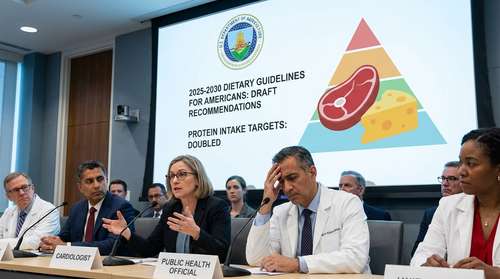
This shift is visually represented in a controversial new USDA food pyramid—often described by officials as an "inverted pyramid"—which places protein, healthy fats, and vegetables at the top hierarchy of importance. Unlike previous iterations that emphasized lean meats, the new text explicitly validates red meat, eggs, and poultry alongside plant-based options. Officials argue this high-protein approach is essential to reverse the nation's obesity crisis and improve metabolic health, positioning the guidelines as a tool to "Make America Healthy Again."
Saturated Fat Confusion: Butter, Beef Tallow, and Mixed Messages
Perhaps the most contentious element of the new guidelines is the rehabilitation of saturated fats. The text encourages the consumption of full-fat dairy and even lists butter and beef tallow as acceptable cooking fats—a direct challenge to the "low-fat" dogma of the last 40 years. However, this has created what experts call a "mathematical tightrope."
Despite promoting high-fat animal products, the guidelines curiously retain the long-standing cap on saturated fat, limiting it to less than 10% of total daily calories. Dr. Frank Hu, chair of the Department of Nutrition at the Harvard T.H. Chan School of Public Health, noted the inherent contradiction, stating that prioritizing steak and full-fat milk makes it "mathematically impossible" for most people to stay within safe saturated fat limits. This animal protein vs plant protein debate has left many health professionals confused about how to counsel patients without increasing their risk of heart disease.
The Return of 'Real Food'
Proponents argue that the source of the fat matters more than the fat itself. The guidelines differentiate between fats found in whole foods and those in processed products. The administration suggests that natural fats from animals are metabolically superior to industrial seed oils, though this claim remains hotly debated within the scientific community. The shift effectively gives a federal stamp of approval to metabolic health diet trends like keto and paleo, which have long been popular among the public but skepticism among dietitians.
A War on Ultra-Processed Foods
If there is one area of consensus between the new administration and traditional nutritionists, it is the crackdown on junk food. For the first time, the guidelines issue a stark, specific warning against "highly processed foods," defining them as packaged products laden with refined carbohydrates, chemical additives, and excess sodium. This aligns with growing ultra-processed food warnings that link these products to diabetes and cancer.
The guidelines take a zero-tolerance approach to added sugars for young children, recommending absolutely no added sugar for anyone under the age of four. For adults, the message is to aggressively replace packaged snacks with whole fruits and vegetables. Public health advocates have largely applauded this specific section, viewing it as a necessary step to curb the dominance of industrial food manufacturers in the American diet.
Experts Warn of Long-Term Health Risks
Despite the praise for cutting sugar, the overarching reaction from the medical establishment has been one of alarm. The American Heart Association released a statement cautioning that the unrestricted promotion of red meat and full-fat dairy could reverse decades of progress in fighting cardiovascular disease. They urge the public to prioritize plant-based proteins, seafood, and lean meats, even if the new federal policy suggests otherwise.
Critics argue that the 2025-2030 Dietary Guidelines for Americans rely too heavily on ideology rather than settled science. By bypassing standard scientific review processes in favor of a new "Scientific Foundation" committee, the administration has drawn accusations of politicizing nutrition. Researchers from institutions like Tufts and Stanford fear that while the "real food" slogan is catchy, the specific nutritional advice could lead to a spike in cholesterol levels and heart attacks over the coming decade.
As these new guidelines trickle down into school lunch programs and military menus, the true impact of this high-protein experiment remains to be seen. for now, Americans are left to navigate a complex landscape where federal advice and medical consensus seem to be moving in opposite directions.