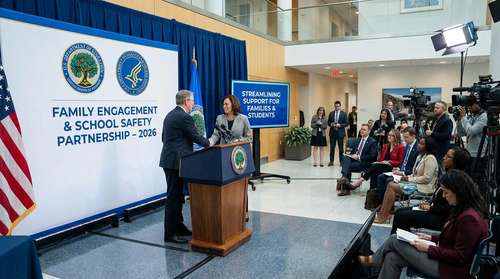
In a historic shift for federal education policy, the U.S. Department of Education (ED) and the Department of Health and Human Services (HHS) have announced a sweeping interagency partnership designed to overhaul family engagement programs and school safety protocols. Announced on February 23, 2026, by Education Secretary Linda McMahon and HHS Secretary Robert F. Kennedy Jr., the initiative marks a significant step in the administration's broader strategy to streamline federal oversight and consolidate student wellness resources.
Historic Partnership to Streamline Federal Support
The new agreement, which officials are calling a "practical step toward greater efficiency," effectively transfers the administration of several key grant programs from the Department of Education to HHS. This move aligns with the administration's long-stated goal to "break up the federal education bureaucracy" and return more control to state and local authorities. By leveraging HHS’s extensive infrastructure for emergency response and family support, the partnership aims to create a more unified federal strategy for family engagement programs 2026 and beyond.
"As we continue to return education to the states, our new partnerships with HHS represent a meaningful improvement for American families," Secretary McMahon stated during the announcement. "We are reducing administrative burdens and ensuring that resources for safety and wellness are managed by the experts best equipped to handle them."
A New Era for School Safety and Student Wellness
Under the terms of the agreement, HHS will take a leading role in administering critical initiatives, including the Project SERV federal funding (School Emergency Response to Violence) and the Statewide Family Engagement Centers. This shift is intended to treat school safety not just as an educational issue, but as a broader public health and community wellness priority.
HHS and Department of Education partnership officials emphasized that this consolidation will allow for faster deployment of resources during crises. "Nothing matters more than the safety of our children," said Secretary Robert F. Kennedy Jr. "HHS brings decades of frontline experience responding to disasters, and we are putting that expertise directly into our schools. We will equip communities with the tools they need to protect students and support teachers without the red tape of a bloated bureaucracy."
RFK Jr.'s Health Strategy in Schools
The move also signals the deeper integration of the Robert F. Kennedy Jr HHS health strategy into the nation's school systems. By moving programs like Ready to Learn and Full-Service Community Schools under the HHS umbrella, the administration aims to focus on a holistic approach to student development that prioritizes physical health, nutrition, and mental well-being alongside academic achievement.
Kennedy has long advocated for a shift in how institutions approach student mental health resources, favoring community-based and preventative models over what he has termed "over-medicalization." This partnership provides the mechanism to align federal school support dollars with that vision, potentially reshaping how schools address behavioral health and trauma recovery in the coming years.
Impact on Local Districts and Families
For school districts across the country, this transition promises both opportunities and immediate logistical changes. The consolidation of federal family support policy means that district leaders may soon report to HHS regional offices for grants that were previously managed by ED. The administration argues this will simplify the grant application process, allowing districts to access funds for both health and education needs through a single stream.
"The goal is to empower local communities," a senior ED official noted. "By combining forces, we are ensuring that school safety and student wellness are not siloed in Washington but are responsive to the actual needs of parents and educators on the ground."
Reactions and Future Outlook
The announcement has drawn mixed reactions from education stakeholders. While some state superintendents have welcomed the promise of reduced federal interference and streamlined funding, critics, including teacher unions and some policy advocates, worry that shifting oversight could dilute the educational focus of these programs. Concerns have also been raised about the potential for confusion during the transition period as responsibilities are handed over.
Despite the debate, the administration is moving quickly to implement these changes before the start of the 2026-2027 school year. As the HHS and Department of Education partnership takes effect, schools and families can expect to see new guidelines and grant competitions rolling out in the coming months, fundamentally altering the landscape of federal support for American education.