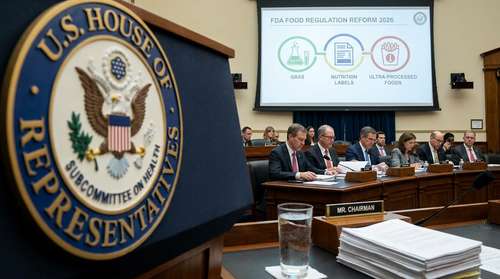
The U.S. House Subcommittee on Health convened today for a landmark legislative session, putting FDA food regulation reform 2026 squarely in the national spotlight. Billed as a critical response to skyrocketing diet-related illnesses, the highly anticipated April 29 hearing examines a sweeping slate of over half a dozen bills targeting chemical additives, inaccurate nutrition facts, and regulatory loopholes. As federal lawmakers weigh aggressive new oversight standards, this legislative push marks the most significant bipartisan effort in decades to reshape how the Food and Drug Administration regulates the contents of American grocery store shelves. Chairmen Brett Guthrie and Morgan Griffith opened the session by emphasizing that diet-driven ailments are the leading driver of health care spending, signaling a clear mandate for urgent policy intervention.
The FRESH Act and the Battle Over GRAS Reform
A central and highly controversial focus of today’s proceedings is the FDA Review and Evaluation for Safe, Healthy and Affordable Foods Act, widely known as the FRESH Act. Introduced by Rep. Kat Cammack, this proposed FRESH Act nutrition legislation aims to overhaul the contentious "Generally Recognized as Safe" (GRAS) pathway. For years, the GRAS framework has allowed food manufacturers to self-affirm the safety of new ingredients without submitting them for formal FDA pre-market review, a process critics frequently label a massive regulatory blind spot.
The legislation seeks to implement sweeping GRAS reform food safety protocols by mandating a formalized notification system and creating a public registry for all newly introduced food substances. However, the bill is facing fierce, immediate opposition from consumer watchdogs and food safety advocates. In statements released just yesterday, organizations like Consumer Reports and the Center for Science in the Public Interest (CSPI) issued stark warnings to the committee. They argue the legislation contains industry-backed preemption clauses that would effectively block individual states from enacting stricter chemical bans. With states like New York recently passing robust additive restrictions, critics warn that federal preemption would roll back vital local protections in favor of a watered-down national standard.
Closing the Margin of Error on Nutrition Labels
Another pivotal measure drawing broad support today is the Ensuring Consistency in Nutrition Labels Act (H.R. 7122). Introduced by Representatives Greg Steube and Darren Soto, the bipartisan bill addresses a glaring gap in healthy food labeling laws. Under current federal guidelines, the calorie counts, sugar levels, and sodium amounts listed on the back of a product package can legally deviate by up to 20 percent from the actual physical contents.
The new legislation would drastically slash that permissible margin of error down to just 5 percent, classifying any product that exceeds this strict threshold as "misbranded" under federal law. If enacted, the Department of Health and Human Services would have a 60-day window to update FDA regulations and enforce the newly tightened parameters. Lawmakers emphasized that this 20 percent allowance poses severe, immediate risks for Americans managing specific medical conditions, such as diabetes or severe sodium sensitivities. By mandating stricter accuracy alongside a renewed push for standardized front-of-package nutrition labels, the committee hopes to rebuild consumer trust. Industry groups, including the Honest Food Council, have already publicly backed the bill, calling the old 20 percent threshold completely outdated for today's transparency expectations.
Targeting Ultra-Processed Products and Chemical Additives
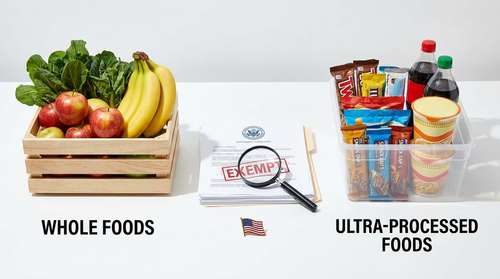
The legislative momentum fueling today's session is heavily influenced by the broader "Make America Healthy Again" (MAHA) agenda, which has elevated chronic disease prevention food policy to the top tier of national healthcare priorities. The intense ultra-processed foods FDA hearing discussions underscore a growing bipartisan consensus that structural changes are required to combat the modern diet's detrimental impact on public health. Beyond GRAS and labeling, lawmakers are evaluating the Food Chemical Reassessment Act of 2025 and the Baby Food Safety Act of 2026, which mandate enforceable limits on heavy metals in infant foods and require systematic safety reviews of existing market chemicals.
Lawmakers are scrutinizing how these bills align with the FDA’s recently announced 2026 Human Foods Program deliverables. Agency officials have already committed to developing a standard federal definition for ultra-processed foods and replacing petroleum-based food dyes with natural alternatives over the next two years. As the Subcommittee debates these sweeping proposals this afternoon, the resulting regulatory framework could fundamentally alter manufacturing practices, force widespread product reformulations, and permanently redefine the standard of American food safety.