For years, cancer patients undergoing treatment have reported a frustrating, foggy mental state commonly known as "chemo brain." From misplacing keys to struggling with complex work tasks, this cognitive decline adds a profound layer of difficulty to an already grueling process. Now, a groundbreaking nationwide chemo brain exercise study offers a highly accessible solution.
According to new JNCCN research March 2026, engaging in a structured, home-based physical activity regimen significantly preserves memory and mental sharpness in patients receiving chemotherapy. The multi-center Phase III clinical trial, published today, proves that specialized exercise can serve as a potent tool against treatment-related cognitive decline.
The EXCAP Protocol: Redefining Oncology Fitness Programs
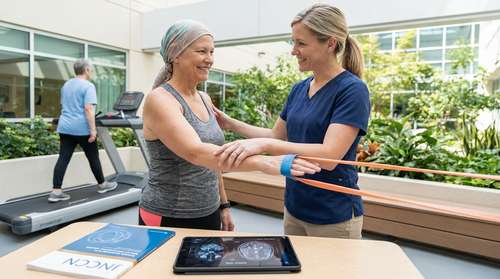
The study randomized patients across the country to either receive their standard chemotherapy or pair their treatment with the Exercise for Cancer Patients (EXCAP) prescription. Developed as an accessible, home-based program, EXCAP relies on individually tailored walking plans and resistance band training for cancer patients.
Participants in the exercise group received instructions using a teach-back method to ensure proper technique and safety. They tracked their progress using pedometers and daily activity diaries. By the end of the trial, those following the structured EXCAP regimen reported substantially less mental fatigue, fewer memory disruptions, and a lower perceived cognitive decline compared to the control group.
In stark contrast, patients undergoing standard care without an exercise plan reduced their daily walking by a staggering 53%. This highlights a growing consensus in modern medicine: prolonged physical inactivity during treatment may actually exacerbate symptoms, whereas oncology fitness programs can actively protect neurological health.
The "Sweet Spot" for Fitness for Chemotherapy Recovery
One of the most compelling discoveries from the trial was the correlation between treatment schedules and physical outcomes. Researchers observed that patients on a two-week chemotherapy cycle experienced the most significant cognitive protection from the EXCAP routine. The benefits were not as pronounced for those on three- or four-week cycles.
Dr. Lindsay L. Peterson, a medical oncologist at Washington University School of Medicine in St. Louis who was not directly involved in the study, noted that the two-week cycle might represent a physiological "sweet spot." At this interval, patients appear to recover just enough to consistently participate in the exercise regimen without becoming overwhelmed by the physical demands of their treatment.
"This means that a safe, simple exercise program could be an important part of supportive care for people going through chemotherapy," stated co-lead author Karen M. Mustian, PhD, MPH, of the Wilmot Cancer Institute at the University of Rochester Medical Center. Mustian emphasized that healthcare providers should routinely educate patients on these benefits and integrate fitness for chemotherapy recovery directly into their survivorship care plans.
Walking for Mental Clarity During Chemo: Practical Takeaways
For many newly diagnosed patients, the idea of working out while battling nausea and extreme fatigue feels impossible. However, the JNCCN findings reinforce that high-intensity workouts are not required to reap neurological benefits. The EXCAP model focuses on low-barrier, sustainable movements.
Walking for mental clarity during chemo has emerged as a cornerstone of this approach. By simply maintaining a daily step count and performing basic resistance movements, patients stimulate blood flow and reduce the systemic inflammation often linked to neurotoxic side effects. The act of safely moving the body not only protects physical strength but also actively shields the brain's neural pathways from the toxic stress of chemotherapy.
If you or a loved one are preparing for treatment, consider these actionable steps backed by the latest trial data:
- Start early: Begin conditioning before the first cycle of treatment to establish a baseline habit.
- Track your steps: Use a simple pedometer or smartphone to monitor daily walking, aiming for consistency rather than distance.
- Incorporate resistance: Use light therapeutic bands to maintain muscle mass safely at home.
- Consult your care team: Always get medical clearance before starting exercise for cognitive impairment to ensure the routine aligns safely with your specific treatment plan.
A New Standard of Care in Cancer Survivorship
The implications of the March 12, 2026 findings extend far beyond physical fitness. They validate the lived experiences of countless survivors who have long advocated for better symptom management.
As the National Comprehensive Cancer Network continues to update its guidelines for survivorship, structured physical activity is no longer viewed as merely optional or complementary. It is becoming an essential therapeutic intervention. These accessible, low-cost interventions present a powerful opportunity to support long-term survivorship. By prioritizing home-based movement, the medical community is empowering patients to reclaim their mental resilience, ensuring that treating the tumor doesn't have to mean sacrificing cognitive clarity.
Ultimately, this latest clinical milestone proves that the most sophisticated treatments in oncology work best when paired with the fundamental healing properties of human movement. For patients navigating the daunting journey of chemotherapy, a pair of walking shoes and a simple resistance band might just be their most valuable prescription.