It is incredibly easy to grab a quick snack or pre-packaged meal when you are navigating a busy schedule. But a groundbreaking new study reveals that convenience comes at a severe cost. If you rely heavily on the drive-thru or the freezer aisle, the ultra-processed foods heart risk is far more dangerous than the medical community previously thought.
The Alarming Reality of Processed Food Cardiovascular Health
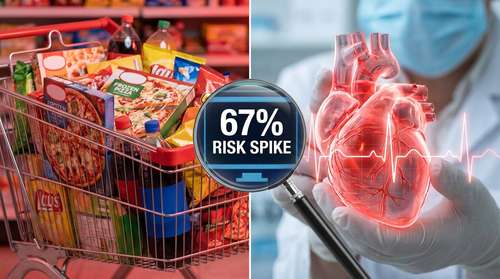
Published this week in the Journal of the American College of Cardiology and presented at the ACC.26 Annual Scientific Session, a landmark 12-year longitudinal study has brought the dangers of modern diets into sharp focus. Researchers discovered that consuming more than nine servings of ultra-processed foods a day increases the risk of a major cardiac event by a staggering 67%.
What is perhaps more frightening is that you do not need to eat nine servings to see a negative impact. The researchers found that the risk scales upward in a linear fashion. For every single additional serving of ultra-processed food consumed daily, your risk of adverse events—such as a heart attack, stroke, or cardiovascular-related death—climbs by 5.1%. Dr. Amier Haidar, a cardiology fellow at McGovern Medical School at UTHealth Houston and the study's lead author, emphasized that the danger persists regardless of overall diet quality or total calorie intake.
Inside the UTHealth Houston Nutrition Study 2026
To truly understand how our diets are failing us, we have to look at the data. The UTHealth Houston nutrition study 2026 analyzed records from 6,814 American adults enrolled in the Multi-Ethnic Study of Atherosclerosis (MESA). These participants ranged in age from 45 to 84 and had no known cardiovascular disease when the study began. Over the 12-year period, researchers tracked their dietary habits using the NOVA classification system, which categorizes food by its level of industrial processing.
The findings laid bare a troubling racial disparity in how these foods affect different populations. While the overall risk of a cardiac event increased by 5.1% per daily serving, the spike was heavily amplified among Black Americans. In this demographic, each extra serving drove the risk up by 6.1%, compared to a 3.2% increase for non-Black individuals. Researchers attribute this widening gap to systemic issues, noting that minority-targeted marketing and neighborhood food deserts often trap residents in environments where whole, fresh foods are scarce and expensive. Dr. Haidar pointed out that some disadvantaged populations are consuming up to 7 to 10 servings of these items per day.
Defining the Culprits: The Impact of Processed Meat on Heart Health
When public health officials talk about the impact of processed meat on heart health, they are looking directly at the chemical additives used to prolong shelf life. Ultra-processed foods are stripped of their original nutritional matrix and pumped full of added sugars, sodium, emulsifiers, and artificial preservatives. This category extends far beyond hot dogs and deli cuts. It includes frozen chicken nuggets, packaged snack cakes, sugary cereals, and sodas.
While the average person might assume a diet soda or a low-fat commercial protein bar is a healthy choice, these items undergo rigorous industrial processing. They lack the dietary fiber and natural micronutrients that protect the endothelial lining of our blood vessels. These items are engineered to be hyper-palatable, driving overconsumption and triggering inflammatory responses within the cardiovascular system.
How to Reduce Ultra-Processed Foods Daily
Given that the average American currently gets more than 50% of their daily calories from these highly altered products, making a sudden shift can feel overwhelming. However, learning how to reduce ultra-processed foods is entirely manageable if you start with small, deliberate swaps.
Begin by auditing your pantry. Trade out flavored, pre-sweetened yogurts for plain Greek yogurt flavored with fresh berries. Instead of reaching for a bag of industrially manufactured potato chips, snack on roasted nuts or air-popped popcorn. When it comes to proteins, swap out factory-formed deli meats for freshly roasted turkey or chicken breasts. Because the UTHealth Houston team observed that the average American eats about 4.5 servings of these foods daily, cutting even one or two items out of your routine can actively lower your cardiovascular risk by over 10%.
Essential Heart Disease Prevention Tips
Safeguarding your heart goes beyond just identifying the right foods. Integrating comprehensive heart disease prevention tips into your lifestyle is the best defense against long-term illness. First, get into the habit of reading ingredient labels. A good rule of thumb is that if a product contains multiple ingredients you would not find in a standard kitchen, it belongs in the ultra-processed category. Second, focus on building meals around whole, single-ingredient foods like vegetables, legumes, and lean proteins.
Finally, do not neglect routine medical screenings. High blood pressure, elevated cholesterol, and insulin resistance often develop silently alongside a highly processed diet. Working closely with your primary care physician to monitor these biomarkers ensures that your efforts in the kitchen translate to a longer, healthier life free from the shadow of entirely preventable cardiac events.