The era of celebrating 10,000 daily steps is officially over. Over the past 48 hours, a massive shift in the health tech sector has materialized as AI fitness wearables 2026 hit a critical mainstream tipping point. Leading this charge is the highly anticipated broader rollout of the Metabolic Momentum protocol, a revolutionary framework that measures whether your daily habits are actively fighting or accelerating the aging process. Unlike the basic activity trackers of the past decade, the latest screenless devices—most notably the new Hume Band—have introduced a sophisticated, clinical-grade approach to wellness. By analyzing complex physiological signals in real-time, these tools are fundamentally transforming how we approach everything from intense physical training to nightly cellular recovery.
Decoding the Metabolic Momentum Protocol
Most traditional fitness trackers simply report what your body did—how far you ran, how many calories you burned, or how many hours you lay in bed. The Metabolic Momentum protocol answers a far more complex and valuable question: how is your body adapting to the demands you place on it over time?
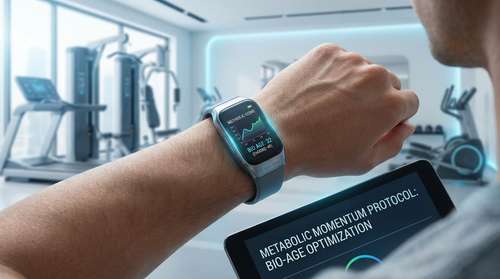
At its core, this advanced framework relies on continuous metabolic health tracking. Rather than offering isolated snapshots of your resting heart rate or estimated caloric burn, the protocol synthesizes daily physical strain, sleep debt accumulation, and cardiovascular resilience. It evaluates your baseline metabolic capacity to determine exactly how much available energy you possess on any given day. This creates a comprehensive, rolling momentum score, providing immediate feedback on whether your overall health trajectory is improving or actively declining.
The widespread adoption of this protocol in late March 2026 marks a defining turning point for the industry. Wearable technology now firmly shifts from retroactive data reporting to proactive health management. By interpreting the deeper meaning behind your vital signs, the protocol ensures your body's hidden stress signals are caught long before they lead to severe overtraining or chronic fatigue.
Breakthrough Hume Band Features Driving the Change
If there is a singular device responsible for bringing this framework to the masses this week, it is the Hume Health ecosystem. The core Hume Band features deliberately omit a digital display, favoring an unassuming, minimalist wristband that works silently in the background. This design choice is intentional, signaling a pivot away from the notification-heavy smartwatches that often contribute to the very stress they claim to monitor.
Beneath its sleek exterior lies a clinical-grade sensor array. Equipped with five advanced LEDs and four photodiodes, the band captures high-frequency data across several critical metrics:
- Heart Rate Variability (HRV) and continuous resting heart rate
- Blood oxygen saturation (SpO2) and minute-by-minute respiratory rate
- Continuous skin temperature trends that detect early signs of strain
- Highly accurate deep, light, and REM sleep stage mapping
Instead of bombarding you with text messages or calendar alerts, the band feeds this continuous stream of physiological data into a proprietary AI engine. It translates raw biological markers into an actionable daily plan, calculating your precise readiness. For users intensely focused on extending their healthspan, this screenless approach eliminates digital distraction while maximizing the precision of the data collected.
The New Standard for Biological Age Tracking
We are no longer guessing our internal wear and tear. One of the most disruptive applications of this new longevity fitness technology is real-time biological age tracking. The Hume system doesn't just assign you a static, generalized biological age based on a yearly blood test; it continuously monitors how your current lifestyle choices fluctuate that specific metric. Whether it is the impact of last night's poor sleep or today's intense sprint session, you instantly see the tangible, measurable impact of your daily habits on your cellular aging process.
The Rise of Bio-Syncing Workouts
Perhaps the most practical daily application of AI fitness wearables 2026 is the rapid emergence of bio-syncing workouts. Generic training plans that stubbornly dictate "leg day on Monday, cardio on Tuesday" regardless of how you feel are rapidly becoming obsolete.
Bio-syncing intelligently aligns your physical exertion with your body's immediate metabolic capacity and natural circadian rhythm. If the AI detects a sharp dip in your HRV coupled with an elevated skin temperature, it instantly recognizes systemic strain. The companion app will intervene, explicitly advising you to swap a planned high-intensity interval session for light mobility work or active recovery. Conversely, when your metabolic momentum is peaking and your nervous system is fully primed, the software signals that you have the physiological green light to push for a new personal record.
This dynamic scheduling ensures you only apply maximum physical strain when your body is fully equipped to adapt.
Future-Proofing Health with Longevity Fitness Technology
The massive surge in wearable adoption we are witnessing right now proves that modern consumers expect significantly more from their personal tech. The Metabolic Momentum protocol has successfully bridged the longstanding gap between elite sports science and everyday preventative healthcare.
We have permanently moved past the era of gamified step goals. By leveraging advanced metabolic health tracking, these intelligent devices catch declining recovery patterns and hidden physiological stressors long before they manifest as systemic burnout or illness. You finally possess a clear roadmap that connects how well you slept, how stressed your nervous system is, and exactly how hard you should push your physical limits today.
As we move deeper into 2026, the baseline for health technology has been elevated. Wearables are essential command centers for optimizing human longevity.