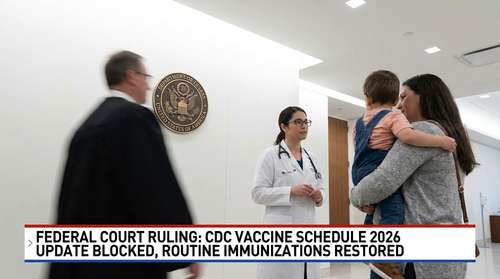
A federal judge has temporarily halted the highly controversial 2026 CDC vaccine schedule update, a mandate that would have slashed the number of universally recommended childhood shots from 17 down to 11. Siding with major medical organizations, the ruling struck a decisive blow against recent overhauls led by the RFK Jr health HHS administration. The decision effectively restores the previous comprehensive slate of routine childhood immunizations, bringing federal guidance back in line with long-standing scientific consensus and alleviating widespread confusion among parents and pediatricians.
Understanding the Federal Court Decision
U.S. District Court Judge Brian E. Murphy of Massachusetts issued the 45-page injunction on Monday, March 16. He described the government's abrupt January sweeping changes as a procedural failure that unlawfully bypassed the established Advisory Committee on Immunization Practices (ACIP). This decisive vaccine schedule court ruling immediately stays the federal effort to reclassify vaccines for diseases like Hepatitis B, rotavirus, and influenza from universal to 'shared clinical decision-making' or high-risk categories.
The conflict ignited in early January 2026 when the Department of Health and Human Services announced the initial 2026 CDC vaccine schedule update, modeling the narrower framework on Denmark's health policy. Health Secretary Robert F. Kennedy Jr. dismissed the independent members of the CDC's vaccine advisory panel, replacing them with appointees who critics argued lacked sufficient immunology expertise. By sidelining these independent experts, the government triggered a chaotic shift in pediatric health policy 2026 that left healthcare providers scrambling.
The Legal Argument Against the Overhaul
Six leading medical groups filed a lawsuit arguing the agency's overhaul was arbitrary, capricious, and dangerous for public health. In his ruling, Judge Murphy agreed that the department ignored established protocols and violated the Administrative Procedure Act. He noted that removing the expert panel members without rigorous screening and substituting unilateral mandates for routine childhood immunizations was an abandonment of critical technical knowledge. Richard Hughes IV, an attorney representing the medical coalition, celebrated the decision, stating that it discards baseless alterations and prevents further damage to national health frameworks.
Impact on the AAP Vaccine Recommendations 2026
Prior to this week's injunction, the medical community had already voiced fierce opposition to the CDC's reduced list. The AAP vaccine recommendations 2026 explicitly broke from the federal agency's guidance when published in late January. Refusing to endorse the cuts, the American Academy of Pediatrics continued to recommend all 18 routine vaccines. Pediatricians argued that removing universal recommendations for severe illnesses like rotavirus and meningococcal disease would leave millions of infants and adolescents vulnerable to entirely preventable outbreaks.
Dr. Andrew Racine, president of the AAP, praised the Monday injunction. He noted that maintaining a rigorous, evidence-based process is a critical step in restoring the scientific decision-making that has successfully kept children healthy for decades. The judicial pause bridges the troubling gap that had emerged between frontline pediatricians and federal health officials, providing immediate clinical clarity as families prepare for upcoming wellness visits.
Protecting the Most Vulnerable
One of the primary contentions regarding the abbreviated schedule was the shifting of the COVID-19 and influenza vaccines away from universal status. The AAP and infectious disease experts maintained that young children under two years of age are at high risk for severe respiratory complications based on age alone. The court's intervention ensures that pediatric clinics can continue administering these vital shots without battling conflicting federal guidelines.
What This Means for Insurance Coverage for Childhood Vaccines
A central anxiety for parents during the initial January overhaul was the financial implication of the cuts. Families worried that paying for 'non-recommended' shots would suddenly fall on them. With the previous ACIP guidelines legally restored, insurance coverage for childhood vaccines remains fully protected. The Affordable Care Act directly links mandated, cost-free preventive services to the recommendations issued by the official CDC advisory committee.
State public health departments that tie their local school entry requirements directly to federal guidelines are also breathing a sigh of relief. The ruling prevents localized coverage gaps and ensures that pharmacists and primary care doctors can continue administering vaccines without worrying about sudden billing rejections, disrupted supply chains, or liability issues.
Looking Ahead: The Future of Immunization Policy
The Department of Health and Human Services has already signaled its intent to fight the injunction. An agency spokesperson confirmed they expect the judge's decision to be overturned on appeal, setting the stage for a prolonged legal battle over executive authority and mandates for routine childhood immunizations. Meanwhile, the newly appointed ACIP panel has been barred from convening, and any votes they have taken over the past two months have been invalidated by the court.
For now, the legal reversal offers a return to the trusted status quo. Parents should continue to consult their pediatricians and refer to the standard, comprehensive immunization timeline rather than the controversial cuts proposed in the 2026 CDC vaccine schedule update. While the appellate courts untangle the limits of federal regulatory power, the immediate focus remains firmly secured on protecting the youngest Americans from preventable infectious diseases.