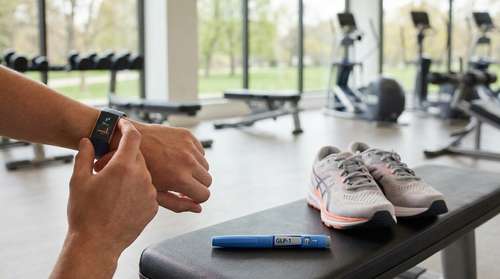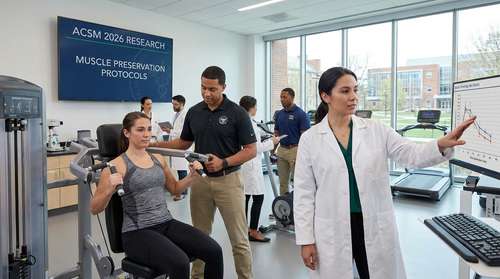
The medical and fitness communities have officially reached a critical inflection point. As of late April 2026, newly finalized clinical protocols are completely reshaping how healthcare providers prescribe weight-loss medications. Driving this shift is the landmark ACSM 2026 research, which recently crowned "Exercise for Weight Management" as a top-three global trend—its highest ranking in history. The American College of Sports Medicine's updated guidance firmly establishes that prescribing GLP-1 receptor agonists without a concurrent, supervised exercise program is no longer clinically sound.
This shift represents one of the most significant medical fitness trends of the decade. The integration of clinical medicine and physical conditioning is transitioning from a niche specialty to a mandatory standard of care. Physicians are no longer just handing out prescriptions; they are writing detailed referrals for specialized strength conditioning.
The Core Issue: GLP-1 Exercise Science and Lean Mass
Medications like semaglutide and tirzepatide have revolutionized obesity treatment. However, urgent clinical reviews published just days ago highlight a severe complication: alarming rates of muscle depletion. Patients shedding pounds on these drugs can lose anywhere from 25% to 40% of that weight as lean muscle mass, rather than exclusively fat.
This reality has forced a rapid evolution in GLP-1 exercise science. When you lose muscle at that velocity, you are not merely altering your physical appearance; you are actively degrading your metabolic engine. Muscle is highly active tissue that dictates how efficiently the body processes glucose and burns calories. Without targeted intervention, patients face a compounding crisis. They lose the protective lean mass required to keep the weight off once they taper down or cease the medication entirely.
Prioritizing Muscle Preservation Weight Loss
The focus has pivoted entirely toward muscle preservation weight loss. According to the latest mandates rolling out to clinics this week, sustainable obesity management requires active muscle retention. Physicians are now formally partnering with certified exercise physiologists to create hybrid treatment models. The directive is straightforward: preserving strength is just as crucial as dropping pounds.
The Mandate: Resistance Training for Longevity
To combat this chemically induced muscle wasting, the new medical standard outlines specific, non-negotiable physical requirements. The cornerstone of this protocol is resistance training for longevity. The guidelines dictate that patients undergoing GLP-1 therapy must engage in resistance exercises two to three times per week, specifically targeting all major muscle groups.
This goes far beyond aesthetic bodybuilding. Loading the skeletal system and stressing muscle fibers signals the body to retain its lean tissue even while operating in a severe caloric deficit. The updated clinical framework suggests a targeted three-step approach for anyone utilizing weight-management pharmaceuticals:
- Progressive Overload: Engaging in structured weightlifting sessions 2-3 times weekly to stimulate muscle synthesis.
- Increased Protein Consumption: Elevating daily protein intake to 1.2 to 1.6 grams per kilogram of body weight to provide the necessary building blocks for tissue repair.
- Consistent Measurement: Tracking body composition through DEXA scans or similar technology to monitor lean mass, rather than relying exclusively on a traditional scale.
When paired together, these elements prevent the metabolic slowdown that traditionally follows massive weight reduction. Strength training ensures that the body maintains its basal metabolic rate, creating a sustainable foundation for the future.
Maximizing Exercise for Metabolic Health
Alongside lifting weights, the ACSM framework mandates 150 minutes of moderate-intensity aerobic activity each week. This combination is the absolute gold standard when evaluating exercise for metabolic health. Cardiovascular exercise improves mitochondrial efficiency and cardiovascular endurance, while resistance training ensures the skeletal system remains robust.
Patients who follow this dual approach not only maintain their physical independence as they age, but they also severely reduce their risk of secondary conditions like sarcopenia and osteoporosis. It acts as a comprehensive defense mechanism against the fragility that often accompanies rapid weight loss, particularly in adults over the age of fifty. The synergy between pharmaceutical support and physical exertion is proving to be the most effective strategy for chronic disease management in modern medicine.
What This Means for 2026 Fitness Industry News
These rapid clinical developments are dominating 2026 fitness industry news this week. Commercial gyms, boutique studios, and digital health platforms are scrambling to adapt to the influx of medically supervised clients. We are witnessing a massive surge in specialized programs explicitly designed for the millions of Americans currently managing their weight with pharmaceutical assistance.
Fitness centers are aggressively retraining their staff to handle the unique physiological needs of medicated clients. These updated programs prioritize movement quality, joint stability, and functional capacity over extreme, high-intensity calorie-burning classes. The outdated fitness model of simply sweating out the most calories in an hour is fading. The new era values clinical precision, functional strength, and long-term metabolic stability.
If you are currently navigating a medically assisted weight-loss journey, your workout routine is no longer just an optional supplement. It is an essential component of your medical prescription. Building and maintaining muscle is the only verified strategy to ensure your biological infrastructure remains strong, functional, and resilient for decades to come. The convergence of pharmacology and physical training marks a permanent shift in healthcare. For years, the fitness industry operated parallel to the medical field, but those distinct lines have officially blurred. Preserving muscle tissue is the ultimate insurance policy against weight regain and metabolic decline. By adopting these new standards, patients are securing not just a lower number on the scale, but a significantly higher quality of life.