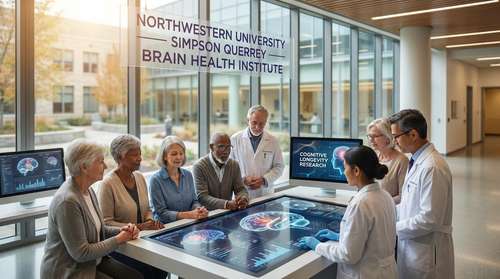
In a landmark move to bridge the widening gap between human lifespan and healthspan, Northwestern University has announced the launch of the Simpson Querrey Brain Health Institute (SQ-Brain). Backed by a transformative $25 million gift from university trustee Kimberly K. Querrey, the new institute is dedicated to a singular, ambitious vision: ensuring our cognitive longevity matches our physical endurance. As modern medicine extends how long we live, SQ-Brain aims to solve the critical puzzle of why our minds often falter before our bodies do.
Closing the Gap in Cognitive Longevity Research
For decades, medical advancements have successfully added years to the average human life. However, these bonus years are frequently marred by cognitive decline, stripping seniors of their independence. The Simpson Querrey Brain Health Institute seeks to rewrite this narrative by focusing on cognitive longevity research that prioritizes function over mere survival.
“Research at higher education institutions has always served to improve the human condition,” stated Henry S. Bienen, Northwestern’s Interim President. The institute's mission is anchored in the belief that brain health should be continuously measurable, modifiable, and monitorable. By shifting the focus from reactive treatment to proactive preservation, SQ-Brain aims to identify the biological mechanisms that allow some individuals to remain sharp well into their 90s while others fade.
The Neurovascular Key: A New Angle on Dementia
While much of Alzheimer's research has historically focused on amyloid plaques, SQ-Brain is pivoting toward a crucial, often overlooked factor: neurovascular aging biology. The institute will operate on the evidence that the health of the brain's complex network of blood vessels is fundamental to cognitive resilience.
Dr. Farzaneh Sorond, the institute’s founding director and Vice Dean for Faculty Affairs at Feinberg School of Medicine, emphasizes that vascular health is a major lever for preventing dementia modifiable factors. Recent data suggests that up to 45% of dementia cases could be delayed or prevented by addressing risk factors like hypertension and vascular damage. By integrating vascular neurology with geriatric care, the institute plans to develop new strategies to keep the brain's supply lines open and efficient.
GLP-1 and Brain Health: The Next Frontier?
One of the most anticipated initiatives at SQ-Brain is the rigorous evaluation of GLP-1 and brain health. Classes of drugs like semaglutide, originally approved for diabetes and weight loss, have shown promising signals of neuroprotective effects. However, the scientific community lacks definitive data on their long-term impact on cognition.
Researchers at the institute will lead the charge in determining if these popular medications can double as a shield against dementia. If successful, this research could repurpose existing therapies to protect millions of aging adults from cognitive decline, marking a revolutionary step in Northwestern University health news.
Precision Medicine for Seniors
The “one-size-fits-all” approach to aging is obsolete. SQ-Brain is championing precision medicine for seniors, utilizing advanced biomarkers and digital monitoring to tailor interventions to the individual. Just as oncologists sequence tumors to select the best cancer drugs, SQ-Brain scientists will profile patients to identify their specific vulnerabilities—be it vascular inflammation, metabolic dysfunction, or genetic predisposition.
This personalized approach ensures that preventative measures are deployed when they are most effective: years, if not decades, before clinical symptoms appear. “This is an investment in longer, healthier lives—and in a future where more people can age with their independence and dignity intact,” Kimberly Querrey remarked regarding the launch.
Leadership and Future Outlook
Under the leadership of Dr. Sorond, a renowned physician-scientist with expertise in clinical vascular neurology, the institute is poised to become a global hub for interdisciplinary collaboration. By bringing together engineers, neurologists, and data scientists, SQ-Brain will foster “collisions of perspectives” necessary to break through the stagnation in Alzheimer’s research.
As the global burden of brain-related disability grows—projected to drive half of the economic burden of disability by 2030—the launch of the Simpson Querrey Brain Health Institute comes at a pivotal moment. With $25 million in funding and a clear strategic roadmap, Northwestern is not just researching the future of aging; they are actively building a world where our brains truly last as long as our bodies.