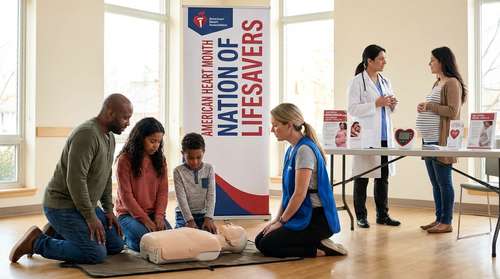
February 1st marks the official launch of American Heart Month 2026, but this year’s observance carries a different urgency than decades past. With recent data confirming that nearly 70% of out-of-hospital cardiac arrests occur in the home, the American Heart Association (AHA) has pivoted its primary focus toward the family unit. The newly expanded ‘Nation of Lifesavers’ campaign is no longer just about training medical professionals—it is a direct call to parents, grandparents, and siblings to become the first line of defense in their own living rooms.
Nation of Lifesavers: Bringing CPR Training Home
The statistics are stark: over 350,000 cardiac arrests occur outside of hospitals annually in the United States, yet bystander intervention rates remain hovering around 40%. The 2026 strategy aims to dismantle the barriers to entry for learning lifesaving skills. This month, the AHA is rolling out resources specifically designed for family CPR training, emphasizing that you do not need a medical degree to save a life.
‘The person most likely to save your life is someone you love,’ creates the central narrative for this year's initiative. The campaign promotes Hands-Only CPR, a technique that can be learned in under 90 seconds and requires no mouth-to-mouth breathing. By simplifying the process, the goal is to double cardiac arrest survival rates by 2030. New for 2026, the campaign includes accessible ‘CPR Anytime’ kits and digital tools that allow families to practice compressions on a simple mannequin while watching a streaming instructional video together.
Schools as Community Anchors
A critical component of the Nation of Lifesavers initiative is the integration of Cardiac Emergency Response Plans (CERPs) in schools and youth sports organizations. As of late January 2026, new partnerships with local school districts are ensuring that students aren't just passive recipients of health education but are becoming active advocates. Through the ‘Kids Heart Challenge,’ students are now bringing CPR knowledge home, effectively turning schools into hubs for community-wide preparedness.
Critical Update: Maternal Heart Health Trends
While preparedness is key, prevention remains paramount, especially concerning the alarming trajectory of maternal heart health trends. Pregnancy-related deaths in the U.S. have risen 140% over the last three decades, with cardiovascular disease remaining the leading cause. The 2026 campaign places a heavy emphasis on the ‘fourth trimester’—the postpartum period where risks often go undetected.
Medical experts are urging families to be vigilant for ‘red flag’ symptoms in new mothers, such as shortness of breath, swelling, and extreme fatigue, which can often be dismissed as normal exhaustion from parenting. The spotlight is specifically on conditions like peripartum cardiomyopathy and preeclampsia, which can have long-term cardiovascular implications. This February, the message is clear: caring for a new baby must not come at the expense of the mother's heart health.
Breaking News: Pediatric Cardiovascular Health Guidelines
In a major development released just days ago on January 26, 2026, the American Stroke Association, a division of the AHA, published the first-ever detailed recommendations for diagnosing and treating stroke in children. This groundbreaking guidance addresses a long-standing gap in pediatric cardiovascular health.
Historically, strokes were often thought of as conditions affecting only older adults, leading to delayed diagnoses in children. The new 2026 guidelines provide clinicians with specific protocols for rapid assessment and treatment in pediatric patients, including the expanded use of advanced clot-busting therapies previously reserved for adults. This shift represents a significant milestone in pregnancy-related heart risk management and pediatric care, ensuring that younger hearts receive the same urgent, evidence-based attention as adult patients.
How to Participate in American Heart Month 2026
Participation this year goes beyond wearing a pin. The annual National Wear Red Day is set for Friday, February 6, 2026. Americans are encouraged to wear red to raise awareness for women's heart disease prevention, but the call to action extends further:
- Download the Toolkit: The AHA’s 2026 American Heart Month Toolkit is free and includes social media resources to spread the word.
- Learn in 90 Seconds: Commit to watching the Hands-Only CPR instructional video. It takes less time than a commercial break.
- Check Your Numbers: Use this month to schedule a check-up to know your blood pressure and cholesterol numbers, the silent indicators of risk.
This February, the focus is shifting from general awareness to tangible action. Whether it's learning to push hard and fast on a chest or recognizing the signs of a stroke in a child, the tools to save a life are now more accessible than ever. We are building a nation of lifesavers, one family at a time.