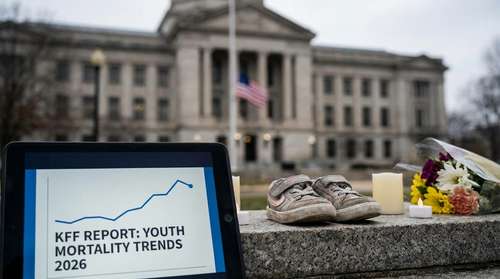
A staggering new analysis has confirmed a devastating reality for American families: gun violence continues to claim more young lives than any other cause. According to a newly released KFF health report 2026, the ongoing crisis of child firearm deaths 2026 remains the undisputed number one killer of children and adolescents in the United States. While overall youth mortality rates have dipped slightly from the historic, tragic peaks observed during the height of the COVID-19 pandemic, the long-term trajectory reveals a harrowing 68% increase in pediatric firearm fatalities over the past decade.
The Sobering Reality of Pediatric Mortality Statistics
For decades, motor vehicle accidents were the unquestioned primary threat to young lives, driving massive public safety campaigns, seatbelt laws, and vehicle engineering improvements. However, shifting youth gun violence trends have completely rewritten public health paradigms. The latest pediatric mortality statistics confirm that firearms now consistently cause more youth deaths than car crashes, pediatric cancer, or congenital diseases.
This grim milestone, first crossed in 2020, has unfortunately solidified into a persistent public health emergency. The new data emphasizes that the United States stands entirely alone among wealthy nations in this category. While peer industrialized countries have successfully reduced child mortality from weapons, American children face an unprecedented risk environment. The numbers reflect a complex web of daily tragedies: community violence, accidental discharges in the home, and an escalating rate of youth suicides utilizing unsecured weapons.
Analyzing the Post-Pandemic Dip
Public health researchers noted a slight deceleration in fatal incidents over the last twenty-four months, a modest retreat from the unprecedented surge seen between 2020 and 2023. During the pandemic era, disruptions to school systems, extreme economic stress, and a massive spike in firearm purchases created a perfect storm for youth vulnerability.
While the recent dip offers a glimmer of hope that the sharpest acceleration has leveled off, researchers caution against complacency. The baseline for youth firearm mortality remains unacceptably high, sitting well above pre-2019 levels. This stabilization, rather than a significant decline, underscores that the fundamental drivers of the leading cause of death for children US remain deeply entrenched in society.
Deepening Disparities in Black and Indigenous Communities
Perhaps the most distressing finding in the comprehensive KFF health report 2026 is the glaring inequity in how this violence is distributed. The burden of this crisis does not fall evenly across the population. Severe disparities continue to devastate Black and Indigenous families, who are disproportionately represented in the fatality data.
According to the newly published demographic breakdowns, Black youth face a significantly higher risk of firearm mortality compared to their white peers, predominantly driven by systemic inequities and localized community violence. Similarly, American Indian and Alaska Native (AIAN) children are experiencing a rapid, sustained acceleration in fatal firearm incidents. Public health officials point out that addressing these tragedies requires targeted, community-specific interventions that acknowledge and dismantle these stark racial and socioeconomic divides.
The Shadow of the Adolescent Mental Health Crisis
The mortality data only tells part of the story. Beyond the tragic loss of life, the ripple effects of gun violence are directly exacerbating the ongoing adolescent mental health crisis. For every child who loses their life to a firearm, multiple others survive their injuries or witness the trauma firsthand in their neighborhoods or schools.
Recent healthcare analyses highlight that youth who survive gunshot wounds experience a dramatic 68% increase in psychiatric disorders in the year following their injury, alongside massive surges in substance use disorders. The psychological toll of lockdown drills, domestic violence involving weapons, and losing peers to gun violence is creating a generation of traumatized youth. This shared trauma is further straining an already overburdened pediatric mental health infrastructure, leaving many families without necessary therapeutic support.
Essential Gun Safety for Families
As policymakers debate legislative solutions to curb this epidemic, medical professionals are urging immediate action at the household level. Implementing rigorous gun safety for families is the most effective immediate barrier against accidental shootings and impulsive youth suicides.
Safety advocates recommend the universal adoption of secure storage practices. This means keeping all firearms unloaded, locked in a biometric safe or lockbox, and storing ammunition in a separate, equally secure location. Furthermore, pediatricians encourage parents to normalize conversations about firearm safety. Just as parents routinely ask about food allergies or pool supervision before a playdate, asking about the presence of unsecured weapons in the homes where their children play must become standard practice.
The stark reality presented by the latest data demands a multifaceted response. Reversing the tragic trajectory of youth firearm fatalities will require not just policy shifts, but a unified commitment from local communities, healthcare providers, and parents to prioritize the physical safety and mental well-being of the next generation.