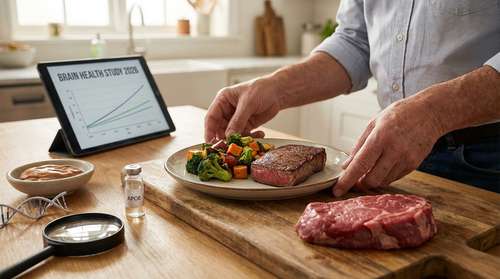
For years, the gold standard for protecting the aging brain has been heavily plant-forward, often minimizing animal products in favor of greens and grains. However, a major paradigm shift has emerged in the search for the optimal Alzheimer's prevention diet 2026. A landmark Swedish study published on April 2, 2026, in JAMA Network Open reveals that individuals carrying the high-risk APOE genetic variants may actually cut their dementia risk by more than half through increased consumption of unprocessed meat. This sweeping discovery challenges conventional wisdom, proving that when it comes to averting cognitive decline, a one-size-fits-all approach is no longer scientifically viable.
A Genetic Twist in the 'Food is Medicine' Movement
For roughly a quarter of the global population, carrying the APOE ε3/ε4 or ε4/ε4 gene variants comes with a daunting reality: a significantly heightened susceptibility to Alzheimer’s disease. In Northern Europe and North America alone, these gene carriers account for nearly 70 percent of all Alzheimer's diagnoses.
Researchers at the Karolinska Institutet followed 2,157 older adults living in Stockholm over a 15-year period to track how dietary habits influenced their brain health. The data collection was rigorous; participants underwent clinical assessments every six years until age 78, and every three years thereafter, reporting detailed dietary intake.
The results were staggering. Among participants possessing the high-risk APOE genotypes, those who consumed the highest amounts of meat—averaging about 870 grams per week—exhibited a 55 percent lower risk of developing dementia compared to their peers who ate little meat. Additionally, this high-intake group demonstrated significantly slower global cognitive decline. Lead researcher Jakob Norgren noted that standard nutritional advice often fails to account for these distinct genetic vulnerabilities. The compelling connection between the APOE gene and meat consumption effectively neutralized the cognitive disadvantage previously associated with the variant.
The Evolutionary Roots of APOE4
Why would a diet heavier in meat offer specialized protection? The answer likely lies in human evolution. The APOE4 variant is widely considered the oldest version of the APOE gene, originating millions of years ago during a period when our human ancestors subsisted on a heavily animal-based diet.
Because this gene evolved to metabolize high loads of animal protein and fat, modern carriers may uniquely require the brain-protective nutrients in meat to maintain optimal neural function. Post hoc analyses suggest that the APOE gene actively modifies how the body absorbs critical elements like vitamin B12 from animal sources. When deprived of these nutrients through strict plant-based regimens, the brain's lipid transport system may simply lack the metabolic fuel it requires to clear amyloid plaques and maintain synaptic integrity.
Processed vs. Unprocessed: A Crucial Distinction
While the latest cognitive health research 2026 provides a green light for meat consumption among certain genetic demographics, scientists are drawing a hard line regarding the type of meat on the plate.
The protective cognitive benefits were exclusively linked to unprocessed meats, such as fresh cuts of beef, lamb, pork, and poultry. Conversely, the study highlighted that a high ratio of processed meats—including bacon, sausages, and deli cold cuts—was associated with a heightened risk of dementia across the entire population, regardless of genetic makeup.
Study co-author Sara Garcia-Ptacek emphasized that minimizing processed foods remains a universal health benefit. However, the neuroprotective power of fresh red meat and dementia risk reduction is a phenomenon specific to the APOE4-carrying subgroup. For these individuals, swapping out refined cereals and grains for high-quality, unprocessed meat yielded the strongest defense against cognitive decline.
Rethinking Dietary Guidelines for Seniors
The implications of the Karolinska Institutet study stretch far beyond the laboratory. Mainstream dietary recommendations for older adults have heavily favored the Mediterranean or MIND diets, both of which advocate for severe restrictions on red meat. Yet, forcing a high-risk APOE4 patient onto a strict plant-based diet might inadvertently strip them of vital neuro-nutrients.
This introduces a complicated reality for clinicians navigating genetic-based dieting for seniors. Medical professionals must now consider the following adjustments to their practice:
- Evaluating standard advice: Assessing whether plant-forward dietary counseling adequately serves a patient who tests positive for the APOE4 allele.
- Customizing macronutrients: Discussing precision nutrition strategies with genetically vulnerable patients to ensure they receive bioavailable brain-boosting nutrients.
- Monitoring new data: Keeping a close watch on emerging clinical trials before making sweeping changes to formal national guidelines.
Moving Toward Precision Nutrition
We are witnessing the dawn of true personalized nutrition for brain health. As genetic testing becomes increasingly accessible, the era of generic public health dietary edicts is coming to an end. For the millions of individuals genetically predisposed to Alzheimer's, learning their APOE status could be the first step in a powerful, diet-driven defense strategy. While further clinical trials will refine these parameters, the 15-year Swedish cohort provides an undeniable blueprint: sometimes, the brain's best medicine is the exact food you were previously warned to avoid.