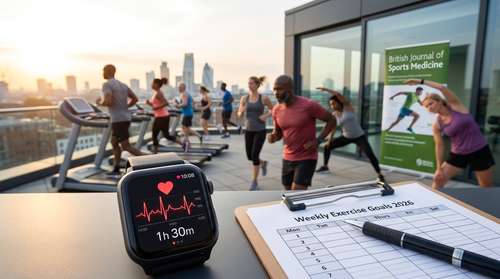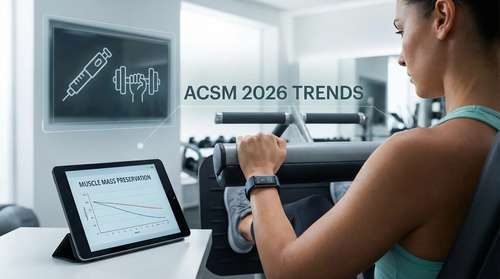
The American College of Sports Medicine (ACSM) has officially released its 2026 Worldwide Fitness Trends report, and while wearable technology has reclaimed the number one spot, a more critical narrative is reshaping the industry. For the first time, the report explicitly connects the booming popularity of weight-loss medications like Ozempic and Wegovy with a mandatory shift in fitness programming. As millions turn to pharmacological solutions for obesity, resistance training for weight loss has emerged not just as an option, but as a medical necessity to combat rapid muscle deterioration.
The 2026 Landscape: Tech Meets Medical Fitness
The 2026 survey, which gathers insights from thousands of health and fitness professionals globally, paints a picture of an industry increasingly integrated with healthcare. While wearable technology 2026 trends dominate the top spot—driven by advanced biosensors that now track blood glucose and recovery metrics—the standout development is the renaming and rise of Trend #3: Exercise for Weight Management.
This reclassification from simple "weight loss" to "weight management" signals a profound shift. It acknowledges that sustainable health involves more than seeing a lower number on the scale. It specifically addresses the millions of patients currently on a GLP-1 exercise plan, for whom preserving metabolic health is a new, urgent priority.
The GLP-1 Muscle Paradox
The rise of GLP-1 receptor agonists has revolutionized obesity treatment, but it has introduced a silent complication: significant lean muscle loss. Recent data indicates that without intervention, up to 40% of the weight lost on these medications can come from lean muscle mass rather than fat. This phenomenon, often dubbed "Ozempic face" or "Ozempic body," represents a critical health risk, particularly for aging populations.
"We are seeing a pivot from 'cardio for calorie burn' to 'strength for longevity,'" explains Dr. Cayla McAvoy, lead author of the ACSM report. The 2026 guidelines emphasize that an Ozempic fitness routine must prioritize muscle mass preservation. Without adequate resistance training, patients risk a condition known as sarcopenic obesity—where one has a normal weight but dangerously low muscle mass and high body fat percentage.
Resistance Training: The Non-Negotiable Prescription
In response to these findings, resistance training for weight loss has effectively been rebranded as the "secret weapon" for medication success. The ACSM report highlights that strength training is no longer just for bodybuilders or athletes; it is a fundamental component of medical weight management. By stimulating muscle protein synthesis, resistance exercises counteract the catabolic effects of rapid weight loss.
Fitness facilities are already pivoting to meet this demand. We are seeing a surge in "medical exercise training" programs designed specifically for patients on anti-obesity medications. These programs focus less on high-intensity interval training (HIIT) and more on progressive overload and functional strength to ensure that as the weight drops, the patient's functional capacity and metabolic rate remain intact.
Wearables and The Future of Tracking
Interestingly, the #1 trend, wearable technology, plays a pivotal role in this new paradigm. The latest generation of wearables does far more than count steps. In 2026, devices are increasingly capable of estimating body composition changes and monitoring recovery strain. This allows users on a GLP-1 exercise plan to ensure they are losing the right kind of weight.
By syncing data from wearables with clinical outcomes, trainers can now offer hyper-personalized guidance. If a client's data shows rapid weight loss but declining strength metrics, coaches can immediately adjust the resistance training volume to arrest muscle loss. This data-driven approach bridges the gap between the clinic and the gym, ensuring that the pharmacological benefits of weight-loss drugs are not undermined by physical frailty.
Adapting to the 'New Normal' in Fitness
The ACSM worldwide survey ultimately serves as a call to action. For gym owners and personal trainers, the message is clear: the era of purely aesthetic fitness is fading. The future lies in providing supportive, scientifically grounded environments for the millions of individuals navigating medical weight loss. Whether through small group strength classes for older adults (Trend #2) or tech-enabled coaching, the industry is mobilizing to ensure that the "miracle" of weight-loss drugs results in genuine, lasting health.