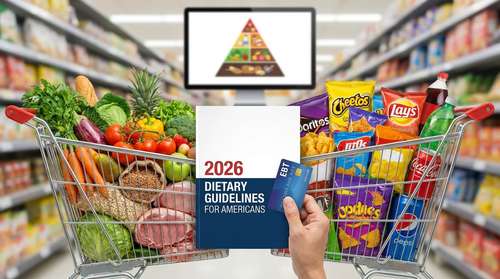
As March highlights the latest National Nutrition Month trends, a historic overhaul of USDA HHS nutrition policy is reshaping how the country eats. The newly released 2026 Dietary Guidelines for Americans represent a dramatic departure from decades of established advice. Gone is the familiar MyPlate model; in its place is a controversial new visual prioritizing whole proteins and healthy fats over processed carbohydrates. However, it is the sweeping SNAP modernization real food mandates accompanying these guidelines that are currently sparking the most intense nationwide debate.
The Flipped Food Pyramid 2026: A Paradigm Shift in Health
The most visually striking change in the new federal guidance is the complete reversal of traditional dietary models. The flipped food pyramid 2026 officially abandons the grain-heavy foundation that dominated American nutrition since the 1990s. Instead, the USDA and HHS now prioritize high-quality, nutrient-dense proteins—recommending an increased 1.2 to 1.6 grams of protein per kilogram of body weight—alongside full-fat dairy and whole vegetables.
This emphasis on metabolic health and satiety places whole grains at the narrow bottom of the pyramid. Health agencies are actively encouraging the consumption of natural healthy fats from whole foods, explicitly endorsing olive oil, butter, and beef tallow while advising that saturated fat stay under 10 percent of daily calories. By advising the public to focus on whole foods, the government aims to curb skyrocketing rates of diet-driven chronic illnesses, noting that 90 percent of health care spending goes to treating these conditions.
Cracking Down: The Ultra-Processed Food Definition
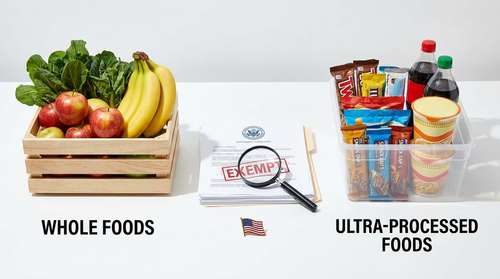
Central to the updated policy is a fierce crackdown on industrialized food manufacturing. For the first time, federal agencies have explicitly targeted highly processed items, forming an ultra-processed food definition that warns against products laden with refined carbohydrates, petroleum-based dyes, and chemical preservatives.
The new framework also introduces severe added sugar restrictions. The guidelines explicitly state that no amount of added sugar or non-nutritive sweetener is considered part of a healthy diet. For adults, the recommendation restricts added sugars to under 10 grams per meal. For children under the age of four, the guidance demands zero added sugars. Environmental Working Group advocates have praised this approach, pointing out that currently, over half of the calories consumed by U.S. adults—and over 60 percent of those consumed by children—come from ultra-processed sources.
The SNAP Modernization Real Food Mandate Takes Effect
Translating these stringent nutritional recommendations into public policy has ignited a firestorm of controversy. The push to align federal assistance with the new guidelines has resulted in aggressive restrictions on the Supplemental Nutrition Assistance Program (SNAP).
States are already leading the charge. Effective April 1, 2026, Texas is implementing Senate Bill 379 under Governor Greg Abbott's Make America Healthy Again initiative. This law prohibits SNAP recipients from using their Lone Star Cards to purchase candy, gum, or sweetened drinks containing five or more grams of added sugar. Colorado is pursuing a similar Healthy Choice Waiver to ban the purchase of sodas and energy drinks using SNAP benefits, though their final board vote has been delayed past April.
These legislative moves aim to reduce the taxpayer burden of treating diet-related illnesses, pointing out that sugary drinks and ultra-processed snacks are currently among the most frequently purchased items through SNAP.
Accessibility vs. Health: The Core of the Controversy
Despite public health intentions, critics argue the new mandates disproportionately punish low-income families without addressing systemic barriers to food access. Purchasing fresh, whole proteins and high-quality dairy is significantly more expensive than relying on processed, shelf-stable carbohydrates.
Furthermore, millions of Americans live in food deserts where access to the items prioritized by the new guidelines is severely limited. Food accessibility advocates worry that penalizing families for buying processed foods without simultaneously subsidizing the cost of fresh meat, dairy, and produce will only exacerbate food insecurity.
What This Means for the Future of American Food
The ripple effects of the new guidelines are already being felt across the agricultural and retail sectors. According to industry analysts, farmers are preparing for shifts in market demand, anticipating higher requirements for livestock, dairy, and whole produce. Concurrently, food manufacturers are scrambling to reformulate products to escape the ultra-processed label and restrictive sugar caps.
As the April deadlines for state-level SNAP restrictions approach, the debate over how to balance public health goals with equitable food access will only intensify. The 2026 guidelines have successfully changed the conversation around nutrition, but whether the government can effectively mandate a return to real food without leaving vulnerable populations behind remains the most critical question of the year.