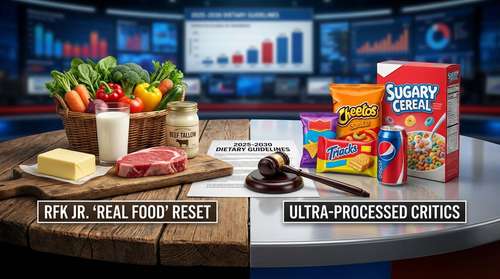
A seismic shift in American nutrition policy reached a boiling point this weekend as health officials and medical organizations clashed over the newly released 2025-2030 Dietary Guidelines. The Trump administration’s bold Make America Healthy Again food agenda, spearheaded by HHS Secretary Robert F. Kennedy Jr., has officially inverted the traditional food pyramid, placing red meat, full-fat dairy, and animal fats at the foundation of the American diet. While supporters hail the move as a necessary return to ancestral eating to combat chronic disease, leading cardiologists warned yesterday that the recommendations could trigger a cardiovascular health crisis.
The 'Real Food' Revolution: Inverting the Pyramid
The new guidelines, which were finalized earlier this month and saw detailed implementation plans released on Friday, mark the most radical departure from federal nutrition advice in forty years. The core message is simple: "Eat Real Food." Gone are the strict limits on saturated fats that defined the low-fat era. In their place is a new food pyramid 2026 that prioritizes nutrient-dense animal proteins—steaks, eggs, and organ meats—alongside a surprising endorsement of beef tallow and butter over industrial seed oils.
The document explicitly challenges the "diet-heart hypothesis," suggesting that the rise in obesity and diabetes is driven not by traditional fats, but by the ultra-processed ingredients that replaced them. "We are ending the war on saturated fats," Secretary Kennedy stated in a press briefing Saturday, defending the policy against fresh criticism. "The data shows that real food, including full-fat dairy health benefits like Vitamin K2 and satiety, outweighs the theoretical risks of cholesterol for the metabolic majority."
School Lunch Overhaul: The Ultra-Processed Food Ban
Perhaps the most tangible impact of the Robert F. Kennedy Jr nutrition policy will be felt in the nation's cafeterias. As of this week's announcement, the USDA is moving forward with a phased ultra-processed food ban for the National School Lunch Program. By the start of the 2026-2027 school year, items containing high-fructose corn syrup, artificial dyes, and seed oils (labeled as "industrial vegetable oils") will be removed from reimbursable meals.
This "School Lunch Reset" aims to replace processed nuggets and pizzas with scratch-cooked meals rich in protein and whole fats. While parents groups have largely applauded the removal of chemicals, school administrators expressed concern this weekend over the logistical costs. The administration has promised increased subsidies for schools purchasing from local regenerative farms, a key pillar of the "Make America Healthy Again" platform, to offset the price of switching from cheap processed fillers to whole ingredients.
The Great Fat Debate: Tallow vs. Seed Oils
The guidelines' specific attack on seed oils—such as soybean, canola, and corn oil—has ignited a fierce scientific debate. The new text describes these ubiquitous cooking fats as "industrial processing byproducts" prone to oxidation and inflammation. Conversely, the guidelines recommend a return to stable, traditional fats like beef tallow and ghee.
This stance aligns with the "seed oil disrespect" movement popular on social media but contradicts established advice from the American Heart Association (AHA). In a sharp rebuttal issued Sunday, the AHA warned that replacing polyunsaturated fats with high amounts of saturated animal fat could reverse decades of progress in lowering heart disease rates. "Vilifying standard cooking oils in favor of artery-clogging beef tallow is a dangerous experiment with the public health," the association's statement read.
High Protein Targets Controversy
Another flashpoint is the new high protein diet guidelines. The 2025-2030 document recommends nearly double the protein intake previously suggested for adults, citing the need to preserve muscle mass and metabolic rate in an aging population. It encourages consumption of red meat as a "superfood" for bioavailable nutrients, dismissing previous associations with cancer as "weak epidemiology confounded by lifestyle factors."
Metabolic health experts supporting the change argue that prioritizing protein leverage is the only way to break the cycle of overeating refined carbohydrates. However, environmental critics and some epidemiologists argue that such high meat consumption targets are unsustainable and potentially hazardous for those with pre-existing kidney or heart conditions.
What This Means for Consumers
As the dust settles on the initial release, Americans are left with two conflicting roadmaps for health. The conventional medical establishment continues to advise moderation and plant-based oils, while the federal government's new stance offers permission to embrace steak, butter, and full-fat dairy. For now, the "Make America Healthy Again" agenda is moving full steam ahead, with the first changes to food labeling and school menus expected to roll out in the coming months. Consumers are advised to consult with their personal healthcare providers—who may be just as divided as the experts—before making drastic changes to their diets.