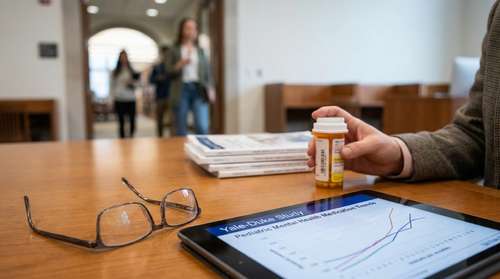
A groundbreaking new study from Yale and Duke universities reveals a concerning trend in pediatric healthcare: nearly one in five children diagnosed with anxiety or depression are prescribed medications that deviate from FDA approvals or professional safety guidelines. Published on February 5, 2026, in the Journal of Political Economy, the research links these "red-flag" prescriptions to a significantly increased risk of self-harm and emergency room visits among adolescents.
Widespread Deviation from FDA Guidelines
The study, led by Yale economist Janet Currie and Duke University’s Emily Cuddy, analyzed health insurance claims from a massive national dataset spanning six years. The findings are stark: 22% of initial medication treatments for children with a new diagnosis of anxiety or depression were either not FDA-approved for their age group or directly contradicted guidelines issued by major professional medical associations.
"Doctors have a very limited menu of federally approved drugs for treating mental illness in children, which can lead them to so-called off-label prescribing," said Janet Currie, the David Swensen Professor of Economics at Yale. While doctors legally have the discretion to prescribe drugs off-label, the study differentiates between off-label uses supported by professional evidence and those that are considered "red-flag" treatments due to lack of efficacy or known safety risks.
The research highlights that while the majority of physicians adhere to safety protocols, a sizeable minority engage in prescribing practices that leave vulnerable adolescents exposed to preventable harm.
The Human Cost: Higher Rates of Self-Harm
The most alarming finding of the Yale-Duke study is the direct correlation between inconsistent prescribing and negative patient outcomes. Children receiving these non-guideline-compliant treatments faced a markedly higher probability of dangerous complications.
According to the data, the probability of self-harm was 5.7% for children receiving "red-flag" treatments, compared to just 3.8% for those treated with FDA-approved medications. This represents a nearly 50% relative increase in the risk of self-harm behaviors among adolescents treated with unverified medication regimens.
Emergency Room Visits Spike
Beyond self-harm, the study found that patients prescribed non-guideline medications were significantly more likely to visit the emergency department within two years of diagnosis. "We found that children have better outcomes when their physicians stick to FDA-approved treatments or off-label treatments recommended by professional associations," Currie noted. The data suggests that deviating from established protocols does not offer a "creative" solution to complex cases but rather destabilizes the child's condition.
Economic Impact of Ineffective Treatment
The consequences of deviation extend beyond immediate health risks to substantial financial burdens for families and the healthcare system. The researchers tracked the cumulative medical costs for patients over two years following their initial diagnosis.
- Guideline-compliant treatment costs: Average of $1,745 over two years.
- FDA-approved drug costs: Average of $9,656 (often due to brand-name premiums).
- "Red-flag" drug costs: Average of $9,557 over two years.
The data reveals a double penalty for families: "red-flag" prescribing is nearly as expensive as the highest-tier FDA-approved treatments but comes with significantly worse health outcomes. In contrast, off-label prescribing that is supported by professional guidelines was found to be the most cost-effective approach, balancing safety with affordability.
Why Are Doctors Prescribing Off-Label?
The study sheds light on the difficult position many pediatricians and psychiatrists face. The FDA has approved only a handful of psychotropic medications specifically for pediatric use. For instance, while there are dozens of antidepressants available for adults, only a few, such as fluoxetine (Prozac) and escitalopram (Lexapro), have specific approvals for treating depression in certain pediatric age groups.
Faced with a child who is suffering and perhaps not responding to first-line treatments, doctors often look to the broader pharmacopeia available for adults. However, the Yale-Duke findings serve as a critical warning that children are not simply "small adults." Their metabolic systems and developing brains react differently to psychoactive compounds, making adherence to pediatric-specific guidelines essential.
What Parents Need to Know
For parents navigating a child's mental health diagnosis, this study underscores the importance of being an informed advocate. Experts recommend that parents ask specific questions when a medication is prescribed:
1. Is this FDA-approved for my child's age?
If the answer is no, ask if the use is supported by professional guidelines from organizations like the American Academy of Child and Adolescent Psychiatry (AACAP).
2. What are the "Black Box" warnings?
Be aware of potential side effects, particularly increased risks of suicidal ideation, which are required disclosures for many antidepressants.
3. Seek a Second Opinion.
"It's a difficult situation for parents," said Currie. "They might want to familiarize themselves with the guidelines or, if possible, request a second opinion if they're unsure about the course of treatment."
As the youth mental health crisis continues to grow, this research provides a vital roadmap: adherence to proven, evidence-based guidelines is the safest path forward for treating our children.