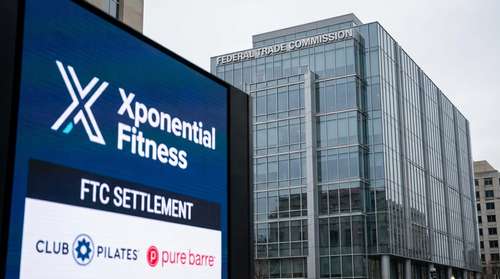
In what is being called a watershed moment for the franchise industry, the Federal Trade Commission has finalized a landmark regulatory action against the parent company of some of America's most recognizable workout brands. The newly announced Xponential Fitness FTC settlement mandates a record-breaking $17 million in financial relief, resolving sweeping allegations of deceptive business practices and franchise disclosure violations.
Announced on March 18, 2026, the enforcement action represents the largest consumer redress ever secured in a franchise-related case. While the action primarily targets the corporate franchisor rather than individual studio owners, the ripple effects are expected to be felt widely across the industry, impacting how future locations are opened, operated, and marketed to the public.
The Core of the $17M Xponential Fitness FTC Settlement
For entrepreneurs looking to break into the booming wellness space, the company's pitch was highly enticing: sign an agreement and have a fully operational studio running within six months. According to the FTC's extensive investigation, however, this timeline was a costly illusion. Regulators allege that franchisees typically waited more than a year to open their doors—if they ever successfully opened at all. This discrepancy left hopeful business owners burning through their capital to cover unexpected rental payments, employee payroll, and hefty licensing fees.
To understand the scale of the financial risk, prospective owners paid an average initial fee of $45,000, not including the tens of thousands required for specialized studio buildouts. Christopher Mufarrige, Director of the FTC's Bureau of Consumer Protection, highlighted the severity of these omissions. He emphasized that Americans frequently invest their entire life savings into franchise opportunities with the expectation of building a prosperous business. By allegedly withholding legally mandated information, Xponential denied prospective owners the ability to properly evaluate the true financial risks involved before signing on the dotted line.
Uncovering the Pure Barre Deceptive Practices
The regulatory complaint goes far beyond delayed construction timelines and rising costs. The FTC exposed systemic failures by the franchisor to provide the legally required Franchise Disclosure Document at least 14 days prior to contract signing. Furthermore, the allegations of Pure Barre deceptive practices and similar misrepresentations across the corporate portfolio point to a deliberate lack of transparency regarding corporate leadership.
Regulators found that Xponential failed to disclose that its former CEO, Anthony Geisler, had been repeatedly involved in fraud litigation in the past. The company also allegedly misreported the contact information of franchise owners whose studios had ceased operations within the previous year, effectively hiding the brand's true failure rates from new investors conducting due diligence.
Who is Affected? The Complete Xponential Fitness Brands List
The settlement casts a wide net, given the massive footprint of the Irvine, California-based corporation. Currently operating approximately 2,500 studios in the United States alone and expanding globally, the complete Xponential Fitness brands list involved in the FTC complaint includes several prominent names:
- Club Pilates
- Pure Barre
- YogaSix
- StretchLab
- BFT (Body Fit Training)
For regular studio-goers following this major boutique fitness news, there is an important distinction to make regarding the financial payout. If you are a member searching for information about a direct Club Pilates refund 2026, it's crucial to understand that the $17 million restitution is specifically earmarked for franchisees who suffered financial losses, not individual gym members. Unlike a typical FTC gym membership lawsuit that targets predatory consumer billing, hidden fees, or notoriously difficult cancellation policies, this specific legal action focuses strictly on business-to-business franchise regulations and investor deception. Memberships at operational locations remain unaffected.
Market Fallout and Fitness Consumer Protection
Despite the severity of the allegations and the massive payout, Xponential Fitness settled the case without admitting any official wrongdoing. In a brief press statement following the FTC announcement, the company noted that the resolution "closes a historical chapter" and allows the brand to pivot toward future operations under new executive management. Crucially, the franchisor is now under a strict federal mandate prohibiting them from making misleading claims to prospective buyers in the future.
The financial markets have already reacted to the corporate turbulence. Xponential's stock (NYSE: XPOF) has plummeted roughly 31% over the past six months, currently trading around $5.68 per share as of mid-March 2026. While the company recently reported a stronger-than-expected $83 million in Q4 2025 revenue, an adjusted net loss of $0.91 per share has prompted major institutional investors to demand sweeping changes. Voss Capital, which holds a commanding 19.3% stake in the fitness giant, has publicly urged the board to explore strategic alternatives, including a potential total sale of the company to private investors.
Ultimately, this historic enforcement action marks a new era for fitness consumer protection, aligning perfectly with the FTC's broader Labor Task Force initiatives launched by Chairman Andrew N. Ferguson. By holding the world's largest boutique fitness franchisor financially accountable, the federal government is sending a definitive message to the broader franchise industry: corporate transparency is not optional, and the financial health of American small business owners will be aggressively protected.