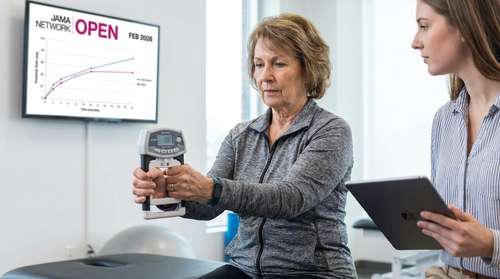
If you have been prioritizing your daily steps over weight training, a groundbreaking new study might convince you to change your strategy. A landmark study published in JAMA Network Open on February 20, 2026, has revealed that handgrip strength is a powerful, independent predictor of mortality in older women—potentially more significant than aerobic exercise alone.
For decades, cardiovascular fitness has been the gold standard for healthy aging for women. However, this new research involving over 5,000 women aged 63 to 99 suggests that maintaining muscular strength is not just optional; it is a critical survival factor. The findings arrive just as senior fitness trends 2026 are seeing a massive shift toward resistance training and "active aging" protocols.
The Science: Stronger Grip, Longer Life
The study, led by researchers at the University at Buffalo, followed 5,472 women for several years to analyze the relationship between muscle function and longevity. The results were stark: women in the highest quartile of grip strength had a 33% lower risk of all-cause mortality compared to those in the lowest quartile.
What makes this JAMA Network Open study particularly revolutionary is its finding on independence. The correlation between strength and survival held true even after adjusting for various factors, including aerobic activity levels. This means that even if a woman did not meet the standard aerobic exercise guidelines (150 minutes per week), having high grip strength still offered significant protective benefits against early death.
More Than Just Hand Strength
"Grip strength is effectively a 'functional vital sign,'" explains Dr. Michael LaMonte, the study's lead author. It acts as a proxy for overall muscle health for seniors. Weakness in the hands often correlates with systemic muscle decline (sarcopenia), which is linked to frailty, falls, and a slower recovery from illness. Conversely, a firm grip indicates robust neuromuscular function and better overall biological resilience.
Biological Age Testing vs. Chronological Age
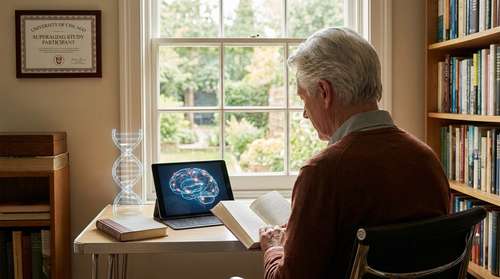
This research aligns with another emerging field: biological age testing. While your chronological age is simply the number of birthdays you've celebrated, your biological age reflects how fast your cells are deteriorating. Grip strength is increasingly cited as a non-invasive biomarker for biological aging.
Recent data supports the idea that muscle quality influences DNA methylation—a process used to measure cellular aging. Women with stronger grips often show "younger" biological markers than their weaker peers. As resistance training for longevity gains traction, experts are moving away from asking "how old are you?" and starting to ask "how much can you carry?"
Grip Strength vs. Cardio: The Verdict
Does this mean you should cancel your daily walk? Absolutely not. Aerobic exercise is still essential for heart health. However, the study highlights that cardio alone is insufficient for optimal longevity. The ideal formula for healthy aging appears to be a combination of metabolic conditioning (cardio) and muscular preservation (strength).
If you had to prioritize one intervention for a sedentary senior, building strength might offer the most immediate protective value against frailty. Muscle tissue acts as an endocrine organ, releasing myokines that fight inflammation and improve insulin sensitivity, key factors in preventing age-related diseases.
2026 Senior Fitness Trends: The Shift to Strength
The fitness industry is already responding to these insights. Senior fitness trends 2026 are dominated by functional strength programming rather than gentle chair aerobics. We are seeing a surge in:
- Loaded Carries: Exercises like the "farmer's walk" that directly build grip and core stability.
- Dead Hangs: hanging from a bar to decompress the spine and forge iron-clad grip endurance.
- Heavy Resistance: A move away from 2-pound pink dumbbells to challenging weights that actually stimulate bone density and muscle growth.
Action Plan: How to Test and Improve Your Grip
You don't need a lab to start focusing on this vital metric. Here is how you can incorporate these findings into your life immediately.
1. Test Your Baseline
A dynamometer is the clinical standard, but you can use functional benchmarks. Can you open a tight jar without help? Can you carry two heavy grocery bags for 50 yards without stopping? These are real-world indicators of your grip capacity.
2. The "Farmer's Carry"
This is the single best exercise for grip strength and longevity. Pick up a heavy dumbbell or kettlebell in each hand. Keep your shoulders back and walk for 30–60 seconds. Rest and repeat. This strengthens your hands, wrists, shoulders, and core simultaneously.
3. Dead Hangs
Simply hanging from a pull-up bar for as long as possible is excellent for grip endurance. Aim for 30 seconds to start. If you cannot support your full body weight, keep your feet on the ground and use the bar to support 50% of your weight.
4. Squeeze Training
Keep a high-resistance stress ball or grip trainer at your desk. Squeeze maximally for 5 seconds, then release. Repeat for 10-15 reps daily. This is an easy way to build neural drive to the hand muscles.
Conclusion
The message from the latest JAMA Network Open study is clear: frailty is not an inevitable part of aging, but it is a choice we make by neglecting our strength. By treating your grip strength as a vital health metric—just like blood pressure or cholesterol—you can take a proactive step toward a longer, healthier, and more independent life. Start lifting today; your future self is holding on to that hope.