On Patriots' Day, Monday, April 20, 2026, the streets from Hopkinton to Boylston Street are witnessing a profound evolution in human performance. As the global fitness community eagerly tracks the unfolding 2026 Boston Marathon results, one trend has already stolen the spotlight: the rise of the 'Data-Stream' athlete. This year, the grueling 26.2-mile trek isn't just a battle of heart and muscle; it is a masterclass in computational physiology. Runners are hitting the pavement armed with millions of data points, processing everything from sweat composition to predictive muscle strain in real time. The marathon has transformed into a moving laboratory where technology and endurance collide.
A Historic Milestone: The Boston Marathon 130th Anniversary
The Boston Marathon 130th anniversary is a celebration of elite endurance, drawing an exclusive field of 24,362 qualifiers. Earning a bib this year was historically difficult, as runners had to beat their standard qualifying times by a staggering 4 minutes and 34 seconds. While elite athletes like defending champions John Korir and Sharon Lokedi, alongside top Americans Conner Mantz and Fiona O'Keeffe, lead the pack, the broader story of this milestone event is the democratization of professional-grade endurance sports tech.
Decades ago, runners relied on stopwatches and raw instinct to pace themselves through the notorious Newton hills. Today, competitors crossing the finish line to receive their redesigned golden medals—crafted by Ashworth Awards on a blue and gold ribbon—operate as moving sensor arrays. They aren't just running; they are continuously streaming physiological telemetry to cloud-based coaching platforms, transforming long-distance racing into an exact science.
Mastering Fuel: Real-Time Glucose Monitoring for Runners
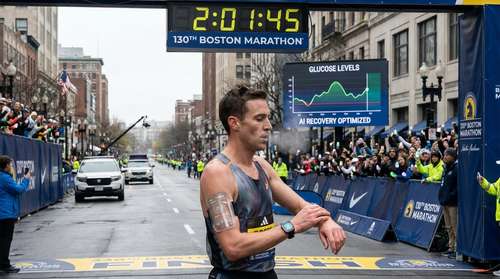
Perhaps the most significant performance breakthrough visible on the course today is the widespread adoption of biosensors. Over the last two years, over-the-counter continuous glucose monitors (CGMs) like the Dexcom Stelo and Abbott FreeStyle Libre 3 Plus have fundamentally changed how endurance athletes fuel. Real-time glucose monitoring for runners has entirely eliminated the guesswork from mid-race nutrition.
Instead of blindly consuming gels every 45 minutes, a data-stream athlete receives proactive alerts directly to their smartwatch. Many of these modern sensors feature Direct-to-Watch capabilities via Bluetooth, bypassing the need to carry a smartphone on the course. By maintaining low and stable glucose profiles throughout their training blocks, runners improve their baseline insulin sensitivity and effectively prevent the dreaded bonk around mile 20. This precise metabolic feedback loop ensures they have the exact energy reserves needed to crest Heartbreak Hill.
Pushing the Limits with Marathon Training Technology 2026
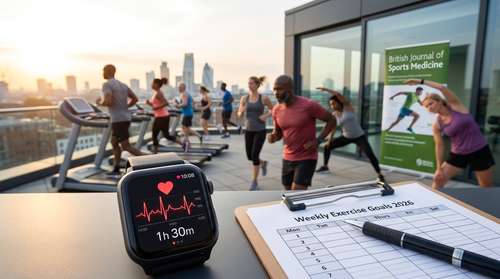
The gear outfitting today's field represents a massive leap forward in personal analytics. If you look closely at the competitors, you will see the best running wearables 2026 has to offer. These devices have moved far beyond basic GPS tracking and step counting. The latest iterations feature AI-powered biometric coaching that learns an individual's specific patterns, such as how caffeine or late meals disrupt their recovery.
By utilizing sub-100 millisecond inferencing—a predictive framework adapted from professional football leagues—wearables can now analyze running biomechanics on the fly. If a runner's gait changes slightly due to mounting fatigue, their watch instantly calculates the increased injury risk and suggests pacing adjustments. This cutting-edge marathon training technology 2026 seamlessly integrates with smart apparel to create a comprehensive digital twin of the athlete, providing zero-latency feedback that was previously restricted to high-performance clinical labs.
AI Recovery for Athletes: Winning the Race Before it Starts
Crossing the finish line on Boylston Street is only the visible culmination of months of preparation. Behind the scenes, AI recovery for athletes has played a pivotal role in getting these competitors to the starting line in peak physical condition. Professional and amateur runners alike now depend on machine learning platforms to optimize their rest and rehabilitation.
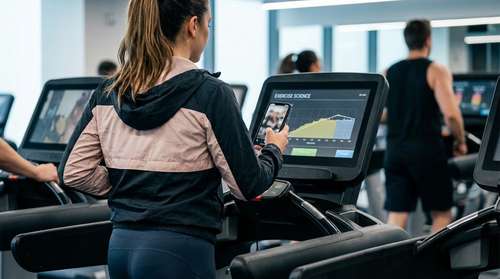
Systems analyzing sleep disruptors, nervous system strain, and historical performance data can prescribe hyper-personalized recovery protocols. Instead of prescribing generic rest days, computer vision technology acts as a digital physiotherapist. Using smartphone cameras, deep learning models track posture and joint angles during strength training, correcting imbalances before they lead to overuse injuries.
The global AI athlete recovery optimization market has exploded, with cloud-based platforms taking the lead in allowing coaches to remotely monitor an athlete's fatigue levels. For a runner navigating a grueling 16-week marathon build, this means their training plan dynamically adapts daily. If a wearable detects poor sleep quality or elevated resting heart rate, the AI automatically dials back the intensity of the morning's track workout. When the final 2026 Boston Marathon results are published later today, they will not just be a testament to human willpower, but a validation of this new era of intelligent, data-driven endurance.