In a historic and controversial shift that overturns nearly five decades of federal nutrition policy, the U.S. government has officially released the 2026 Dietary Guidelines, unveiling a radical "inverted food pyramid" that prioritizes whole proteins and animal fats while heavily restricting grains. The announcement, made jointly by the USDA and HHS earlier this week, marks a decisive victory for the "Make America Healthy Again" movement, explicitly labeling beef tallow healthy fat and declaring a nationwide war on ultra-processed foods. This update, which critics and supporters alike are calling the most significant overhaul in modern history, effectively ends the low-fat era.
The Great Inversion: Protein and Fats Take the Throne
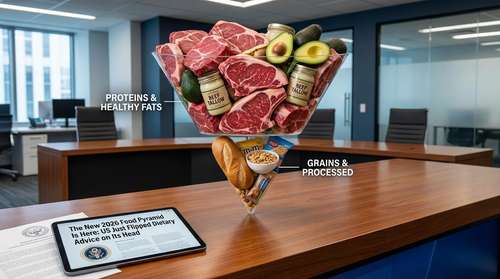
For generations, Americans were taught that carbohydrates should form the foundation of their diet. The new inverted food pyramid shatters this paradigm. Under the newly ratified standards, the "base" of the diet—the largest recommended portion—now consists of nutrient-dense whole foods: red meat, poultry, eggs, and dairy. Vegetables and fruits occupy the second tier, while grains, formerly the pyramid's foundation, have been demoted to the narrowest tip, termed "supplemental energy."
HHS Secretary Robert F. Kennedy Jr. described the move as a return to biological reality. "We are ending the experiment that replaced farm-fresh foods with factory-made fillers," he stated during the press briefing. The new visual guide replaces the "MyPlate" icon, which officials argued had become too abstract and permissive of processed carbohydrates. Instead, the US nutrition policy update focuses on "bioavailability" and "nutrient density," urging Americans to build meals around high-quality proteins rather than starchy fillers.
Tallow and Butter: The Return of 'Heritage Fats'
Perhaps the most shocking element of the 2026 update is the explicit re-categorization of traditional animal fats. For the first time since 1980, the guidelines distinguish between "industrial seed oils" (like soybean and corn oil) and "heritage fats." The document formally lists beef tallow healthy fat, butter, and lard as preferred cooking mediums, citing their heat stability and lack of oxidative byproducts.
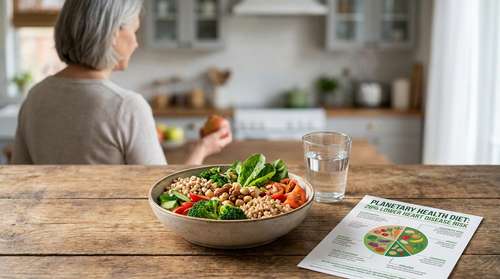
This reversal challenges decades of cardiology advice but aligns with a growing body of independent research championing a protein-rich diet supported by natural saturated fats. The guidelines argue that the obesity epidemic correlated with the removal of satiating animal fats and their replacement with inflammatory vegetable oils. "Fat is not the enemy; processing is," the summary document reads, encouraging consumers to embrace whole-fat dairy and untrimmed cuts of meat as sources of essential fat-soluble vitamins.
The Ban on 'Food-Like Substances'
While the promotion of meat and dairy has grabbed headlines, the crackdown on artificial ingredients is equally sweeping. The new policy introduces a strict definition for an ultra-processed food ban in federal programs. Starting immediately, foods containing high-fructose corn syrup, artificial dyes, and industrial emulsifiers are disqualified from the National School Lunch Program.
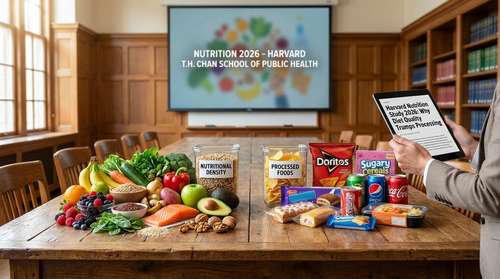
The guidelines go a step further, advising that "products with ingredients not found in a home kitchen should be treated as recreational substances, not food." This stark language aims to drastically reduce the consumption of boxed cereals, shelf-stable pastries, and meat substitutes, which the USDA now categorizes as "low-nutrient vectors." The goal is nutrient dense eating: consuming foods that provide maximum vitamins and minerals per calorie, rather than empty energy.
Impact on Schools and Grocery Aisles
The ripple effects of this announcement are already being felt across the industry. Major food manufacturers saw stock dips yesterday as investors fear a regulatory cliff for snack foods. Meanwhile, commodity prices for beef and dairy futures have surged in anticipation of increased institutional demand. Schools have been given a generous timeline to transition, but the message is clear: the days of pizza and chocolate milk (loaded with added sugar) counting as a balanced meal are over.
This 2026 Dietary Guidelines overhaul represents a massive gamble by the administration, betting that a return to ancestral eating patterns can reverse the nation's chronic disease crisis. Whether this "meat-first" approach will slim down America remains to be seen, but one thing is certain: the government is no longer asking you to eat your bread.