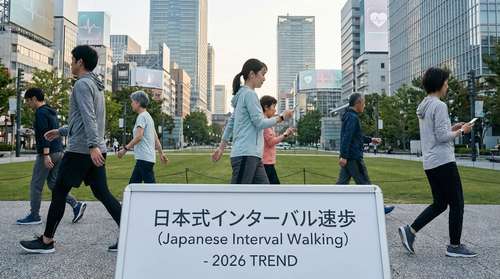
Forget the grueling CrossFit sessions and the obsession with hitting exactly 10,000 steps. In February 2026, the fitness world has collectively pivoted toward a smarter, more efficient longevity hack: the Japanese walking method. According to a groundbreaking new industry report released this month, search interest for this specific interval walking workout has skyrocketed by nearly 3,000% compared to last year, crowning it the undisputed leader of 2026 fitness trends. But unlike the fleeting viral challenges of the past, this surge is backed by decades of rigorous scientific data.
The Rise of Low-Impact Interval Training
The method, scientifically known as Interval Walking Training (IWT), isn't technically new, but its explosion into the mainstream is right on time. As we settle into 2026, the global fitness zeitgeist has shifted away from high-cortisol, punishment-based exercise toward low-impact interval training that prioritizes metabolic health and lifespan. The viral appeal lies in its deceptively simple structure: you don't need a gym membership, specialized equipment, or hours of free time.
"We are seeing a massive correction in how people view movement," notes fitness industry analyst Sarah Jenkins. "The data shows that people are done with burnout. They want protocols that deliver measurable clinical improvements in blood pressure and biological age without destroying their joints. That is exactly what the Japanese method offers."
Deconstructing the Shinshu University Method
At the heart of this trend is the specific protocol developed by Dr. Hiroshi Nose and his team at Shinshu University in Matsumoto, Japan. While "interval walking" sounds generic, the Japanese interval walking study established a precise formula that unlocks benefits steady-state walking cannot match.
The 3-Minute Protocol
The regimen requires a strict alternation of intensity for a total of 30 minutes, at least four days a week:
- 3 Minutes of Fast Walking: This isn't just a brisk stroll. You must walk at roughly 70% of your maximum effort. A good litmus test is the "talk test"—if you can sing, you're going too slow; if you can't speak a short sentence, you're going too fast.
- 3 Minutes of Slow Walking: This is the recovery phase, done at about 40% effort. It allows lactate to clear and prepares your muscles for the next burst.
- Repeat: Complete five sets of this 3-on, 3-off cycle per session.
Dr. Nose’s research revealed that this oscillation is key. The high-intensity intervals trigger a muscle pumping action in the thighs that forces blood back to the heart, significantly improving stroke volume and aerobic capacity (VO2 max) in a way that steady 10,000-step routines simply do not.
Why It Beats the '10,000 Steps' Myth
For years, the 10,000-step rule—originally a marketing slogan from the 1960s—held a monopoly on walking advice. However, the surge in walking for longevity in 2026 is driven by a realization that intensity matters more than volume. The Shinshu University data showed that participants who followed the interval method increased their aerobic fitness by up to 20% and saw significant drops in systolic blood pressure, whereas those who walked 10,000 steps at a continuous pace saw almost no improvement in these specific biomarkers.
In the context of viral fitness challenges 2026, this efficiency is a major selling point. You can achieve superior metabolic results in 30 minutes than you might in 90 minutes of aimless strolling. It turns walking from a passive activity into a potent medical intervention.
Longevity and the 'Healthspan' Focus
The method's popularity also dovetails with the "Super-Aging" society concerns that originated in Japan but are now relevant globally. The Japanese walking method specifically targets the fast-twitch muscle fibers in the thighs and glutes—the first muscles to atrophy as we age. By preserving this muscle mass, the practice serves as a firewall against frailty and metabolic disease.
Recent user data from major health apps indicates that adoption is highest among the 30-55 demographic, a group increasingly focused on preventative health rather than just aesthetics. It’s a shift from "looking fit" to "staying young," with interval walking serving as the primary tool for mitochondrial health.
How to Start Your Interval Walking Routine
If you are ready to join the millions adopting this trend, start with these practical steps:
- Measure Your Baseline: Don't guess your speed. Use a smartwatch or a simple timer to ensure you are actually hitting the 3-minute marks accurately.
- Focus on Form: During the fast intervals, engage your core and pump your arms. This isn't a casual walk; it's an athletic event.
- Consistency Over Intensity: While the speed matters, the frequency matters more. Aim for the recommended four sessions a week to see the blood pressure and VO2 max benefits cited in the clinical trials.
As we move further into 2026, the Japanese walking method stands out as a rare fitness trend that over-delivers on its promises. It is scientifically sound, universally accessible, and provides a powerful antidote to the sedentary modern lifestyle—three minutes at a time.