In a fitness landscape often dominated by aesthetic goals and quick fixes, biohacking pioneer Bryan Johnson has just dropped a statistic that is reshaping how we think about exercise in 2026. On February 1, the architect of the Blueprint protocol revealed what he calls the "42% Advantage"—a data-backed assertion that the precise combination of strength training and cardiovascular intensity can lower all-cause mortality risk by nearly half. This announcement marks a significant pivot in Johnson’s public health strategy, moving beyond the shock value of plasma exchange and into a surprisingly accessible, yet rigorous, fitness philosophy he terms "framework protection."
The 42% Equation: Decoding the New Standard
The core of Johnson’s latest update is not a new supplement or an esoteric machine, but a specific ratio of movement that he claims unlocks the maximum longevity benefit. According to his February 1 update, the "42% advantage" is achieved through a strict adherence to a "3+3" weekly split: three days of targeted strength training combined with three days of cardiovascular conditioning.
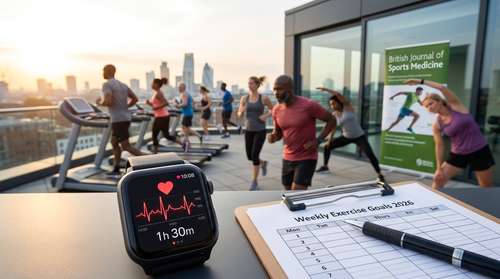
This isn't just about hitting the gym; it's about hitting specific physiological zones. Johnson’s updated 2026 protocol mandates 150 minutes of moderate Zone 2 cardio (where you can hold a conversation) alongside 75 minutes of vigorous Zone 5 effort (where you cannot). This balance is designed to optimize mitochondrial efficiency without creating the excessive oxidative stress that can accelerate aging—a fine line that many fitness enthusiasts unknowingly cross.
Enter "Framework Protection": The Shift to Skeletal Longevity
Perhaps the most radical departure in Johnson’s new routine is the concept of "framework protection." While traditional fitness trends for men have historically focused on hypertrophy (muscle growth) for aesthetic bulk, Johnson is doubling down on structural integrity. The goal is no longer just to look ripped, but to fortify the skeleton against the inevitable decline of bone density.
"Framework protection" prioritizes the skeletal system as the primary engine of longevity. The logic is stark: frailty, often caused by hip fractures or loss of mobility, is a leading cause of mortality in later life. To combat this, Johnson’s new routine emphasizes axial loading exercises—movements that compress the spine and long bones to stimulate osteogenesis (bone growth).
Key Moves for Bone Density
The updated regimen strips away isolation exercises like bicep curls in favor of compound, load-bearing movements. Key staples now include:
- Weighted Farmer’s Walks: For grip strength and total-body structural tension.
- Tibialis Raises: To strengthen the shins and protect the knees (the "shock absorbers" of the framework).
- Nordic Hamstring Curls: To bulletproof the posterior chain against injury.
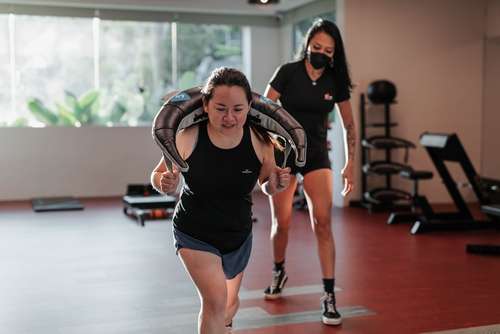
- Heavy Sled Pulls: A low-impact way to generate maximum force without joint trauma.
Biohacking the "Anti-Bodybuilder" Physique
Johnson’s 2026 aesthetic is noticeably leaner and more functional than the bulky ideal of the 2010s. This is intentional. The new protocol explicitly warns against "vanity muscle" that demands excessive caloric intake and places undue stress on the heart. Instead, the focus is on relative strength—how strong you are compared to your body weight.
This shift reflects a broader trend in the longevity community: the realization that carrying extra mass, even muscle, can be metabolically expensive. By optimizing for VO2 max and grip strength (both top-tier biomarkers for aging), Johnson is advocating for a physique that is built for duration, not just display.
Implementation: How to Start the Protocol Today
While Johnson’s resources allow him to train with laser-guided precision, the barrier to entry for the "42% advantage" is surprisingly low. The 2026 update encourages followers to begin with the basics of the "Don't Die" philosophy immediately.
Start by auditing your weekly volume. Are you hitting the 150-minute mark for moderate cardio? If not, brisk walking or rucking (walking with a weighted backpack) is the recommended entry point. For strength, swap machine-based exercises for free weights that require stabilization, thereby engaging the "framework" more effectively. As Johnson stated in his recent briefing, "We are the first generation that can choose to build a body that refuses to break."