For millions suffering from the grinding pain of osteoarthritis, the only long-term solution has historically been invasive joint replacement surgery. But on Wednesday, scientists at Stanford Medicine announced a stunning development that could make those surgeries obsolete. In a groundbreaking study published this week, researchers revealed a new injectable treatment capable of regrowing healthy cartilage in aging joints and preventing arthritis before it starts. This Stanford arthritis breakthrough targets a single protein responsible for tissue aging, effectively hitting the "reset" button on damaged knees.
Blocking the "Gerozyme": How It Works
The discovery centers on a protein called 15-PGDH (15-hydroxyprostaglandin dehydrogenase), which the research team has dubbed a "gerozyme"—an enzyme that drives aging. According to the study published in Science, levels of 15-PGDH rise dramatically in our joints as we get older, leading to the breakdown of cartilage.
The Stanford team, led by Dr. Helen Blau, Professor of Microbiology and Immunology, and Dr. Nidhi Bhutani, Associate Professor of Orthopaedic Surgery, found that 15-PGDH depletes a vital molecule called prostaglandin E2, which is essential for tissue repair. By injecting a molecule that inhibits 15-PGDH, they successfully restored prostaglandin E2 levels, triggering the joints to heal themselves.
"Imagine regrowing existing cartilage and avoiding joint replacement," Dr. Blau said in a statement. "We are very excited about this potential breakthrough. This is a new way of regenerating adult tissue, and it has significant clinical promise for treating arthritis due to aging or injury."
Reprogramming Cells, Not Adding Stem Cells
One of the most surprising findings of this cartilage regeneration research is that it does not rely on stem cells. For decades, scientists believed that regrowing cartilage would require introducing fresh stem cells into the joint. However, the Stanford study proves otherwise.
The treatment works by "reprogramming" the existing chondrocytes—the cells already present in the cartilage. In aging joints, these cells often become dormant or destructive, producing factors that degrade the tissue. The 15-PGDH inhibitor effectively wakes them up, causing them to revert to a youthful state and begin producing fresh, shock-absorbing tissue.
"The mechanism is quite striking and really shifted our perspective about how tissue regeneration can occur," noted Dr. Bhutani. "It's clear that a large pool of already existing cells in cartilage are changing their gene expression patterns. And by targeting these cells for regeneration, we may have an opportunity to have a bigger overall impact clinically."
Success in Mice and Human Tissue
The results, which have sent waves through the medical community this week, were demonstrated in two key models:
- Reversing Aging: In older mice with thinned, damaged cartilage, the injection restored the tissue to a thickness and quality comparable to young, healthy mice.
- Preventing Injury-Based Arthritis: In mice subjected to knee injuries similar to human ACL tears, the treatment prevented the onset of osteoarthritis, a condition that typically plagues athletes years after an injury.
Crucially, the team validated these findings in human tissue. They treated cartilage samples removed from patients undergoing total knee replacements. After just one week of exposure to the inhibitor, the human cartilage showed signs of regeneration and reduced inflammation, suggesting the therapy is highly translatable to humans.
A Non-Surgical Joint Repair Future?
This development comes at a critical time. Healthy aging mobility is a growing concern as populations age, and osteoarthritis affects nearly one in five adults in the U.S. alone. Current treatments, such as steroid injections or hyaluronic acid, only mask pain or provide temporary lubrication. This new therapy represents the first potential non-surgical joint repair that addresses the root cause of the disease.
Timeline: When Will It Be Available?
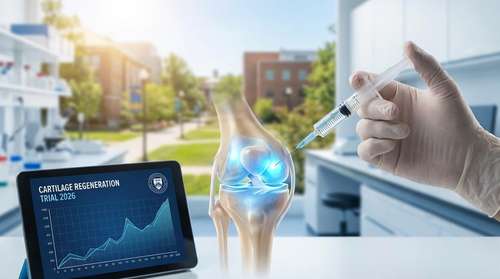
While the study results are fresh as of January 2026, the path to clinical availability is promising. An oral version of the 15-PGDH inhibitor is already in Phase 1 clinical trials for a different condition—sarcopenia (age-related muscle loss)—and has shown to be safe in humans. This existing safety data could significantly accelerate the FDA approval process for an osteoarthritis injection 2026 trial.
The researchers hope to launch dedicated human trials for cartilage regeneration "soon." If successful, this therapy could transform orthopedics, turning a debilitating, progressive disease into a manageable, reversible condition.
"We were looking for stem cells, but they are clearly not involved," Dr. Blau concluded. "It's very exciting." For the millions waiting for a cure, that excitement is an understatement.