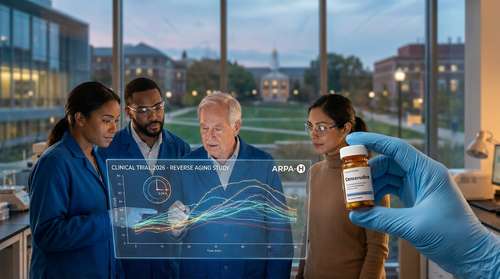
ROCHESTER, N.Y. — In a potential watershed moment for longevity science, researchers have launched a groundbreaking federal trial to determine if a repurposed HIV drug can slow or even reverse the biological aging process. The University of Rochester and Brown University announced yesterday that they have been awarded a $22 million contract from the Advanced Research Projects Agency for Health (ARPA-H) to test the drug Censavudine (TPN-101). This initiative, which centers on a reverse aging clinical trial 2026 is watching closely, aims to neutralize a hidden genetic driver of aging known as "retrotransposons" or "junk DNA."
Targeting the "Zombie Genes" Inside Us
For decades, scientists dismissed large portions of the human genome as "junk DNA"—ancient viral fragments that were believed to be inactive. However, leading researchers like Vera Gorbunova at the University of Rochester and John Sedivy at Brown University have discovered that this genetic material is far from dormant. Known as retrotransposons, these elements can wake up as we age, behaving like "zombie genes" that replicate and trigger a chronic immune response.
This internal "false alarm" leads to widespread inflammation—often called "inflammaging"—which degrades tissues and contributes to age-related decline in cognitive and physical function. "Our hope is that by dialing down retrotransposons, we can help people remain healthier, stronger, and mentally sharper as they age," said Gorbunova, a lead investigator on the project. By silencing these rogue genetic elements, the team hopes to stop the aging process at its molecular source.
Censavudine for Longevity: Repurposing a Powerful Drug
The trial focuses on Censavudine for longevity, a drug originally developed to treat HIV and progressive supranuclear palsy (PSP). Also known as TPN-101, the drug works as a reverse transcriptase inhibitor. Since retrotransposons rely on the same replication machinery as HIV, TPN-101 effectively blocks the enzyme these "zombie genes" need to copy themselves and wreak havoc.
How TPN-101 Anti-Aging Benefits Work
In preclinical studies, TPN-101 anti-aging benefits were evident: the drug successfully reduced inflammation and interferon signaling in older mice, mimicking the cellular environment of a younger organism. Now, under the ARPA-H aging research program, scientists will test if these results translate to humans. If successful, this could be the first oral treatment validated to slow biological aging, shifting the medical paradigm from treating individual diseases to bolstering the body's intrinsic resilience.
Details of the University of Rochester Longevity Study
The University of Rochester longevity study, conducted in collaboration with Brown University and other institutions, represents one of the most significant investments by the federal government into geroscience. As part of ARPA-H's PROactive Solutions for Prolonging Resilience (PROSPR) program, the trial will be rigorous and comprehensive.
- Participants: The study will enroll approximately 200 healthy seniors aged 60 to 65.
- Methodology: A randomized, placebo-controlled trial will administer Censavudine over a 48-week period.
- Measurements: Researchers will track "intrinsic capacity"—a World Health Organization metric that includes mobility, cognition, vitality, and sensory function—alongside epigenetic clocks that measure biological age.
This biological aging treatment trial is unique because it targets healthy individuals rather than those already suffering from a specific disease. The goal is preservation: keeping seniors robust and independent for significantly longer.
A New Era of Healthy Aging Breakthroughs
The launch of this trial marks a pivotal shift in how we approach healthcare in the 21st century. Historically, medicine has played "whack-a-mole" with age-related conditions like Alzheimer's, heart disease, and frailty. The ARPA-H aging research initiative seeks to change the rules of the game by addressing the root cause.
"What’s new and really exciting about this project is that the goal is not to treat diseases, but to treat aging itself," said John Sedivy of Brown University. If the data from this reverse aging clinical trial 2026 confirms the safety and efficacy of TPN-101, it could pave the way for a new class of geroprotective drugs. Such healthy aging breakthroughs would not only extend life spans but, more importantly, extend "healthspans"—the number of years we spend in good health.
As the trial commences, the scientific community and the public alike wait with bated breath. If humanity can indeed silence the "junk DNA" that drags us down, the definition of what it means to be 65 years old may be about to change forever.