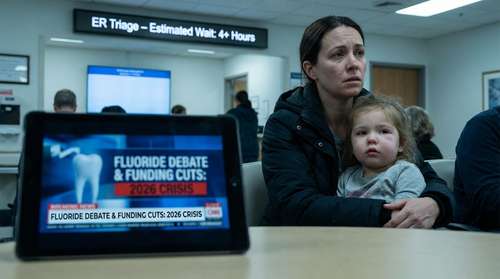
Across the United States, emergency rooms are grappling with a disturbing new trend: a staggering influx of children arriving in agonizing pain, not from broken bones or respiratory viruses, but from severe tooth decay. As federal health funding shrinks and the water fluoridation controversy of 2026 intensifies, pediatric dental health has reached a critical tipping point. For thousands of parents lacking access to affordable dental care for families, the local hospital has become the last resort for managing preventable oral infections.
The Staggering Rise in Kids Toothache ER Visits
The numbers paint a bleak picture of the current childhood tooth decay crisis. Recent reports from the CareQuest Institute for Oral Health reveal that ER visits for non-traumatic dental problems in children under 15 surged by nearly 60% nationally in recent years. Local data mirrors this alarming trajectory. At Children's Hospital Colorado, non-traumatic dental cases in the emergency department skyrocketed 175% over the past fifteen years, while states like Kentucky reported a 72% jump in children seeking urgent hospital care for tooth problems since 2020.
Pediatric dentists note that the severity of these cases is also escalating. Providers who once treated young patients with a single isolated cavity are now routinely examining children with widespread, multi-tooth decay and systemic infections. These severe cases often require physical restraint or aggressive pain management, traumatizing both the child and the parents who are unable to secure timely appointments with specialized dental professionals.
Funding Cuts and the Squeeze on Dental Insurance for Children
The spike in pediatric dental emergencies is deeply tied to recent shifts in public health funding. Broad cuts to Medicaid programs and shifting state-level policies have stripped dental insurance for children from thousands of vulnerable households. Research shows that when adult dental benefits are rolled back, there is a direct spillover effect on children; families who lose coverage are significantly less likely to schedule routine check-ups for their kids.
Furthermore, an ongoing shortage of pediatric dental professionals—particularly in rural areas—means that even families who maintain their coverage struggle to find nearby practitioners accepting new patients. When a child wakes up with a swollen face and an exposed nerve, parents have little choice but to rush to the nearest emergency department for immediate relief.
The Water Fluoridation Controversy 2026: A Looming Disaster?
Complicating the crisis is a fiercely debated political movement targeting community water supplies. The water fluoridation controversy 2026 has seen top health officials aggressively push to ban fluoride from public drinking water. As of March 2026, lawmakers in at least 15 states have introduced bills prohibiting or limiting the mineral, following the lead of early adopters like Florida and Utah.
The American Academy of Pediatric Dentistry (AAPD) recently sounded the alarm, formally condemning the Environmental Protection Agency's trajectory on fluoride assessments. The AAPD warns that relying on heavily criticized toxicology reports to justify de-fluoridation will trigger a massive public health disaster. A recent modeling study supports this fear, estimating that a nationwide removal of fluoride would result in 25.4 million additional cavities among American children over the next five years, disproportionately affecting those without insurance.
Why the ER Is Not a Dental Home
While the emergency room can dispense antibiotics and pain medication, it is rarely equipped to handle root causes. Most hospitals lack the specialized tools and on-call dental surgeons necessary to extract severely decayed teeth or perform pediatric root canals. Consequently, families are sent home with temporary relief, only to find themselves back in the waiting room days later when the infection inevitably returns. This cycle not only burdens an already strained healthcare system but also saddles families with massive out-of-pocket medical bills that rarely resolve the underlying dental issue.
Restoring Preventative Oral Health
Addressing this nationwide emergency requires immediate intervention at both the policy and community levels. Expanding affordable dental care for families must become a legislative priority, ensuring that preventative oral health news translates into real-world accessibility. Routine measures—such as professional cleanings, sealants, and maintaining optimal fluoride levels—are exponentially cheaper and less traumatic than treating advanced abscesses in a hospital setting.
Actionable Steps for Parents
With the current landscape making it difficult to rely on standard safety nets, dental professionals recommend taking proactive steps to protect your child's teeth from decay:
- Schedule Early Visits: The AAPD recommends that a child sees a dentist by their first birthday or when their first tooth erupts, establishing a baseline for routine preventative care.
- Limit Sugary Snacks: Studies show a direct correlation between increased sugar intake during the pandemic and the current severity of multi-tooth cavities. Opt for water and whole foods whenever possible.
- Understand ER Limitations: If your child faces a genuine dental emergency—such as trauma, high fever, or facial swelling—the ER is necessary. However, for a standard toothache, exhausting local urgent dental care options first can save time and money.
- Stay Informed: Keep abreast of preventative oral health news and local policy changes regarding water fluoridation in your county. Advocacy at the community level can help protect pediatric health resources.
Establishing a consistent dental routine early in a child's life remains the most effective defense against the excruciating pain of tooth decay. Until systemic gaps in pediatric care are closed, however, emergency rooms will likely continue to bear the brunt of this entirely preventable epidemic.