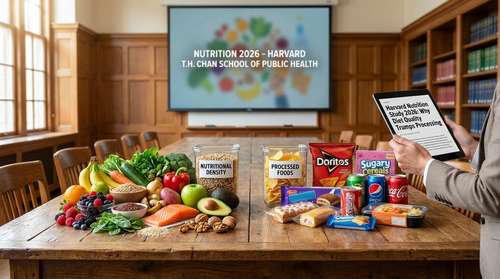
February 4, 2026 – The battle over America's dinner plates has reached a fever pitch this week as leading nutrition scientists launched a coordinated offensive against the Trump administration's newly implemented 2025-2030 Dietary Guidelines for Americans. While the updated policy was unveiled last month, a fresh wave of expert analysis released in the last 48 hours has exposed critical contradictions between the administration's "Make America Healthy Again" (MAHA) agenda and established cardiovascular science, triggering a national debate that could reshape how millions of families eat.
The Great Protein Pivot: Necessity or Excess?
At the heart of the controversy is the administration's new directive effectively doubling the recommended protein intake for adults. The new guidelines advise a daily target of 1.2 to 1.6 grams of protein per kilogram of body weight, a stark increase from the previous standard of 0.8 grams. This shift prioritizes animal-based sources like red meat, poultry, and eggs, explicitly moving away from the plant-forward messaging of previous years.
However, new reports published yesterday by independent watchdogs warn that this "protein hyper-focus" may be scientifically baseless for the average American. "The guidelines move away from treating protein targets as a minimum to prevent deficiency and instead treat them as an optimal target for muscle growth, which is confusing for the general public," noted nutrition researchers in a briefing Tuesday. Critics argue that without accompanying resistance training, this massive surplus in calories—specifically from animal fats—could inadvertently fuel the obesity crisis the administration claims to be fighting.
Red Meat and the "Healthy Fat" Confusion
The most contentious point of friction emerged this week regarding the definition of "healthy fats." While the written text of the guidelines technically retains the longstanding recommendation to limit saturated fat to 10% of daily calories, the new visual aids—dubbed the "New Food Pyramid 2026"—prominently feature butter, beef tallow, and full-fat dairy at the top tier.
This visual rebranding has drawn sharp rebuke from the American Heart Association and other health organizations as of February 3. They argue that categorizing animal fats alongside olive oil and avocados creates dangerous "conflicting messaging" that could mislead consumers into consuming artery-clogging saturated fats at dangerous levels. The administration, led by HHS officials, defends the move as "ending the war on saturated fats," positing that whole-food animal fats are superior to processed vegetable oils.
School Lunch Shake-Up: The End of UPFs?
For parents, the most immediate impact of this U.S. nutrition policy reset will be seen in school cafeterias. Following the signing of the "Whole Milk for Healthy Kids Act," schools are now pivoting back to offering whole milk, a move celebrated by the dairy industry but scrutinized by pediatric dietitians.
More drastically, the guidelines explicitly target ultra-processed foods (UPFs), mandating their removal from federally funded meal programs. As of this week, school nutrition directors are scrambling to interpret what officially counts as a "highly processed" food under the new rules. The ban targets common staples like pre-packaged muffins, sugary cereals, and flavored yogurts. While health advocates universally applaud the reduction of UPFs, school districts are voicing urgent concerns about the financial feasibility of switching to scratch-cooked, high-protein meals without increased federal funding.
The "MAHA" Agenda vs. Institutional Science
This nutrition overhaul represents the first major policy victory for the "Make America Healthy Again" movement, spearheaded by administration officials who have long criticized the influence of corporate food lobbies on federal guidelines. By calling out "petroleum-based dyes" and "artificial preservatives," the guidelines take a populist stance against the processed food industry.
Yet, the rollout has deepened the rift between government policy and academic science. In the last two days, prominent researchers from Harvard and Tufts have publicly questioned whether the exclusion of established scientific consensus—particularly regarding the cardiovascular risks of red meat—was driven by ideology rather than data. As the 2026 dietary guidelines move from paper to policy, the American public is left navigating a confusing landscape where government advice and medical consensus no longer align.
As this debate intensifies, one thing is clear: the definition of a "healthy American diet" has fundamentally changed, and the fallout from this radical pivot is only just beginning.