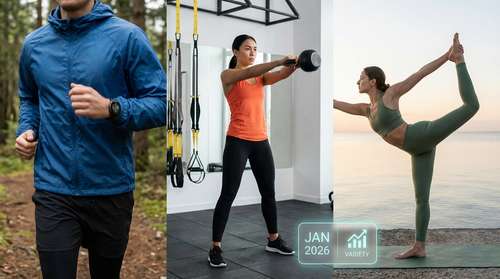
For decades, the "150-minute rule" has been the golden standard of public health advice: get 150 minutes of moderate activity per week, and you're good to go. But a landmark study published this week in BMJ Medicine is shaking up that foundation, suggesting that how you move matters just as much as how much you move. The research, involving over 111,000 adults, reveals that exercise variety is independently linked to a staggering 19% lower mortality risk, challenging the long-held belief that hitting a time target is the sole metric for longevity.
The Breaking Science: Why 150 Minutes Isn't Enough
The study, released on January 20, 2026, by researchers at the Harvard T.H. Chan School of Public Health, analyzed three decades of data from the Nurses’ Health Study and the Health Professionals Follow-Up Study. While previous guidelines focused almost exclusively on volume and intensity, this new analysis introduces a third critical dimension: modal diversity.
Researchers discovered that participants who engaged in the widest range of physical activities—mixing walking, swimming, weightlifting, and racquet sports—outlived those who stuck to a single form of exercise, even when their total caloric burn and time spent exercising were identical. The data showed a linear relationship: the more diverse the movement portfolio, the lower the risk of premature death from all causes, including cardiovascular disease and cancer.
"It’s a pretty novel finding that engaging in more types of activities at a given total activity level may offer additional health benefits toward longevity," explained Yang Hu, the study’s corresponding author. The implication is clear: a runner who logs 30 miles a week may be less protected against aging than a "hybrid athlete" who runs 10 miles, swims laps, and lifts weights for the same total duration.
Beyond Boredom: The Biological Power of Biomechanical Diversity
Why does variety equate to vitality? The secret lies in biomechanical diversity. Doing the same movement pattern repeatedly—whether it's the pavement-pounding stride of running or the hunched posture of cycling—stresses the same tissues and neglects others. This "specialization" can lead to overuse injuries and localized inflammation, potentially accelerating wear and tear on specific joints.
Complementary Physiological Adaptations
Multimodal exercise triggers what physiologists call "complementary adaptations." Resistance training improves bone density and muscle scaffolding, aerobic work enhances mitochondrial efficiency, and racquet sports (like tennis or squash) sharpen neuromuscular coordination and reaction time. When combined, these modalities create a more resilient physiological system.
According to the 2026 findings, the "variety effect" was particularly potent for cardiovascular health. Mixing upper-body dominant activities (like swimming or rowing) with lower-body heavy exercises (like running) forces the heart to adapt to different pressure loads and circulation demands, potentially leading to superior arterial elasticity.
The New Longevity Protocol: How to Diversify Your Routine
This study arrives just as "Hybrid Training" tops the fitness trends charts for 2026. The era of the specialist is fading; the era of the generalist is here. To capitalize on these findings, you don't need to train like a triathlete, but you do need to break the monotony. Here is a science-backed protocol to integrate variety into your week:
- The Foundation (Daily): Low-impact movement like walking or gardening. The study found these "baseline" activities contributed significantly when paired with higher intensity work.
- The Structural Pillar (2x Week): Resistance training. This is non-negotiable for preserving lean mass.
- The Metabolic Spike (1-2x Week): High-output cardio like running, spinning, or rowing.
- The Neurological Challenge (1x Week): Complex movement requiring hand-eye coordination, such as tennis, pickleball, or dance.
Comparing a "runner-only" profile to a "mixed-method" profile, the mixed group showed significantly lower risks of respiratory disease and cancer, likely because different exertion types stimulate different immune responses and hormonal adaptations.
2026 Fitness Trends Align with Science
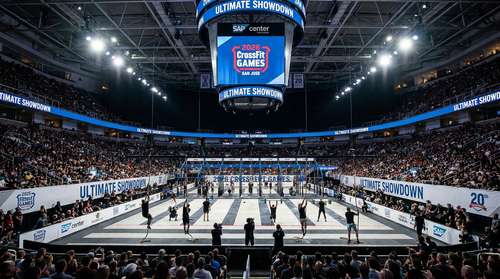
It is no coincidence that the American College of Sports Medicine (ACSM) named "Adult Recreation and Sport Clubs" a top trend for 2026. We are seeing a shift away from solitary grind-mode workouts toward social, skill-based activities. The rise of Hyrox competitions and the explosion of pickleball leagues are practical manifestations of this "exercise variety" principle.
This shift is also psychological. Adherence is the silent killer of many fitness plans. "Biomechanical burnout"—where your body is capable but your mind is bored—is less likely when your weekly schedule includes a swim on Tuesday, a lift on Thursday, and a hike on Saturday. The mental novelty keeps the "reward" centers of the brain engaged, ensuring consistency over decades, not just weeks.
Ultimately, the 2026 BMJ Medicine study doesn't negate the 150-minute rule; it evolves it. The goal is no longer just to fill a time bucket with sweat. The goal is to build a body that is competent in multiple domains—strong, enduring, flexible, and coordinated. In the quest for longevity, it turns out that being a jack-of-all-trades is better than being a master of one.