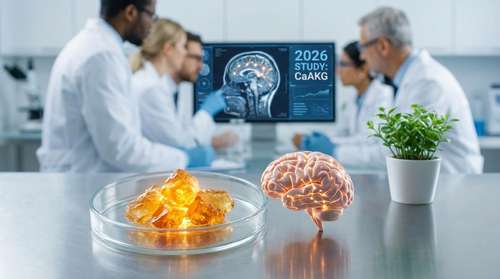
In a striking development for brain health research, a landmark study released on January 25, 2026, has identified a natural way to reverse the neural damage associated with early-stage Alzheimer’s disease. Researchers at the National University of Singapore (NUS) have discovered that Calcium Alpha-Ketoglutarate (CaAKG), a compound our bodies produce naturally but lose as we age, can repair weakened neural signaling and restore lost memories. This finding represents a significant shift from traditional treatments, suggesting that CaAKG for Alzheimer’s could offer a safer, biologically native approach to stalling cognitive decline.
Rewiring the Brain: How CaAKG Restores Memory
The study, led by Professor Brian K. Kennedy at the NUS Yong Loo Lin School of Medicine, focused on one of the most devastating aspects of dementia: the loss of associative memory. This is the ability to link unrelated items—like a face to a name or a smell to a place. It is often one of the first faculties to fade in patients with neurodegenerative conditions.
Professor Kennedy’s team found that administering CaAKG did not just slow this decline; it actively restored the brain's ability to communicate. The compound works by revitalizing synaptic plasticity, specifically a process known as Long-Term Potentiation (LTP). LTP is essentially the volume knob on neural connections—when it’s high, signals are strong and memories form easily. In Alzheimer's brains, this knob is turned down. The study revealed that CaAKG turns it back up, effectively repairing the "broken highways" of the brain.
Bypassing the Blockades
What makes this discovery truly ground-breaking is how the molecule works. Current Alzheimer’s drugs often struggle because they try to push signals through receptors (like NMDA receptors) that are already clogged or damaged by toxic amyloid plaques. The NUS researchers discovered that CaAKG takes a detour. It activates L-type calcium channels and AMPA receptors instead, completely bypassing the damaged routes to restore neural firing. This unique mechanism explains why restoring neural signaling was successful even in brains with significant pathology.
The Age Factor: Treating the Cause, Not Just Symptoms
This breakthrough aligns with a growing trend in brain health breakthroughs 2026: the move toward "geroprotection," or treating the biological processes of aging itself. Alpha-Ketoglutarate (AKG) is a key metabolite in the Krebs cycle, the engine that powers our cells. However, starting around age 40, our natural levels drop precipitously. By the time we reach 80, we may have only 10% of the AKG we had in our youth.
"Our findings reveal the exciting potential of longevity compounds in addressing Alzheimer’s disease," Professor Kennedy stated regarding the study. By replenishing this molecule with calcium alpha-ketoglutarate longevity supplements, we aren't introducing a foreign drug; we are simply giving the brain back a fuel source it is starving for. This suggests that cognitive decline prevention might be achievable by maintaining youthful levels of essential metabolites.
Cleaning House: The Role of Autophagy
Beyond signal repair, the study highlighted another critical benefit: cellular housekeeping. CaAKG was shown to boost autophagy, the body’s internal recycling system. In the context of healthy aging supplements, this is vital. Autophagy clears out the "cellular trash," including damaged proteins that clump together to form the toxic plaques seen in Alzheimer’s. By simultaneously clearing debris and strengthening signal pathways, CaAKG attacks the problem from two angles.
A New Horizon for Cognitive Health
While clinical trials are the next necessary step to standardize dosages for human patients, the implications of this January 2026 study are immediate and profound. For years, the field has searched for a "magic bullet" drug, often with severe side effects. The realization that natural memory restoration might lie in a compound already present in our cells offers new hope for millions.
As we move forward, the focus will likely shift to how early interventions with CaAKG can protect at-risk individuals. If we can maintain the brain's communication infrastructure before it collapses, we may finally have a viable strategy to make memory loss a treatable condition rather than an inevitability.