As health officials and dietitians nationwide observe National Nutrition Month 2026, a startling new data point has fundamentally shifted the conversation around how we feed our kids. Recent reports released this March reveal that ultra-processed foods now account for nearly 70% of children's caloric intake in the U.S., prompting urgent warnings from medical professionals. In response to this dietary crisis and the sheer exhaustion of modern hyper-scheduled family life, a powerful counter-movement is taking hold. Weary of complex health tracking and synthetic convenience snacks, mothers and fathers are rapidly embracing slow wellness parenting—a lifestyle shift that prioritizes mindful routines, connection, and real ingredients over over-optimized perfection.
The Hidden Costs of Convenience Foods
The latest figures surrounding ultra-processed foods and children paint a concerning picture of modern dietary habits. Driven by aggressive marketing and the demands of perpetually busy schedules, staple items like packaged pastries, frozen chicken nuggets, and artificially sweetened beverages have slowly crowded out nutrient-dense meals. Recent data briefs indicate that these hyper-palatable industrial products are engineered to override a child's natural satiety signals, leading to chronic overconsumption.
According to pediatric health briefings circulated this week, this heavy reliance on factory-made foods is driving a steep decline in pediatric metabolic health. The Academy of Nutrition and Dietetics has designated this year's campaign theme as "Discover the Power of Nutrition", a fitting rallying cry as families face the realities of these statistics. Rather than pointing fingers, experts recognize that the modern food environment makes it incredibly difficult for busy caregivers to consistently put fresh meals on the table. However, regular consumption of highly processed items is strongly linked to long-term chronic conditions, making systemic dietary changes an essential strategy for preventing childhood obesity.
Enter the 'Slow Wellness' Movement
If the problem is a fast-paced culture reliant on fast food, the emerging solution is intentional deceleration. The slow movement originally began decades ago as a rebellion against fast food, but it has now evolved into a holistic parenting framework for 2026. Slow wellness parenting isn't about perfectly curated bento boxes or rigidly tracking every macronutrient your toddler consumes. Instead, it strips away the anxiety of hyper-optimized modern parenting and returns to the basics. It asks a simple question: What if doing less is actually better for our children's health?
This approach directly challenges the culture of convenience that necessitates drive-thru dinners. By intentionally leaving "white space" in the family calendar and rejecting the pressure to enroll kids in endless after-school activities, parents suddenly have the bandwidth to prepare meals at home. A whole food diet for families becomes highly achievable when evenings aren't fractured by a frantic rush between obligations. Slow wellness advocates argue that sitting down together for a simple, home-cooked meal of roasted vegetables and baked chicken offers far more physical and emotional benefits than eating a processed snack in the backseat of a car.
Swapping Metrics for Mindfulness
For years, diet culture pushed strict regimens and restrictive eating windows, trends that inevitably trickled down into family life. Slow wellness discards these stressful metrics. Parents are deleting complex health-tracking apps and instead tuning in to their children's natural hunger cues and energy levels. The focus shifts from counting calories and analyzing ingredient percentages to fostering a positive, intuitive relationship with natural foods. It is a sustainable framework that views dinner not as a nutritional checklist, but as a daily opportunity to decompress and connect.
Actionable, Healthy Family Nutrition Tips
Transitioning away from a diet dominated by ultra-processed snacks does not happen overnight. The beauty of the slow wellness philosophy is its emphasis on gradual, sustainable change rather than dramatic overhauls. Here are some highly effective, healthy family nutrition tips you can start implementing this week:
- Make One Swap at a Time: Do not attempt to clear out your entire pantry in a single afternoon. Start by replacing sugary breakfast cereals with oatmeal topped with fresh berries, or swap out packaged fruit snacks for actual whole fruit.
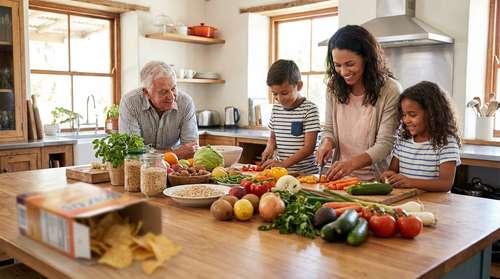
- Involve Kids in the Kitchen: Slow parenting emphasizes shared experiences. Let your children wash vegetables, stir ingredients, or assemble their own yogurt parfaits. Kids are significantly more likely to eat foods they helped create, and the process builds critical life skills.
- Reclaim the Family Dinner: Commit to sitting down together for a meal at least three to four times a week without the distraction of smartphones or television. The mindful eating practices fostered during these quiet moments are crucial for developing lifelong healthy habits.
- Embrace "Good Enough" Cooking: A whole-food meal does not need to be a gourmet production. A simple plate of scrambled eggs, whole-grain toast, and sliced avocados is incredibly nutritious and takes less than ten minutes to prepare.
Fostering a Legacy of Health
As we navigate the remainder of this year's National Nutrition Month, the central message for parents is ultimately one of empowerment and relief. Reversing the alarming trends in youth diets does not require flawless meal planning, expensive superfoods, or a culinary degree. By adopting the core principles of slow wellness, families can step off the exhausting treadmill of modern parenting. Through simple, intentional routines and a steady, forgiving return to whole ingredients, we can successfully nourish both our children's bodies and their relationship with food for decades to come.