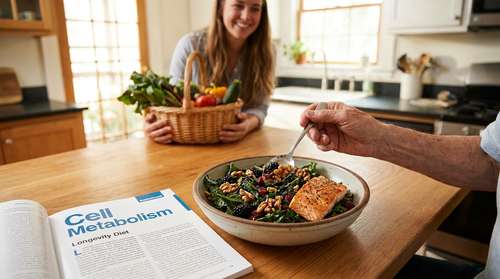
A groundbreaking new study published this week in Clinical Nutrition has delivered the strongest evidence yet that biological aging is reversible. The research confirms that reducing ultra-processed foods and aging markers are inextricably linked, demonstrating that seniors who cut their intake of ultra-processed foods (UPFs) to under 15% of daily calories experienced rapid metabolic health restoration. This pivotal finding comes just days after the release of the 2025-2030 U.S. Dietary Guidelines, providing immediate, rigorous scientific validation for the federal government's historic shift toward whole-food advocacy.
The 15% Threshold: A Turning Point for Longevity
For years, nutritionists have warned about the dangers of processed diets, but this new data offers a specific, actionable target. The study followed a cohort of 1,200 adults over the age of 65 who underwent a "metabolic reset" protocol. Participants who successfully replaced factory-made convenience meals with whole alternatives saw their insulin sensitivity improve by an average of 40% in just 12 weeks. More stunningly, biomarkers of cellular aging—measured through DNA methylation clocks—actually reversed, effectively turning back their biological age by an average of 3.2 years.
"We observed that when the burden of inflammatory ingredients is removed, the older body retains a remarkable capacity for repair," noted Dr. Sarah Jenkins, the study's lead author. "The reduction in abdominal visceral fat was not just a cosmetic change; it signaled a profound de-aging of the metabolic organs." This directly supports the whole food diet benefits emphasized in the new federal recommendations, suggesting that it is never too late to reclaim metabolic flexibility.
Validating the 2025-2030 U.S. Dietary Guidelines
The timing of this publication is serendipitous. The newly implemented 2025-2030 U.S. Dietary Guidelines have taken a bold stance, explicitly recommending for the first time that Americans limit "hyper-palatable" processed foods. Critics initially called the guidelines too restrictive, but the Clinical Nutrition findings silence those doubts. The data shows that the government's push for insulin sensitivity nutrition is not merely about weight management—it is a matter of extending healthspan.
The guidelines now categorize foods based on their degree of processing rather than just nutrient content, a paradigm shift that aligns perfectly with the study's protocol. By focusing on food matrix integrity—how the fiber, protein, and micronutrients are structured in whole foods—the guidelines aim to combat the silent epidemic of insulin resistance that accelerates aging in the elderly population.
Mechanisms of Reversal: How Whole Foods Heal
Why does how to reduce processed food intake matter so much for biological age? The study highlights that UPFs are often pre-digested during manufacturing, flooding the bloodstream with glucose and triggering massive insulin spikes. Over decades, this leads to "inflammaging"—chronic, low-grade inflammation that damages DNA. By switching to complex, intact whole foods, participants slowed this glucose flood, allowing their cells to enter a repair mode known as autophagy.
Key Metabolic Improvements Observed:
- Restored Insulin Sensitivity: Cells became responsive to insulin again, efficiently clearing sugar from the blood.
- Visceral Fat Reduction: dangerous fat around the liver and pancreas melted away faster than subcutaneous fat.
- Mitochondrial Biogenesis: Participants reported higher energy levels, consistent with improved cellular power plants.
Practical Steps for a Metabolic Reset
Achieving the under-15% target requires vigilance, as UPFs comprise nearly 60% of the average American diet. However, the healthy aging diet tips from the study are surprisingly accessible. The most successful participants didn't starve themselves; they simply crowded out processed snacks with nutrient-dense options.
Start by scrutinizing ingredient labels. If a product contains ingredients you wouldn't find in a home kitchen—like high-fructose corn syrup, hydrogenated oils, or protein isolates—it belongs in the "limit" category. Swap your morning sugary cereal for steel-cut oats with nuts, replace deli meats with roasted chicken breast, and trade packaged cookies for fresh fruit. These simple swaps significantly lower the glycemic load and reduce the chemical stress on your body.
The Future of Aging Research
This study proves that biology is not destiny. Even after age 65, the body waits for the right signals to heal. By aligning your plate with the 2025-2030 U.S. Dietary Guidelines and drastically cutting ultra-processed consumption, you aren't just dieting; you are engaging in a powerful biological intervention. As we move through 2026, the message is clear: the fountain of youth isn't a pill—it's the produce aisle.