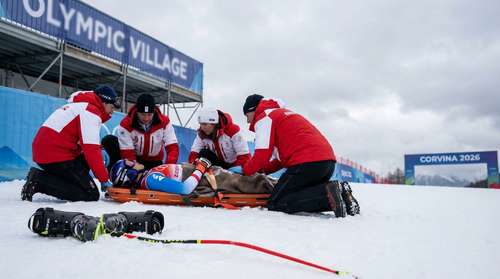
The 2026 Winter Olympics in Milan-Cortina came to a heart-stopping halt on Sunday when American skiing legend Lindsey Vonn crashed violently during the women's downhill event. The 41-year-old, who had unretired in a historic bid to become the oldest Olympic alpine medalist, was airlifted from the Olimpia delle Tofane course after suffering a complex tibia fracture. This devastation comes just nine days after Vonn ruptured her ACL in a World Cup training run, a gamble that has sparked intense debate about the limits of Lindsey Vonn Olympic injury 2026 narratives and the realities of high-performance sports after 40.
The Crash at Cortina: What Happened
Seconds into her run, Vonn appeared to catch her right arm on a gate flag approximately 13 seconds down the course. The impact twisted her body at high speed, sending her cartwheeling into the safety netting. Silence fell over the crowd as medics rushed to the scene. While her teammate Breezy Johnson went on to win the gold medal, the image of Vonn being airlifted to a hospital in Treviso became the defining moment of the day.
On Monday, Vonn posted a defiant update from her hospital bed, stating, "I have no regrets." She clarified that her previous injury played no role in the fall: "I was simply 5 inches too tight on my line... My ACL and past injuries had nothing to do with my crash whatsoever." However, for medical experts and fitness enthusiasts watching, the incident serves as a brutal reminder of the fine line between bravery and biological reality.
The "Impossible" Comeback: Competing Compromised
Vonn's journey to the 2026 starting gate was nothing short of miraculous. After a partial knee replacement in 2024, she returned to the World Cup circuit with impressive speed. But disaster struck on January 30 in Crans-Montana when she ruptured her ACL. Rather than withdraw, she chose to compete in a specialized brace, relying on muscular strength to compensate for the missing ligament.
This decision highlights a critical conversation regarding longevity in professional sports. While elite athletes often push through pain, the physiological stakes change dramatically after four decades of wear and tear. Vonn's spirit remained unbroken, but the Lindsey Vonn broken leg update confirms that even the strongest will cannot always override the risks inherent in gravity-defying sports.
A Wake-Up Call for Masters Athletes
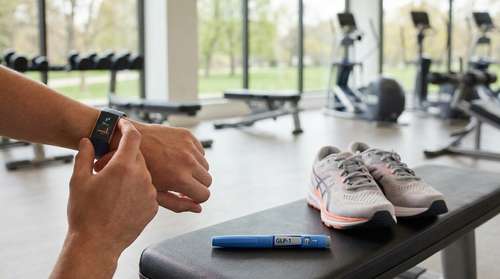
Vonn's crash is an extreme example, but it resonates deeply with the growing community of masters athletes—everyday competitors over 35 who continue to push their limits in marathons, triathlons, and CrossFit. The incident underscores the importance of adapting training philosophies as we age. High intensity training for older athletes offers immense benefits, including increased bone density and metabolic health, but it demands a shift in strategy.
The Physiology of Aging Tissues
As we age, our connective tissues—tendons and ligaments—lose elasticity and vascularity. This makes ACL injury prevention over 40 a different game than it is for a 20-year-old. The "bounce back" factor diminishes; micro-tears that would heal overnight in our youth can accumulate into catastrophic failures. For Vonn, skiing at 70 mph on a compromised knee placed immense stress on the surrounding structures, a high-stakes gamble that ultimately ended her season.
Redefining "Toughness"
For the aging athlete, toughness shouldn't be defined by playing through injury, but by the discipline of recovery. Ignoring warning signs—like Vonn’s initial ACL tear—often leads to compensatory injuries. When one part of the kinetic chain is broken (like the ACL), the force is transferred elsewhere, often overloading bones or other ligaments. In Vonn’s case, a simple error in line choice resulted in a tibia fracture, a severe consequence that might have been mitigated in a younger, more pliable body.
Essential Recovery Tips for Masters Athletes
You don't need to be an Olympian to learn from this event. To maintain longevity in your sport, consider these masters athlete recovery tips:
- Prioritize Stability Over Power: After 40, joint stability becomes more critical than raw output. Incorporate unilateral exercises and balance training to support vulnerable ligaments.
- Respect the Recovery Window: Older bodies require 30-50% more recovery time between high-intensity sessions. Sleep and protein intake must be non-negotiable.
- Listen to "Bad" Pain: Learn to distinguish between the burn of effort and the sharp signal of structural damage. Never train through joint pain.
- Periodize Your Year: Unlike the 24/7 grind of your 20s, build designated "off-seasons" into your calendar to allow deep tissue repair.
The Future of Longevity in Sports
Lindsey Vonn’s 2026 Winter Olympics fitness news story is not a tragedy, but a testament to human ambition. However, it also draws a line in the snow. As medical technology advances, allowing athletes to compete longer with knee replacements and rehab protocols, the biological limits of the human frame remain. Vonn’s legacy will likely shift from just her medal count to her role in pioneering what is possible for the older athlete—and demonstrating where the edge of that possibility lies.