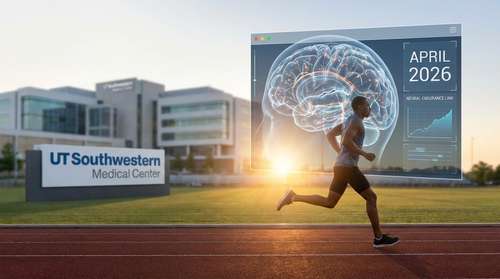
For decades, athletes and physiologists have operated on a simple premise: physical stamina is built in the muscles, lungs, and heart. If you want to run farther or lift longer, you train the body. But the landmark brain endurance study 2026 published yesterday, April 6, in the journal Neuron, has completely flipped this fundamental principle of human biology. The new findings demonstrate that your brain actively programs your physical stamina, rather than merely reacting to the strain of a workout.
This major piece of UT Southwestern health research identifies a specific cluster of brain cells that essentially acts as the master control switch for physical endurance. By storing a biological "memory" of past physical activity, these cells command the body's metabolic adaptations even before muscle fibers undergo significant structural changes.
The Discovery of VMH SF1 Neurons
The groundbreaking research, co-led by Dr. Kevin Williams at UT Southwestern Medical Center alongside collaborators at the University of Pennsylvania and The Jackson Laboratory, pinpoints a vital region of the brain: the ventromedial hypothalamus (VMH). Within this area, a subset of cells known as steroidogenic factor-1 (SF1) producing neurons act as the unsung heroes of physical performance.
To map the true impact of VMH SF1 neurons, exercise adaptations were closely monitored during a rigorous five-day-a-week training protocol for mice using miniature treadmills. The regimen included a progressive weekly long run to test their limits. Around the three-week mark, the subjects' stamina predictably hit a natural plateau.
However, real-time brain imaging revealed something entirely unexpected. As the physical training progressed, the SF1-producing neurons showed a dramatic uptick in activity. These neurons weren't just passively firing; they were actively strengthening their structural plasticity, building a neurological archive of the treadmill sessions.
Flipping the Switch on Stamina
To verify that these brain cells were the true drivers of physical capacity, researchers took the experiment a step further. When they chemically blocked the VMH SF1 neurons from firing after a workout session, the mice failed to gain any endurance whatsoever. Despite completing the exact same grueling treadmill routines, their bodies refused to adapt without the brain's permission.
Conversely, when researchers artificially stimulated these specific neurons after exercise, the subjects blew past their three-week performance plateaus. Their endurance continued to climb as if they were doing extra conditioning, proving that these neural pathways are an active driver of physiological changes rather than a downstream responder.
But how exactly does a cluster of brain cells tell the legs to keep running? Related data from the broader research initiative indicates that these neurons utilize the sympathetic nervous system to communicate directly with skeletal muscles. When the SF1 neurons fire, they essentially send a biological green light, instructing muscle fibers to increase their metabolic rate and alter their energy expenditure.
Redefining Fitness Science Breakthroughs
This revelation ranks among the most significant fitness science breakthroughs of the decade. Historically, scientists knew that exercise changed the brain—reducing neuroinflammation and boosting the production of new cells. But those changes were always viewed as a secondary benefit, a byproduct of a healthy cardiovascular system.
"Most people think of the body adapting to exercise through the muscles, heart, lungs, and other tissues," noted Dr. Williams in the publication. "But our study shows that the brain itself can program endurance capacity. The brain is not just reacting to exercise. It is actively shaping how the body adapts over time."
The Future: Neuro-Conditioning for Athletes
For professional competitors and Olympic hopefuls, this discovery opens an entirely uncharted frontier. The traditional playbook of endurance workout secrets usually focuses on VO2 max optimization, lactate threshold training, and nutritional timing. Now, sports scientists are looking toward the brain.
The concept of neuro-conditioning for athletes—specifically targeting and stimulating the hypothalamus to maximize training returns—could become the next major performance enhancer. Brain-based training protocols might eventually involve targeted therapies used immediately after a track session or heavy lift, effectively tricking the central nervous system into amplifying the physical gains of that specific workout.
A Game Changer for Medical Rehabilitation
While the sports applications are thrilling, the clinical implications are potentially life-saving. Millions of people suffer from metabolic imbalances, severe injuries, or chronic illnesses that prevent them from engaging in cardiovascular activities. Because VMH SF1 neurons also drive the resistance to weight gain and the increased calorie burning associated with movement, unlocking this neural pathway offers a powerful medical alternative.
If interventions can artificially stimulate these exact neurons in human patients, doctors could theoretically prescribe the physiological benefits of physical movement to individuals with limited mobility. It represents an eventual avenue to bypass the muscles entirely, acting directly on the central nervous system to trigger cardiovascular resilience.
As scientists continue to unravel exactly how these neurons sense that physical exertion has occurred, one fact is now undeniable. The next time you hit the wall during a long run or a heavy lift, remember that your ultimate limiting factor isn't just in your legs or your lungs—it resides right inside your head.