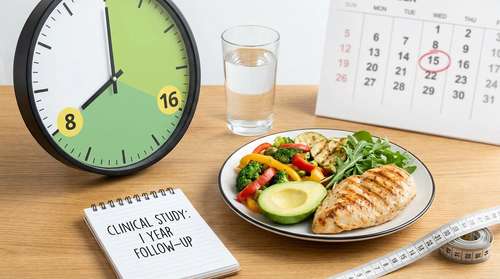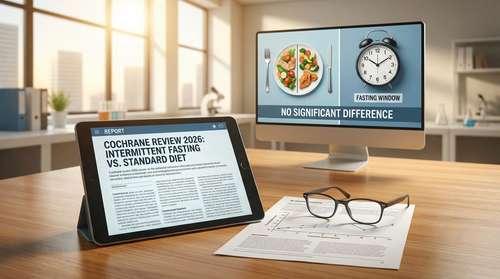
In a watershed moment for the nutrition world, a landmark Cochrane review released this week has challenged one of the decade's most pervasive health trends. The comprehensive analysis, published on February 16, 2026, reveals that intermittent fasting results 2026 data show no significant weight loss advantage over traditional calorie counting or standard dietary advice. For years, millions have turned to time-restricted eating in hopes of hacking their metabolism, but this rigorous new evaluation of 22 clinical trials suggests that when it comes to shedding pounds, the clock matters far less than the calories.
The Verdict: Time-Restricted Eating vs Calorie Counting
The review, led by researchers at the Universidad Hospital Italiano de Buenos Aires Cochrane Associate Centre, scrutinized data from nearly 2,000 overweight or obese adults across the globe. Their findings strike a blow to the "metabolic magic" often attributed to fasting windows. When researchers compared time-restricted eating vs calorie counting, they found no clinically meaningful difference in weight loss outcomes.
"Intermittent fasting just doesn't seem to work for overweight or obese adults trying to lose weight [better than other methods]," noted lead author Luis Garegnani. The analysis showed that while participants did lose weight, the amount was negligible compared to those who simply followed standard advice to eat less. specifically, the mean difference in weight loss between the fasting groups and the continuous calorie restriction groups was a mere -0.33%.
Breaking Down the Numbers
The study, titled "Intermittent fasting for adults with overweight or obesity", aggregated results from trials spanning North America, Europe, and Asia. Most studies followed participants for up to 12 months. The data indicates that while fasting is a valid strategy, it is not the superior weight loss study 2026 breakthrough many enthusiasts hoped for. Whether you skip breakfast or count calories at every meal, the physiological result appears strikingly similar.
Fasting Myths Debunked: The Reality Check
This review serves as a significant chapter in having fasting myths debunked. The central premise of intermittent fasting—that long periods without food trigger a unique fat-burning state superior to regular dieting—is not supported by this high-level evidence. The hype, fueled by social media influencers and celebrity endorsements, has often outpaced the science.
The review found that intermittent fasting was only slightly better than doing nothing at all, showing a small benefit of roughly 2% to 5% weight reduction compared to no intervention. However, against active dieting controls, that advantage vanished. This suggests that the weight loss comes from the resulting caloric deficit, not the timing of the meals themselves.
Is Intermittent Fasting Healthy? Side Effects and Safety
Beyond weight loss, many adherents ask: is intermittent fasting healthy? The Cochrane review highlighted a concerning gap in the data regarding safety and quality of life. Reporting of side effects—such as headaches, fatigue, and dizziness—was inconsistent across the 22 trials, making it difficult to draw firm conclusions about the long-term comfort of the regimen.
Furthermore, the review found no clear evidence that fasting improved quality of life more than standard dieting. For some, the rigidity of an 8-hour eating window creates social friction and stress, potentially offsetting the simplicity of the rule. As the medical community digests these findings, the recommendation is shifting towards personalization rather than prescription.
Best Diet for Weight Loss 2026: Sustainability is Key
If fasting isn't the magic bullet, what is the best diet for weight loss 2026? The answer, reinforced by this review, brings us back to the fundamentals of energy balance and adherence. The "best" diet is simply the one a patient can stick to long-term. For some, skipping dinner (time-restricted eating) is an easy way to cut calories without counting. For others, it's a recipe for binge eating when the window opens.
Experts suggest that we should view intermittent fasting as just one tool in a toolbox, not a superior metabolic hack. It offers a simplified structure for calorie reduction that suits specific lifestyles, but it does not biochemically force the body to shed fat faster than a standard deficit.
Looking Ahead: The Future of Weight Management
While this Cochrane review provides "low certainty" evidence due to the small size and bias risks of the included studies, it represents the gold standard of current knowledge. It signals a move away from fad-based nutrition towards evidence-based flexibility. As we move further into 2026, the focus is likely to shift from "when to eat" to "what to eat" and how to maintain those changes for life.
Ultimately, if you enjoy fasting and it helps you control your intake, there is no harm in continuing. But if you are forcing yourself to starve until noon expecting a miracle, the science says you can relax. The clock is not the cure.