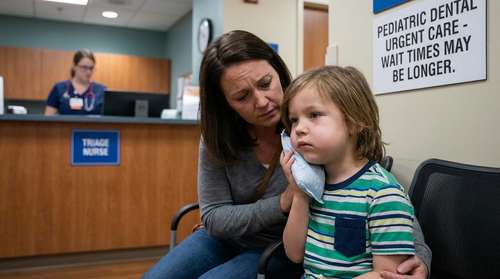
Across the nation, a preventable public health crisis is unfolding in hospital waiting rooms. A rising pediatric dental emergency trend is driving thousands of desperate parents to the nearest hospital when their children suffer from severe, untreated oral infections. Instead of receiving specialized restorative care, these families are frequently sent home with nothing more than an ice pack and a prescription for pain medication, since most hospitals lack on-staff dentists. Health experts in early 2026 point to a perfect storm of systemic failures: a worsening rural dental workforce gap, contentious policy shifts regarding community water systems, and a highly restrictive insurance landscape.
The Alarming Surge in Kids Tooth Pain ER Visits
The sharp rise in kids tooth pain ER visits highlights a fractured healthcare system. From 2019 to 2022, nontraumatic emergency room visits for tooth problems in children under 15 surged by nearly 60% nationally. State-level data released in March 2026 reveals even sharper localized spikes. At Children's Hospital Colorado, dental cases in the emergency department climbed 175% from 2010 to 2025, while Kentucky reported a 72% jump in pediatric ER visits for dental issues over a four-year span.
This is not merely a temporary inconvenience. Severe childhood tooth decay can permanently affect a child's developing jaw, leading to long-term difficulties with speech, sleep, and academic performance. When parents rely on the ER for dental care, emergency department physicians—who are trained in life-saving acute medical care rather than restorative dentistry—can only offer temporary relief for the pain. This leaves the underlying decay untreated and virtually guarantees repeat hospital visits.
The Impact of the Water Fluoridation Debate 2026
Preventive care is currently facing unprecedented political hurdles. The water fluoridation debate 2026 has escalated from fringe discussions to actionable federal policy. Following moves by Utah and Florida to halt public water fluoridation in 2025, federal agencies including the Environmental Protection Agency and the FDA announced plans in early 2026 to review or restrict fluoride distribution. This massive policy shift has been heavily championed by Health and Human Services Secretary Robert F. Kennedy Jr..
Dental professionals warn that this shift could be devastating for vulnerable youth. Decades of peer-reviewed research demonstrate that community water fluoridation reduces decay by roughly 25% and provides an incredible return on investment, saving communities approximately $38 in treatment costs for every dollar spent. Stripping away this passive defense mechanism leaves marginalized populations highly susceptible to rapid oral health deterioration.
Medicaid Dental Coverage Cuts and the Access Gap
Beyond the loss of preventive measures, treating existing cavities has become a logistical nightmare for low-income households. While Medicaid dental coverage cuts and abysmal reimbursement rates have plagued the industry for years, the fallout is now unavoidable. According to the American Dental Association, Medicaid typically reimburses providers at less than 40% of their customary fees. Consequently, only about one in three dentists nationwide is willing to accept Medicaid patients.
This massive access gap forces patients to delay necessary care until a minor cavity morphs into a full-blown infection. For children with intellectual or developmental disabilities, the barriers are even higher. Over 26% of children have special health care needs, and they are twice as likely to have unmet dental requirements. Very few general practitioners possess the specialized pediatric training or sedation capabilities required to treat these patients safely.
A Worsening Rural Dental Care Shortage
Geography dictates health outcomes now more than ever. The rural dental care shortage is leaving millions of Americans stranded in comprehensive care deserts. Over two-thirds of rural regions in the United States are currently designated as Dental Health Professional Shortage Areas. Approximately 34% of rural residents lack dental insurance, and children in these communities consistently face poorer dental health outcomes compared to their urban peers.
Lawmakers are attempting to intervene at the federal level. In March 2026, Senator Dick Durbin introduced the Promoting Dental Health Act to reauthorize the CDC's Oral Health program, aiming to build a robust pipeline of new health providers for underserved communities. However, until these legislative initiatives take root and produce new clinicians, rural emergency departments will continue to bear the brunt of the crisis.
Shifting Family Oral Health Trends and Next Steps
The pandemic triggered negative family oral health trends that continue to haunt children today. Disrupted daily routines led to a widespread decline in consistent brushing and flossing habits, and high dietary sugar consumption has only compounded the risk of aggressive cavities.
What Parents Can Do
For parents caught in this complex web of challenges, pediatric dentists strongly recommend taking proactive, immediate steps to protect your child's smile:
- Establish a Dental Home Early: Find a local provider who accepts your insurance before a true pediatric dental emergency strikes. Do not wait for pain to appear.
- Maximize At-Home Prevention: With community fluoride access actively in jeopardy, consistent daily brushing with fluoridated toothpaste is more critical now than ever.
- Know When to Use the ER: Only head to the emergency room for severe trauma, uncontrollable bleeding, or facial swelling that impacts breathing or swallowing. For a standard toothache or a chipped tooth, seeking urgent care from a specialized dental clinic is the safest and most effective route.