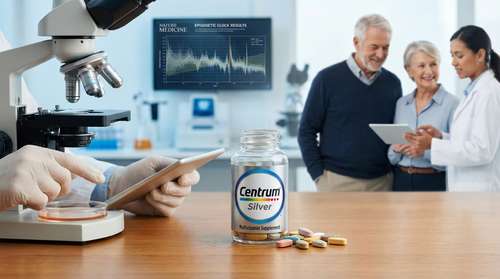
For decades, the quest to extend human healthspan has focused on expensive therapies, restrictive diets, and complex pharmaceutical interventions. Millions of Americans swallow a multivitamin each morning as a simple nutritional insurance policy, often wondering if it actually makes a difference. Now, compelling evidence suggests that this basic daily habit actively turns back the cellular clock.
Published this week on March 9, the COSMOS study Nature Medicine 2026 paper provides groundbreaking data on multivitamin longevity benefits, demonstrating that standard daily supplements tangibly reduce the rate at which our bodies deteriorate at a molecular level.
Breakthrough Findings on Slowing Biological Aging
Researchers from Mass General Brigham analyzed blood samples from 958 older adults over a two-year period. By tracking microscopic chemical changes, the scientists revealed that participants taking a daily multivitamin effectively shaved roughly four months off their biological age compared to those on a placebo.
Dr. Howard Sesso, senior author of the paper and associate director of the Division of Preventive Medicine at Mass General Brigham, noted the significance of finding accessible interventions that contribute to higher-quality aging. This randomized controlled trial provides rigorous clinical proof that an inexpensive, over-the-counter pill directly impacts cellular deterioration.
Inside the Centrum Silver Clinical Trial
The findings originate from the broader COcoa Supplement and Multivitamin Outcomes Study (COSMOS). Participants, who had an average chronological age of 70, were randomized into a rigorous trial design to eliminate bias. They received either a daily multivitamin—specifically provided for this Centrum Silver clinical trial—a cocoa extract supplement, a combination of both, or standard placebos.
To monitor biological shifts, the research team collected longitudinal blood samples at baseline, year one, and year two. While the cocoa extract group saw no measurable shift in cellular aging markers, the multivitamin cohort displayed a statistically significant reduction in their pace of aging.
Decoding the Epigenetic Clock Results
To understand these physiological changes, scientists look beyond chronological age—the simple counting of birthdays—and measure biological age. This is accomplished by analyzing DNA methylation and aging.
Think of the human genome as a massive library of instruction manuals. Methylation acts like a series of chemical bookmarks, determining which chapters remain open for the cell to read and which are permanently glued shut. As the body weathers decades of stress, poor diet, and environmental toxins, these bookmarks shift in predictable patterns, creating a readable timeline of cellular decline.
By mapping these shifts, researchers generated the highly anticipated epigenetic clock results. The team utilized five different DNA-based measurements. Out of those five, participants taking the daily multivitamin experienced significant slowing in two specific second-generation clocks: PCPhenoAge and PCGrimAge.
These particular metrics carry heavy weight in the scientific community because they strongly predict all-cause mortality risk and future physiological decline. The data translates to roughly 2.7 to 5.1 months of slowing biological aging after just two years of consistent supplementation.
A Safety Net for Accelerated Agers
One of the most striking details to emerge from the data is identifying exactly who experiences the greatest multivitamin longevity benefits. The intervention did not uniformly impact every participant to the same degree. Instead, the daily pill had a disproportionately positive effect on individuals who entered the trial with accelerated biological age—meaning their cells initially appeared much older than their actual birth years.
For these fast-aging participants, the multivitamin acted as a cellular safety net. It dramatically blunted the rapid pace of their epigenetic age increases compared to similar individuals taking a placebo. Investigators suspect that older adults experiencing accelerated aging may suffer from underlying nutritional gaps or chronic physiological stressors that a comprehensive vitamin and mineral profile helps correct. By filling these invisible dietary voids, the supplement efficiently applies the brakes to early cellular breakdown.
The Future of Healthy Aging Supplements
The nutrition industry is saturated with unproven anti-aging claims, making this placebo-controlled trial an important outlier. Because these findings rely on gold-standard randomized trial data rather than mere observational surveys, the medical community is treating the results with serious consideration. Furthermore, this new biological data aligns seamlessly with previous COSMOS trial findings, which demonstrated that daily multivitamin use improved global cognition and memory among older adults.
Medical professionals emphasize that a pill cannot replace the foundational pillars of longevity, such as regular cardiovascular exercise, adequate sleep, and a balanced diet. However, this research highlights a highly accessible, low-cost tool for slowing biological aging.
As scientists continue evaluating exactly how these micronutrients shift our genetic machinery, the evidence clearly shows that standard healthy aging supplements offer measurable utility. Consumers do not need to seek out expensive, proprietary blends or extreme megadoses; the formulation tested was a simple, easily accessible drugstore multivitamin. For older adults looking to preserve their cellular resilience, taking a daily vitamin is proving to be a scientifically sound strategy.