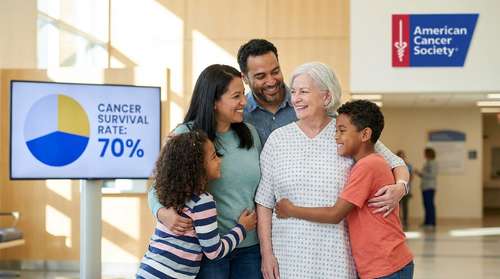
For millions of American families facing the daunting reality of a cancer diagnosis, the narrative is shifting from fear to hope. Breaking news from the American Cancer Society 2026 report confirms a monumental achievement in medical history: for the first time, the five-year relative survival rate for all cancers combined has reached 70 percent. This 70 percent cancer survival milestone marks a decisive turning point in the war on cancer, driven by decades of relentless research, smoking cessation efforts, and revolutionary treatment advances.
A Historic Turning Point in Cancer Care
The latest figures released this week in the Cancer Statistics, 2026 report paint a picture of steady, hard-won progress. The report reveals that the overall cancer death rate has plummeted by 34% since its peak in 1991. To put that percentage into perspective, this decline translates to approximately 4.8 million fewer deaths—4.8 million mothers, fathers, and children who survived to share more birthdays, graduations, and holidays with their loved ones.
"Seven in 10 people now survive their cancer five years or more, up from only half in the mid-70s," states Rebecca Siegel, the report's lead author. This shift effectively recategorizes many forms of the disease from an immediate death sentence into a manageable, chronic condition. For those following family health news 2026, these statistics offer profound reassurance that a diagnosis today carries a very different prognosis than it did just a generation ago.
The Science Saving Lives: Therapies and Detection
What is driving these record-breaking cancer survival rates 2026? Experts attribute the success to a combination of smarter screenings and the explosion of targeted therapies and immunotherapies. Unlike traditional chemotherapy, which attacks rapidly dividing cells indiscriminately, these modern treatments are precision tools designed to unmask cancer cells or target specific genetic mutations.
The impact of these latest cancer research updates is most visible in cancers that were once considered rapidly fatal. For instance, survival rates for leukemia, lymphoma, and melanoma have seen dramatic improvements due to advances in immunotherapy. The report specifically highlights that survival for distant-stage melanoma—once dire—has more than doubled from 16% to 35% since the mid-1990s.
Breakthroughs in Lung and Liver Cancer
Perhaps the most encouraging data comes from the most difficult-to-treat malignancies. Lung cancer, which remains the leading cause of cancer death, has seen significant improvements. The five-year survival rate for regional-stage lung cancer has jumped from 20% to 37%. Similarly, liver cancer survival has tripled from 7% to 22%, and myeloma survival has nearly doubled from 32% to 62%. These gains underscore the life-saving potential of combining early cancer detection benefits with next-generation drugs.
Why Early Detection Is Your Family's Best Defense
While treatment advances grab headlines, the foundation of survival remains early detection. The 2026 report emphasizes that survival rates are significantly higher when cancer is caught before it spreads. For example, while the overall survival rate is 70%, survival for local-stage disease is often upwards of 90% for many common cancers like breast and prostate.
This data serves as a critical reminder for cancer prevention for families: adhering to screening guidelines is non-negotiable. Routine mammograms, colonoscopies, and lung cancer screenings for high-risk individuals are the gateways to these high survival statistics. As William Dahut, Chief Scientific Officer at the American Cancer Society, notes, the tools to detect cancer early are becoming more accessible and effective, but they only work if patients use them.
Remaining Challenges: The Rise in Younger Adults
Despite the celebration of the 70 percent cancer survival milestone, the report includes a sobering caveat. Researchers are observing a concerning rise in cancer incidence among younger adults—specifically those under age 50—for colorectal and breast cancers. While the death rates are dropping, the number of new cases is projected to top 2.1 million in 2026.
This trend highlights a new frontier in cancer control. It suggests that while we are getting better at treating cancer, we must redouble efforts in prevention. Lifestyle factors, environmental exposures, and perhaps unrecognized risks are driving these early-onset cases. Families should prioritize open conversations about family medical history and advocate for earlier screenings if genetic risks are present.
As we navigate 2026, the message from the American Cancer Society is clear: We are winning significant battles. The path to a world without cancer is still long, but with a 70% survival rate, we are traveling it faster and more effectively than ever before. For families everywhere, that is a reason to hope.