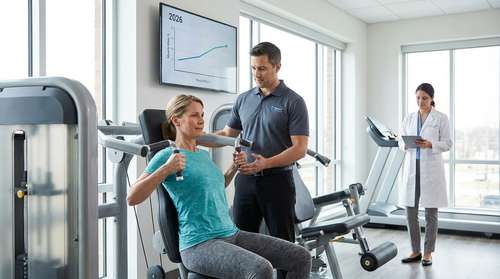
The fitness landscape has fundamentally changed. As millions of Americans rely on medications like Ozempic, Wegovy, and Zepbound to manage their weight and metabolic health, the widespread celebration of rapid fat loss has been replaced by a more urgent conversation. The breakthrough success of these medications brought an unexpected challenge to the forefront: the critical need to maintain lean body mass. Consequently, GLP-1 muscle preservation has emerged as the defining medical and physical priority of the year. According to the latest clinical data and fitness industry insights from March 2026, the strategy for long-term success is no longer about just dropping pounds—it is about securing your strength, metabolism, and functional independence for decades to come.
The Hidden Cost of Rapid Weight Reduction
Weight-loss medications have undeniably reshaped obesity treatment, but clinicians are increasingly raising the alarm about a physiological phenomenon known as GLP-1 muscle drain. Research indicates that without targeted, proactive interventions, up to 30 to 40 percent of the weight lost on GLP-1 and dual GLP-1/GIP therapies can come directly from lean muscle mass. When your body enters a significant caloric deficit brought on by suppressed appetite, it begins looking for alternative energy. Lacking adequate amino acids and physical stimulus, the body cannibalizes its own muscle tissue for energy and glucose production.
This is the harsh reality of muscle wasting on weight loss drugs: patients might hit their target number on the scale, but they risk ending up with a suppressed metabolic rate, compromised joint stability, and a significantly higher probability of future weight regain. Standard weight loss can act like a careless metabolic gut renovation. To avoid destroying the structural foundation of your body while stripping away adipose tissue, you must actively signal your muscles to stick around and perform.
Insights from the NASM 2026 Fitness Report
The fitness industry has rapidly adapted to this pharmacological shift. The highly anticipated NASM 2026 fitness report revealed a monumental pivot away from the superficial Aesthetic Era. According to the National Academy of Sports Medicine, 62 percent of fitness professionals note that their clients now prioritize lifespan, mobility, and quality of life over looking good in a mirror.
Furthermore, 56 percent of trainers cited GLP-1 usage as the year's top overarching trend, fundamentally altering their roles from traditional weight-loss coaches to what the industry now calls strength guardians. By recognizing medical fitness trends like these, the coaching sector is transitioning from a transactional burn calories mindset to a transformational build life model. Training now integrates seamlessly with medical interventions to ensure holistic patient success.
The New Paradigm: Strength Training for Longevity 2026
Cardio-heavy, sweat-drenched weight loss programs are officially a relic of the past. Today, the focus is squarely on strength training for longevity 2026. A landmark study published in Cell Reports Medicine in March 2026 by Langer et al. demonstrated that weight loss from GLP-1 medicines is primarily driven by fat reduction, not disproportionate muscle wasting. When patients pair these medications with a consistent resistance protocol, their relative muscle mass and overall power-to-weight capacity actually improve. You are not just getting smaller; you are optimizing your physical capability, ensuring every pound lost is adipose tissue while every pound kept is functional load.
Strength training does far more than sculpt a physique. Lean mass acts as a metabolic engine that helps regulate blood sugar, supports robust immune function, and drives recovery capacity. It protects your joints through better neural activation and maintains crucial bone density, which is paramount as we age. The modern fitness goal is preserving the capability to carry groceries at 80, get off the floor effortlessly, and travel without physical limitations.
Designing an Effective Ozempic Workout Routine
Translating these clinical insights into a practical Ozempic workout routine requires moving away from daily exhaustion and toward deliberate intention. You do not need to live in the gym or perform grueling two-hour sessions to protect your lean tissue. Exercise physiologists now recommend that patients undergo two to three days of compound resistance training per week, with sessions lasting roughly 30 to 45 minutes.
Effective resistance training for Wegovy users focuses on foundational movements that recruit multiple large muscle groups simultaneously. A beginner-friendly, sustainable protocol typically involves:
- Squat variations (such as goblet or bodyweight squats) to maintain lower body power and mobility.
- Hinge movements (like dumbbell Romanian deadlifts) for posterior chain strength.
- Push and pull exercises to preserve upper body functionality and posture.
- Core stabilization (such as planks held for 30 to 45 seconds) to protect the spine.
The Nutritional Anchor: High Protein Intake
You cannot out-train a nutrient deficiency. Your medication handles the appetite suppression, and your resistance training provides the mechanical stimulus for muscle retention, but dietary protein provides the necessary fuel. The established medical weight loss protocol for 2026 mandates a daily intake of 1.2 to 1.6 grams of protein per kilogram of body weight, often translating to roughly 100g to 130g daily for many adults.
By strategically timing protein intake—especially consuming fast-absorbing sources within two hours post-workout—patients can reduce lean mass loss from 40 percent down to less than 15 percent of their total weight lost.
The era of chasing a fleeting transformation photo is definitively over. True fitness is now measured by physiological resilience, healthspan, and the active preservation of the physical machinery that carries you through life. By prioritizing muscle retention, GLP-1 users can ensure that their modern weight loss journey results in a stronger, fundamentally more capable future.