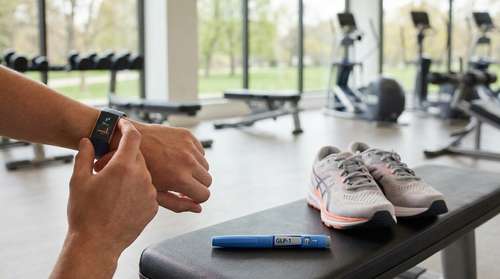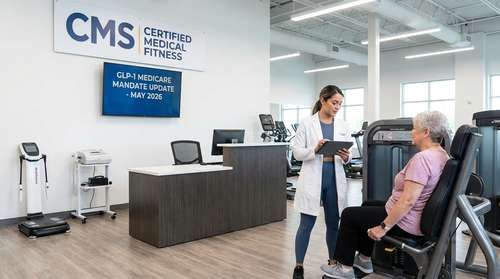
The line between healthcare facilities and traditional health clubs is officially vanishing. Starting next week, the highly anticipated GLP-1 Medicare mandate takes effect, fundamentally altering how weight loss medications are prescribed and managed for older adults. With federal requirements now stipulating that patients receiving Medicare-covered GLP-1 therapies must participate in structured resistance training, the fitness industry is pivoting fast. Leading chains, including Life Time and Planet Fitness, are securing "Lifestyle Provider" status to offer medically supervised programs. This historic shift toward the medicalization of fitness is transforming gym floors across the country, prioritizing muscle mass preservation over the high-intensity cardio that dominated previous decades.
The May 2026 GLP-1 Medicare Mandate Explained
The early May 2026 rollout of new Centers for Medicare & Medicaid Services (CMS) requirements represents a watershed moment for both healthcare and the fitness sector. Under the new GLP-1 Medicare mandate, coverage for blockbuster medications like Wegovy—which gained FDA approval for reducing cardiovascular risk in overweight adults—now hinges on concurrent enrollment in approved lifestyle and resistance training regimens. Policymakers introduced this stipulation after clinical data repeatedly showed that GLP-1 receptor agonists, while highly effective for weight loss and heart health, can lead to severe lean tissue loss if not paired with proper exercise.
Based on recent health policy analysis, an estimated 3.6 million Medicare beneficiaries with established cardiovascular disease and obesity are eligible for this coverage. Rather than forcing millions of patients into overcrowded physical therapy clinics, federal regulators created a pathway for commercial health clubs to step up. By completing rigorous credentialing, these facilities are transforming into CMS certified gyms. This allows them to seamlessly integrate with healthcare providers, bill for specific supervised wellness services, and serve seniors who require guided exercise to keep their prescriptions active.
Why Muscle Mass Preservation Is the New Cardio
For decades, weight loss in the fitness space meant logging endless hours on treadmills and ellipticals. The explosion of anti-obesity medications has flipped that script entirely. Clinical studies from late 2025 and early 2026 confirmed that up to 40 percent of the weight lost by patients on semaglutide and tirzepatide can come from lean mass in the absence of nutrition and exercise interventions.
This biological reality makes muscle mass preservation the central pillar of the new medical fitness era. Sarcopenia—the age-related loss of skeletal muscle—is already a severe risk for older adults. Compounding that natural decline with rapid, medication-induced weight loss creates a dangerous frailty risk, potentially leading to falls and loss of independence. To combat this, fitness directors are completely overhauling their programming. The days of generic boot camps are fading, replaced by targeted hypertrophic protocols designed specifically to protect skeletal muscle, stabilize joints, and maintain resting metabolic rates. Nutritionists at these facilities are also enforcing strict protein guidelines, pushing for 1.2 to 2.0 grams per kilogram of body weight daily to support tissue repair.
Strength Training for Ozempic Users
Developing effective strength training for Ozempic users requires a specialized approach. Because these medications drastically reduce appetite and slow gastric emptying, clients often train in a steep caloric deficit and may experience bouts of nausea. Fitness professionals at certified facilities now utilize advanced bioimpedance scans every few weeks to track body composition rather than relying on standard scales. Workouts emphasize compound, multi-joint movements like goblet squats, rack pulls, and modified presses. These exercises provide the necessary mechanical tension to signal muscle retention without causing excessive central nervous system fatigue.
How CMS Certified Gyms Are Redesigning Floor Plans
The physical layout of the modern health club is evolving rapidly to meet these new clinical standards. Facilities securing their Lifestyle Provider status are actively ripping out rows of underutilized cardio equipment to expand their strength and recovery zones.
At select locations operated by Life Time and Planet Fitness, members will notice dedicated consultation rooms where registered dietitians and medical fitness specialists review patient charts and medication dosing schedules. The resistance training areas are being outfitted with accessible, selectorized machines that allow older adults and previously sedentary individuals to load muscles safely. Furthermore, recovery spaces featuring cold plunges, infrared saunas, and peptide therapy consultations are becoming standard amenities. These additions help manage the delayed onset muscle soreness that often deters new exercisers from adhering to their prescribed routines.
Medical Fitness Trends 2026: The Rise of Longevity Training Programs
As we look at broader medical fitness trends 2026 and beyond, the integration of clinical oversight into commercial gyms is just the beginning. The industry is rapidly adopting longevity training programs that measure success through actionable health metrics—such as biomarkers, bone mineral density, and VO2 max—rather than mere aesthetic changes.
Weight loss medication fitness is no longer a niche subcategory; it is the financial and operational engine driving the sector's growth. Health clubs that fail to adapt to this clinical model risk obsolescence in a market that demands verified health outcomes. For the consumer, this evolution means safer, more scientifically grounded approaches to wellness. By merging the pharmaceutical power of GLP-1s with the physiological necessity of resistance training, the local gym has finally become a true extension of the doctor's office.