For decades, neuroscientists have hunted for ways to slow the gradual slip of memory that accompanies getting older. A major update published this week in early April 2026 shifts that paradigm entirely. Instead of simply hitting the brakes on neural degradation, scientists have found a way to shift it into reverse. The culprit driving this cognitive decline is a surprisingly common cellular component, and targeting it has produced a legitimate reverse memory loss breakthrough.
Recent developments stemming from the UCSF healthy aging study 2026 have isolated the exact mechanism that causes our memory centers to fail over time. By manipulating a specific iron-storage molecule, researchers successfully triggered a structural and functional restoration of the aging brain. The findings indicate that the FTL1 protein brain aging connection is far more profound than previously understood by the global medical community.
The Science Behind Ferritin Light Chain 1 Aging
Aging takes a severe and specific toll on the hippocampus, the region of the brain responsible for learning, spatial navigation, and storing long-term memories. To figure out why this specific area is so vulnerable, researchers at the UCSF Bakar Aging Research Institute tracked shifts in genes and proteins in mice over an extended period. Utilizing advanced RNA sequencing to filter through massive amounts of transcriptomic data, the team looked for factors that changed consistently alongside age.
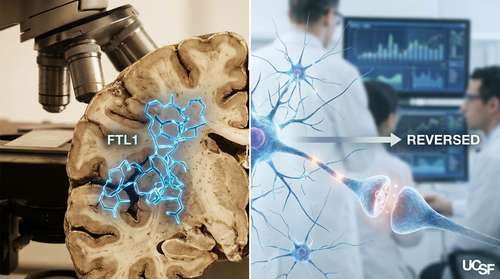
Among the dozens of potential candidates, only one protein consistently stood out as radically different between young and old animals: ferritin light chain 1, or FTL1. This molecule forms part of a larger complex that safely stores iron inside cells. Iron is essential for distributing energy and maintaining healthy brain function, but when it is mismanaged, it unleashes destructive effects. The team discovered that ferritin light chain 1 aging leads to an excessive buildup of this protein in older brains. This accumulation disrupts neuronal function, drains cellular energy, and strips away the vital synaptic connections required for sharp memory recall.
Mimicking Age in Young Brains
To prove that FTL1 was the direct cause of the decline rather than just a harmless byproduct of getting older, the scientific team artificially elevated FTL1 levels in young, healthy subjects. The results were immediate and striking. The young brains rapidly began to mimic old age. In laboratory cultures, their neurons stopped forming complex, branching networks and instead shrank into simple, single-armed extensions known as one-armed neurites. Metabolism slowed down drastically, and their cognitive performance plummeted during rigorous maze and memory tests.
Rebuilding the Hippocampus: A True Cognitive Decline Reversal
The true revelation occurred when researchers performed the inverse experiment. By utilizing targeted techniques to clear out the excess FTL1 clutter in older subjects, the brain did not just stop deteriorating. It actively healed. Neural networks rebuilt their lost connections, and the subjects began scoring significantly better on memory evaluations, effectively demonstrating genuine cognitive decline reversal.
Saul Villeda, PhD, senior author of the foundational Nature Aging research 2026 findings that sparked this week's renewed clinical interest, emphasized the sheer magnitude of the discovery. He noted that the treatment goes far beyond delaying symptoms, representing a true reversal of functional impairments that plague older populations.
According to lead study author Laura Remesal, the metabolic rescue was robust. By lowering FTL1 and supplementing with cellular energy boosters like NADH, the team observed an immediate uptick in the expression of genes involved in mitochondrial respiration and ATP synthesis. Essentially, they successfully rebooted the brain's failing power grid.
Redefining Brain Health for Seniors
Optimizing brain health for seniors has traditionally relied on lifestyle interventions—like Mediterranean diets, rigorous sleep hygiene, and cardiovascular exercise—to stave off the inevitable cognitive fade. While these daily habits remain crucial for overall longevity, the FTL1 discovery offers a highly targeted, biological therapeutic avenue. The research proves that the aging brain remains remarkably plastic and capable of profound physical repair even late in life.
Furthermore, the investigation highlights a hopeful reality: memory deficits in older adults often occur without the widespread, irreversible cell death seen in advanced neurodegenerative diseases like Alzheimer's. Instead, the neurons are simply dormant or disconnected due to metabolic starvation and iron dysregulation. Fix the iron storage problem, and the dormant neurons wake back up.
Next Steps in the Fight Against Memory Loss
Moving this breakthrough from laboratory models to human clinics is the immediate next hurdle for the scientific community. Elevated ferritin levels in human cerebrospinal fluid are already known to predict the transition from mild cognitive impairment to more severe forms of dementia. Because of this existing diagnostic link, blocking the negative effects of the FTL1 protein offers a highly specific and measurable target for next-generation neuroprotective pharmaceuticals.
Medical researchers and biotech firms are currently exploring how future therapies might safely modulate iron storage and energy metabolism in the human hippocampus without disrupting the rest of the body's vital iron needs. If these translational hurdles can be cleared, this line of research will permanently alter how the medical community treats the aging mind. We are entering an era where lost memories might not be permanently erased, but merely waiting for the right biological switch to bring them back online.