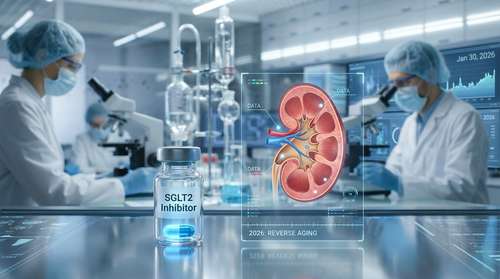
Could the secret to eternal youth—or at least, younger organs—be sitting in your local pharmacy right now? A groundbreaking study published on January 30, 2026, in Kidney International suggests that SGLT2 inhibitors, a class of drugs already widely prescribed for diabetes and heart failure, may be the first proven pharmaceutical to significantly reverse age-related organ damage. Researchers using a unique accelerated-aging model discovered that these medications don't just protect the kidneys; they effectively rewind the biological clock by calming inflammation and recharging cellular batteries.
The Killifish Breakthrough: Decades of Aging in Months
The study, led by Dr. Hermann Haller and a team of international scientists from the MDI Biological Laboratory, Hannover Medical School, and Colby College, turned to an unlikely hero: the African turquoise killifish. This tiny vertebrate is a superstar in longevity research because it compresses an entire human lifetime of aging—from youth to frailty—into just four to six months.
By treating these rapidly aging fish with SGLT2 inhibitors, the research team observed something remarkable. The drug didn't merely slow down the decline; it actively preserved the kidney's intricate structures. The treated fish maintained healthy capillary networks and robust filtration barriers, structures that typically disintegrate with age. "The findings reveal specific biological mechanisms that may help explain why these drugs consistently protect kidney and cardiovascular health in people, beyond their original role in lowering blood sugar," noted Dr. Haller. This establishes the drug not just as a treatment for disease, but as a potential organ rejuvenation agent.
How It Works: Calming the "Inflammaging" Fire
To understand why this is a major healthy aging breakthrough for 2026, we have to look under the hood at the cellular level. Aging organs are typically plagued by two main problems: chronic low-grade inflammation (often called "inflammaging") and a loss of mitochondrial energy. The study found that SGLT2 inhibitors tackled both problems simultaneously.
The medication appears to work by downregulating genetic pathways associated with inflammation while boosting the production of energy within kidney cells. Think of it as cooling down an overheating engine while simultaneously swapping in a fresh battery. The treated kidneys showed improved communication between cells and reduced "genetic noise" typical of older tissue. By mimicking the metabolic effects of calorie restriction—a known life-extender—SGLT2 inhibitors force cells to run more efficiently, clearing out junk proteins and maintaining their structural integrity.
Beyond Kidneys: A Systemic Longevity Pill?
While this study focused on kidneys, the implications for longevity medicine news are profound. The mechanisms identified—mitochondrial support and inflammation control—are relevant to every organ in the human body, particularly the heart and brain. This aligns with a separate target trial emulation study released just days earlier on January 23, 2026, which found that SGLT2 inhibitor use was associated with significantly lower all-cause mortality in older adults, even those up to 80 years old.
Experts are now asking if SGLT2 inhibitors (such as empagliflozin or dapagliflozin) should be considered "geroprotectors"—drugs that target the root causes of aging rather than just specific diseases. Unlike unproven supplements, these FDA-approved drugs have a well-known safety profile and are already taken by millions. The ability to translate findings from the killifish model to humans suggests we may be closer to a verified anti-aging pill than previously thought.
The Future of SGLT2 Inhibitors and Longevity
This landmark research signals a paradigm shift in how we treat aging. Instead of waiting for organs to fail, preventative treatment with organ rejuvenation drugs could maintain vitality well into our later years. While clinical trials specifically for "aging" are still in their infancy, the evidence is mounting that SGLT2 inhibitors offer benefits that go far beyond blood sugar control.
As we move further into 2026, expect to see more research pivotal to this narrative. For now, the humble killifish has provided the strongest evidence yet that reversing the biological damage of time is not just science fiction—it is a biological possibility sitting on our pharmacy shelves.