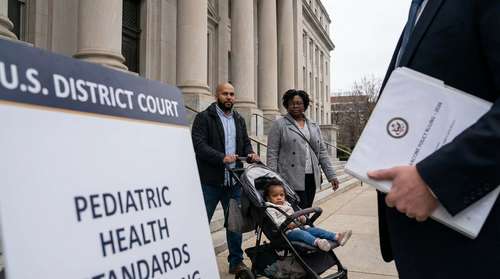
In a sweeping federal court health ruling issued this week, a U.S. District Judge in Massachusetts has temporarily halted major modifications to the nation's immunization guidelines. For millions of parents and pediatricians navigating the childhood vaccine schedule 2026, the decision brings an abrupt pause to the most significant restructuring of American public health protocols in decades. The preliminary injunction blocks efforts by Health and Human Services (HHS) Secretary Robert F. Kennedy Jr. to drastically reduce the number of universally recommended vaccines for infants and adolescents.
Understanding the Federal Court Health Ruling
On Monday, March 16, 2026, U.S. District Judge Brian E. Murphy granted a preliminary injunction requested by a coalition of leading medical organizations, including the American Academy of Pediatrics (AAP) and the American Public Health Association. The judge ruled that the government had acted unlawfully by bypassing necessary scientific review processes and violating the Administrative Procedure Act.
The core of the legal dispute centered around the Advisory Committee on Immunization Practices (ACIP), the expert panel responsible for shaping national immunization guidance. In June 2025, Kennedy dismissed all 17 independent scientific experts on the panel, replacing them with his own appointees. Judge Murphy's injunction stayed 13 of these appointments, noting that the reconstitution of the committee likely violated federal law regarding fair balance and expertise requirements. Furthermore, all votes taken by this newly formed panel over the past several months have been invalidated.
Writing in his decision, Judge Murphy emphasized that vaccine decisions have historically been made through a rigorous, scientific method codified into law. He stated that the government had disregarded these established procedures, thereby undermining the integrity of its actions and bypassing the technical knowledge of health experts.
The Scope of RFK Jr. Vaccine Policy Changes
The halted overhaul would have fundamentally altered the landscape of pediatric care in the United States. In early January 2026, the Centers for Disease Control and Prevention (CDC), operating under new HHS directives, abruptly narrowed the universally recommended routine immunizations from 17 down to 11.
These RFK Jr. vaccine policy changes effectively removed broad recommendations for several widely administered vaccines, including those protecting against influenza, rotavirus, hepatitis A, and hepatitis B, reserving them primarily for children in high-risk categories. The reformed panel had also voted to downgrade the universal birth-dose recommendation for the hepatitis B vaccine and limit broad recommendations for COVID-19 protections.
For families and school administrators, these modifications created immediate logistical and medical questions. Because state and local school vaccination requirements often closely mirror federal CDC guidelines, reducing the national schedule threatened to create a patchwork of conflicting state laws and insurance coverage gaps. Administrators and parents were left uncertain about which shots children genuinely needed before entering the classroom.
Public Health Advocacy News and Medical Reactions
The pushback against the narrowed schedule has dominated recent public health advocacy news. Medical professionals argued that removing universal recommendations would leave millions of children vulnerable to preventable diseases and reverse decades of progress in reducing childhood illness.
Following the ruling, AAP President Dr. Andrew Racine celebrated the decision as a critical step toward restoring scientific decision-making in federal policy. Leaders across the medical community echoed this sentiment, arguing that an evidence-based approach is non-negotiable when dealing with the health and safety of infants and adolescents.
The legal pressure against the administration has emerged from multiple fronts. Beyond the initial lawsuit filed by the medical coalition, 15 Democrat-led states launched a separate legal challenge in February 2026. These states argued that the arbitrary schedule changes and the unprecedented dismissal of independent ACIP experts violated administrative laws. The combined weight of these lawsuits underscores the intense scrutiny facing the current administration's approach to national health directives.
Conversely, HHS has indicated its intention to fight the injunction. Department spokesperson Andrew Nixon stated that the agency anticipates the judge's decision will be overturned on appeal, setting the stage for a protracted legal battle that could ultimately reach the Supreme Court. A scheduled March meeting of the ACIP has already been postponed as a direct result of the court's intervention.
Family Healthcare Updates: What Parents Need to Know Now
If you are a parent scheduling a checkup for your child, these family healthcare updates mean that, for now, doctors are reverting to the comprehensive guidelines established prior to January 2026. The pediatric immunization standards that pediatricians have relied on for years remain the active baseline for clinical care and insurance coverage.
Healthcare providers advise families to maintain their regular appointment schedules and consult directly with their pediatricians regarding any skipped or delayed doses. While the legal challenges surrounding the federal vaccine schedule continue to unfold in the courts, the immediate medical consensus encourages parents to follow the traditional, science-backed framework to ensure optimal protection against preventable childhood illnesses.