After months of intense anticipation, the U.S. Food and Drug Administration (FDA) is finalizing the first official ultra-processed foods definition this week. Backed by Health and Human Services (HHS) Secretary Robert F. Kennedy Jr., this monumental shift in FDA nutrition labeling 2026 represents the cornerstone of the administration's broader MAHA health agenda. The new regulations aim to radically transform how Americans buy groceries, introducing mandatory front-of-package stoplight labels designed to warn shoppers about products loaded with artificial additives, refined carbohydrates, and potentially harmful dyes.
The push to officially classify and label heavily manufactured products gained major momentum following Secretary Kennedy's appearance on the Joe Rogan Experience in early March, where he confirmed that a formal federal classification would arrive by April 2026. Now, as the exact parameters are readied for publication, both health advocates and food manufacturers are bracing for a policy change that will upend billions of dollars in commercial grocery sales.
Closing the GRAS Loophole Under the MAHA Health Agenda
For decades, consumer advocates have criticized the vague oversight of chemical additives in the American food supply. The newly empowered RFK Jr. nutrition policy directly targets the "Generally Recognized as Safe" (GRAS) loophole. Historically, the GRAS system allowed food companies to self-affirm the safety of thousands of new ingredients using industry-funded research, largely bypassing formal FDA pre-market safety reviews.
Under the forthcoming processed food regulations, the FDA's Human Foods Program—which recently received a requested $57 million budget increase to address chemical contaminants and food additives—is prioritizing absolute transparency. By legally defining what constitutes an "ultra-processed food," the government is laying the groundwork for sweeping industry reforms. Experts anticipate the definition will heavily penalize products containing nonnutritive sweeteners, chemical emulsifiers, stabilizers, and synthetic flavorings.
The Shift to Front-of-Package Stoplight Labels
Perhaps the most visible change for the average consumer will appear directly on store shelves. Moving away from the previous administration's proposed "Nutrition Info box"—which simply listed high, medium, or low amounts of fat, sugar, and sodium—the current FDA is pursuing an intuitive traffic-light system.
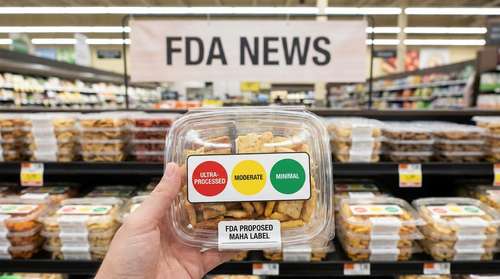
These mandatory front-of-package stoplight labels will utilize a clear red, yellow, and green visual graphic to instantly communicate a product's overall healthfulness. A "red light" designation will factor in not just excessive levels of sodium, added sugars, and saturated fats, but the totality of the ingredient list. The primary goal is to force immediate transparency, allowing busy families to quickly recognize whether a box of breakfast cereal or a packaged snack bar aligns with their dietary goals. This move aligns the United States with neighboring Canada, which recently began strict enforcement of its own front-of-package warning symbols.
Accelerating the Synthetic Food Dye Ban
A major catalyst for a food receiving an ultra-processed classification will be the presence of artificial colorings. The FDA is actively expediting a national synthetic food dye ban, targeting petroleum-based additives that have long been scrutinized for their potential developmental and behavioral impacts on children. Major manufacturers are already facing aggressive regulatory deadlines to completely eliminate "The Big Six" food dyes (including Red 40, Yellow 5, and Blue 1) by December 31, 2026. Moving forward, the agency will heavily prioritize the expedited review of natural, fruit- and vegetable-derived color alternatives.
Industry Pushback and Future Market Impact
Unsurprisingly, the impending regulations have triggered a wave of resistance from major food and beverage conglomerates. Trade organizations, including the Food Industry Association, have formally urged the administration to reconsider the mandatory front-of-package symbols. They argue that an overly broad ultra-processed classification could unfairly target heavily fortified foods or products that utilize safe, necessary preservatives to prevent foodborne illness. Opponents warn this could lead to widespread consumer confusion and inflated grocery prices.
The agricultural sector is also closely monitoring the situation. If the FDA officially incorporates heavily refined seed oils into its definition, as some members of the MAHA commission have advocated, the downstream economic effects could be staggering. Studies funded by agricultural boards suggest that labeling products containing soybean or canola oil with a red warning could cause a sizable drop in domestic consumption, forcing farmers to rapidly adapt to shifting consumer demands.
Despite the friction from agricultural and manufacturing sectors, the consumer market is already reacting. Anticipating the new federal parameters, several massive brands have voluntarily accelerated their timelines for reformulating products. The transition away from controversial ingredients—ranging from synthetic colors to heavily refined seed oils—is happening faster than financial analysts predicted just a year ago.
As the FDA prepares to publish the exact language of the definition later this week, the American food landscape stands on the edge of a historic transformation. If successfully enforced, these strict new guidelines will not only redefine what the government considers "junk food," but also establish some of the most rigorous nutritional guardrails in the developed world.