The United States food supply is undergoing its most radical transformation in decades. Driven by the administration's broader health goals, the U.S. Food and Drug Administration has officially accelerated its timeline to purge petroleum-based chemicals from grocery store shelves. Announced recently in late March 2026, the sweeping FDA nutrition updates 2026 portfolio introduces strict new regulatory frameworks. Highlighting this push is an aggressive artificial food dye ban and a total overhaul of consumer transparency tools. For health-conscious shoppers and advocates alike, this marks a watershed moment in the battle against heavily modified ingredients.
Driving the MAHA Food Safety Initiative Forward
The fundamental architecture of American food regulation is shifting rapidly. Under the guidance of FDA Commissioner Marty Makary and HHS Secretary Robert F. Kennedy Jr., the government is aggressively executing the MAHA food safety initiative. This agenda demands rigorous oversight of the chemicals and additives that have quietly proliferated in the food system since the mid-20th century. Historically, the United States maintained a relatively relaxed posture toward food additives compared to European regulators. The FDA nutrition updates 2026 represent a sharp departure from that legacy. Agency leaders are currently leveraging federal power to end the era of voluntary industry compliance, implementing enforceable deadlines to strip potentially hazardous substances from consumer goods. A critical component of this strategy involves closing the Generally Recognized as Safe (GRAS) loophole. The FDA is moving forward with a proposed rule to mandate the submission of GRAS notices for all new substances. This eliminates the longstanding industry practice of quietly introducing novel chemicals into the food supply based solely on self-funded safety determinations, forcing radical transparency across the entire sector.
Enforcing the Artificial Food Dye Ban
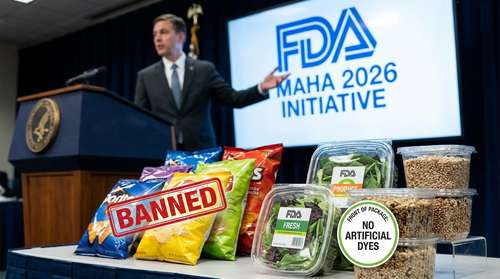
Parents and public health officials have long sounded the alarm regarding synthetic dyes like FD&C Red No. 40, Yellow 5, and Blue 1. Recent federal actions transform these concerns into concrete policy. The upcoming artificial food dye ban sets a strict timeline to eliminate petroleum-based synthetic colors from the domestic food supply by the end of 2026. To facilitate this massive industry pivot, the FDA issued a landmark enforcement discretion policy in February 2026 that is currently reshaping manufacturing pipelines. Previously, companies could not use a 'no artificial colors' label if their products contained any color additives whatsoever, even those derived from natural sources like spirulina or beetroot red. Regulators recognized that this outdated rule heavily penalized brands trying to formulate healthier products for families.
Paving the Way for Natural Alternatives
By updating these label requirements, the FDA is financially incentivizing the food and beverage industry to abandon synthetic chemicals. Companies ditching petroleum dyes for natural plant extracts can now legally market their products as free from artificial colors. This specific regulatory tweak is the linchpin of the artificial food dye ban, smoothing the supply chain transition while delivering clear, honest information to shoppers. The agency has concurrently fast-tracked the approval of several new natural colorants to ensure manufacturers have viable, safe alternatives readily available.
Strict Reviews for BHA Preservative Safety
Chemicals that extend shelf life are facing unprecedented scrutiny. The FDA recently launched a comprehensive reassessment of butylated hydroxyanisole (BHA), a synthetic antioxidant commonly found in frozen meals, cereals, and baked goods. Because the National Toxicology Program classifies BHA as reasonably anticipated to be a human carcinogen based on animal studies, the government is demanding current, rigorous safety data from manufacturers. HHS Secretary Robert F. Kennedy Jr. bluntly characterized this review of BHA preservative safety as the end of the 'trust us' era in food regulation. The agency is evaluating whether the additive meets modern, gold-standard safety benchmarks under its current conditions of use. If the data falls short, BHA will be stripped of its approved status. Regulators have already signaled that other ubiquitous chemical preservatives, including BHT and azodicarbonamide, will face similar post-market assessments later this year as part of the overarching MAHA food safety initiative.
Front of Package Labeling for Real Food
Changing what goes into the food is only half the battle; changing how it is presented to consumers completes the picture. The FDA is advancing a mandatory front of package labeling system designed to instantly communicate the nutritional realities of packaged goods. Moving away from the confusing, math-heavy Nutrition Facts panel buried on the back of the box, the new mandated labels will prominently flag products containing high, medium, or low levels of added sugars, sodium, and saturated fats. This transparency tool directly supports the administration's push toward real food dietary guidelines. By forcing brands to disclose poor nutritional profiles upfront, the FDA empowers shoppers—especially busy parents and vulnerable populations—to make split-second decisions in the grocery aisle. The strategy is straightforward: when consumers easily recognize heavily processed items, market demand naturally shifts toward whole, nutrient-dense alternatives.
Combating the Ultra-Processed Epidemic
Tied directly to the front of package labeling rollout are imminent ultra-processed food regulations. The FDA is collaborating closely with the USDA to establish a formal legal definition for ultra-processed foods. Once defined, these highly modified products could face further restrictions, particularly regarding their inclusion in school lunch programs and federal nutritional assistance initiatives. Through the comprehensive FDA nutrition updates 2026, federal health authorities are fundamentally rewriting the rules of the American diet. By prioritizing real food dietary guidelines, enforcing an artificial food dye ban, and demanding accountability for BHA preservative safety, regulators are taking decisive action. These newly implemented ultra-processed food regulations ensure that transparency and consumer health finally take precedence over industry convenience.